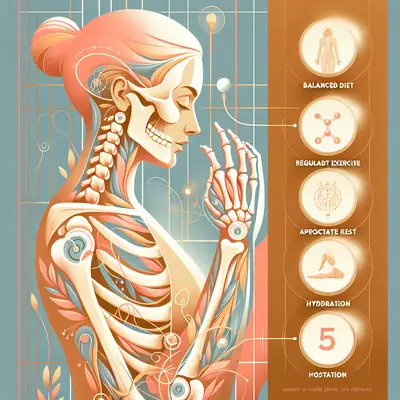
Healthy living, when joint health is the priority, is less about dramatic overhauls and more about quiet, deliberate architecture—subtle design decisions that accumulate into long-term comfort. Rather than chasing the latest wellness trend, those who age with supple, reliable joints tend to curate their days with precision: how they stand, how they recover, how they eat, and how they respond to early discomfort. This is not about perfection; it is about cultivating a lifestyle that makes inflammation unwelcome and graceful movement the default.
Below are five exclusive, often-overlooked insights for those who want their joints to feel as composed as the rest of their life.
Insight 1: Treat Low-Grade Inflammation as a Design Flaw, Not a Flare-Up
Most people react only when pain becomes impossible to ignore. By then, the joint has already been living in a biochemical storm of inflammatory signals. The more refined approach is to treat even low-grade, intermittent discomfort as data—an early sign that the overall lifestyle “architecture” needs adjusting.
This means paying attention to minor patterns: the knee that whispers after two hours at your desk, the fingers that feel subtly fuller after certain meals, the ankle that objects to one particular shoe. Instead of dismissing these as “normal,” the joint-conscious individual treats them like early stress fractures in a finely built structure.
Practical applications include keeping a brief weekly note on when and where joints feel off, then looking for correlations with sleep quality, stress peaks, certain foods, or specific activities. This shifts you from crisis management to quiet course correction—micro-adjustments in daily habits that prevent major flares before they begin.
Insight 2: Build a “Baseline of Ease” Through Micro-Movement, Not Marathon Workouts
For joint-focused living, the real luxury is not the occasional intense workout; it is a daily baseline of ease—joints that never drift far from feeling warm, lubricated, and ready. This baseline is less about heroic gym sessions and more about intelligent, frequent, low-intensity movement.
Think of your joints like a high-end mechanical watch: it does best with consistent, subtle motion throughout the day, not sporadic extremes. Long, uninterrupted sitting is the enemy here. Standing desks are not a complete solution either; static standing can be as demanding on hips, knees, and lower back as static sitting.
A more refined strategy: build a pattern of micro-movements. Stand every 25–40 minutes. Roll your ankles while on calls. Gently rotate wrists and shoulders before opening your laptop and again when you close it. Integrate short, structured “mobility interludes” into your day—one or two minutes of dynamic, controlled motion for your main joints. Over time, these almost invisible acts form a background soundtrack of lubrication and circulation, keeping synovial fluid moving and stiffness from settling in.
Insight 3: Use Sleep as Your Most Underestimated Joint Treatment
Many people consider sleep a general wellness variable; few treat it as a targeted joint therapy. Yet sleep is when the body conducts some of its most important maintenance: repairing connective tissue, regulating immune function, and modulating inflammatory markers that directly influence joint comfort.
From a joint-health perspective, three details matter:
- Sleep quantity and consistency: Aim not only for enough hours, but for roughly the same window each night. Irregular schedules can disrupt hormonal rhythms tied to inflammation.
- Sleep quality and environment: A supportive mattress that respects spinal alignment, a pillow that keeps your neck neutral, and cool ambient temperatures create a restorative environment for load-bearing joints.
- Pre-sleep inputs: Alcohol, heavy late meals, and excessive screen exposure can degrade sleep quality, which in turn heightens next-day pain sensitivity and inflammatory tone.
Those who treat joint health as a long game often have “sleep hygiene” that is almost architectural in its precision: dim lighting in the evening, calming pre-bed rituals, and a consistent boundary between stimulating activity and winding down. The payoff is subtle but powerful: joints that wake up composed instead of resentful.
Insight 4: Curate an Anti-Inflammatory Plate With Quiet Precision, Not Extremes
Nutrition for joint health is often reduced to slogans—“cut sugar,” “avoid processed foods,” “eat more plants.” While directionally useful, a more elevated approach is to curate an eating style that steadily lowers inflammatory burden without feeling punitive or extreme.
From a joint-centric lens, consider three tiers of refinement:
- Foundational choices: Emphasize whole foods—vegetables, fruits, legumes, whole grains, quality proteins, and healthy fats (olive oil, nuts, seeds, fatty fish). These are your non-negotiables.
- Targeted anti-inflammatory allies: Fatty fish (salmon, sardines, mackerel) for omega-3s; extra-virgin olive oil as your default fat; herbs and spices such as turmeric, ginger, and rosemary; and deeply colored produce rich in polyphenols (berries, kale, red cabbage).
- Measured indulgence: Instead of strict elimination, adopt a “worth it” standard for refined carbohydrates, sweets, and ultra-processed snacks. You are not banning them; you are curating frequency and portion with the understanding that each choice nudges your inflammatory set point in one direction or the other.
The sophisticated perspective treats every meal as a quiet vote: not for immediate gratification, but for how easily your joints will allow you to move tomorrow, next season, and ten years from now.
Insight 5: Consider Strength Training as Joint Insurance, Not Aesthetic Ambition
For many, strength training is framed as a way to “look toned.” For those invested in joint longevity, it takes on a different identity: it becomes a form of structural insurance. Well-trained muscles act as shock absorbers, stabilizers, and co-pilots for your joints, reducing unnecessary strain with every step, lift, and turn.
The key is how you train:
- Prioritize form and control over load. Smooth, controlled movement patterns train your body to support joints in daily life.
- Include compound movements that mirror real-world function—hip hinges, squats or chair stands, rows, and gentle presses—appropriately scaled for your current capacity.
- Respect tempo and progression. Tendons and ligaments adapt more slowly than muscles; a refined plan increases intensity gradually and allows adequate recovery, especially after heavier or novel sessions.
Viewed this way, strength sessions are less about performance metrics and more about shaping the invisible scaffolding that supports every joint. You are not simply exercising; you are investing in the ease with which you will navigate stairs, luggage, and long days on your feet for years to come.
Conclusion
Healthy living for joint-conscious individuals is not a dramatic reinvention; it is an ongoing act of meticulous editing. You notice subtle discomfort instead of dismissing it. You weave micro-movement into the architecture of your day. You protect your sleep as intentionally as your schedule. You curate your plate with an eye toward inflammation, not impulse. You train your body to support your joints, not just your reflection.
This is the quiet architecture of anti-inflammatory living—a lifestyle composed of small, consistent decisions that allow your joints to remain not merely functional, but poised, responsive, and reliably yours.
Sources
- National Institute of Arthritis and Musculoskeletal and Skin Diseases (NIAMS) – Osteoarthritis Overview - Explains how inflammation, joint structure, and lifestyle factors contribute to osteoarthritis and joint discomfort
- Harvard T.H. Chan School of Public Health – The Nutrition Source: Anti-Inflammatory Diet - Reviews dietary patterns and specific foods that influence systemic inflammation
- Johns Hopkins Medicine – Sleep and Inflammation - Describes how sleep affects immune function and inflammatory processes relevant to joint health
- American College of Sports Medicine – Position Stand on Exercise and Physical Activity for Older Adults - Details how strength and mobility training support musculoskeletal and joint integrity with age
- Arthritis Foundation – Physical Activity and Arthritis - Provides guidance on movement strategies and exercise types that are beneficial and safe for people with joint concerns
Key Takeaway
The most important thing to remember from this article is that this information can change how you think about Healthy Living.