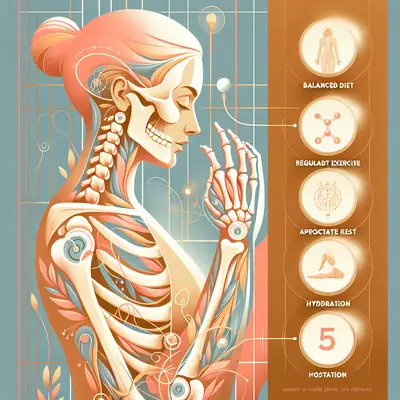
Healthy living is often framed as an all-or-nothing pursuit—intense workouts, strict diets, dramatic goals. But joints tell a different story. They respond not to extremes, but to quiet consistency, subtle refinement, and intelligent restraint. When you begin to design your life around your joints rather than simply dragging them along for the ride, health takes on a more elegant, sustainable form.
This isn’t about living cautiously; it’s about living intentionally. Below are five exclusive, joint-centric insights that elevate everyday choices into a long-term investment in ease, strength, and graceful movement.
1. Think in “Joint Loads,” Not Just “Workouts”
Most people track workouts. Very few track joint load—the cumulative stress your joints experience across the entire day. For joint-focused living, that distinction is everything.
Standing at a high counter in unsupportive shoes, repeatedly lifting a heavy handbag, or sitting for hours with hips flexed and spine rounded may be as impactful on your joints as a gym session. Your joints experience life as total exposure, not isolated workouts.
Begin to curate your day like a portfolio of joint loads:
- Alternate positions every 30–45 minutes: sitting, standing, gentle walking, leaning.
- Treat high-heel days, long drives, or intense training as “joint events” that require recovery rituals—gentle mobility work, a short walk, or a warm shower followed by light stretching.
- Use stairs, inclines, and carrying loads (groceries, luggage, briefcases) as intentional, moderate strength work, not mindless strain.
- Consider flooring: hard stone and concrete magnify joint forces. Soft rugs, pads in the kitchen, and supportive footwear quietly reduce daily impact.
This mindset shift—from counting workouts to managing total joint load—transforms joint health from something you “do” occasionally to something you design continuously.
2. Curate a “Joint-Smart” Environment at Home
Healthy living often focuses on what happens outside the home: the gym, the studio, the track. But for most people, joints spend the majority of their time navigating the home environment. Transforming your spaces can be one of the most refined, underappreciated investments in joint health.
Consider an environmental audit with your joints as the client:
- Kitchen: Place most-used items (pots, dishes, appliances) between shoulder and mid-thigh height to avoid repeated deep squats or overhead reaches. A thick, supportive mat at the sink can ease knees, hips, and spine during meal prep.
- Bathroom: Subtle grab bars, a slightly higher toilet seat, and non-slip mats in the shower are not just for advanced age—they quietly protect joints during slippery, rotational movements.
- Bedroom: Consider bed height that allows you to sit and stand without collapsing into or pushing out of deep flexion. A too-low bed can quietly irritate knees and hips over time.
- Work area: Align screens at eye level, wrists neutral over the keyboard, feet supported. Neck, shoulder, and hand joints are exquisitely sensitive to angles sustained for hours.
This environmental curation allows daily life to support your joints rather than quietly eroding them. Healthy living becomes less about willpower, more about intelligent design.
3. Feed Your Joints Like Living, Moving Tissue—Not Static Hinges
When people think “joint health,” they often jump to supplements or generalized “anti-inflammatory” advice. But joints are not simple hinges; they are living, metabolically active tissues—cartilage, bone, synovial fluid, ligaments—that respond to nuanced nutritional patterns.
A joint-focused approach to nutrition goes beyond broad slogans:
- Consistent, not extreme, anti-inflammatory eating: Colorful vegetables and fruits, extra-virgin olive oil, nuts, seeds, legumes, and omega-3–rich fish (like salmon or sardines) support long-term joint health better than intermittent “clean eating” cycles followed by indulgence.
- Protein with precision: Adequate protein (distributed evenly across meals) supports muscle mass, which in turn protects joints by absorbing impact. For many adults, this may mean intentionally including high-quality protein at breakfast, not just dinner.
- Collagen and its co-factors: Collagen-rich foods (bone broth, slow-cooked meats, collagen powders) appear more effective when supported by vitamin C (citrus, berries, peppers) and overall adequate protein. Think synergy, not miracle ingredient.
- Micro-hydration, not just big bottles: Joints rely on well-hydrated cartilage and synovial fluid. Instead of chugging large amounts of water occasionally, aim for elegant, consistent sips throughout the day—herbal teas, water, sparkling water without added sugars.
This is less about rigid rules and more about a rhythm of nourishment that treats joints as dynamic tissues that deserve steady, intelligent support.
4. Practice “Articulate Strength,” Not Just Big Muscles
Traditional fitness culture often prizes visible muscle and intense effort. For joint-first living, the quality of strength matters as much as the quantity. “Articulate strength” is the capacity to control movement through ranges of motion, not just in and out of them.
This kind of strength training has a distinctly refined feel:
- Slow eccentric work: Lower into a squat, lunge, or step-down over 3–5 seconds. This teaches the muscles around the joint to guide and decelerate movement, reducing strain on passive structures like ligaments and cartilage.
- End-range control: Instead of simply stretching, add gentle active engagement at the end of your range—lifting the leg slightly while in a hip stretch, or lightly pressing the foot into the floor during a calf stretch. This builds stability where joints are most vulnerable.
- Unilateral elegance: Single-leg and single-arm work (step-ups, split squats, single-arm rows) reveal and correct asymmetries that quietly overload one side of the body.
- Micro-loads, meticulously applied: Light weights, resistance bands, or even bodyweight can be profoundly effective when applied with precision: aligned joints, controlled tempo, intentional breathing.
Healthy living for joints is not a spectacle; it is sophistication in motion. The aim is not simply to be strong, but to be strategically strong around every joint that carries you.
5. Treat Recovery as a Daily Ritual, Not a Rescue Mission
For many, recovery is something to be summoned when pain appears—a reaction to discomfort. Joint-centered living reframes recovery as a lifestyle ritual that quietly preserves capacity long before symptoms arise.
Think of recovery as a continuum woven into your day:
- Transitional movement: After prolonged sitting, take 60–90 seconds for joint “wake-up” moves—gentle ankle circles, shoulder rolls, neck rotations, a few hip-opening steps. This re-lubricates joints with synovial fluid and calms stiff tissues.
- Evening downshift: Instead of collapsing into screens, consider 5–10 minutes of intentional decompression—lying on the floor with legs up on a chair, gentle spinal rotations, or supported stretches. It signals to joints that their load for the day is complete.
- Sleep as joint therapy: Deep, regular sleep supports tissue repair, hormone balance, and pain modulation. A calm pre-sleep ritual—dim lights, no heavy meals late at night, minimal screens—becomes as critical for your knees and spine as for your mind.
- Occasional “joint sabbatical” days: Not inactivity, but a day of deliberate lightness: walking instead of running, gentle cycling instead of high-impact, restorative movement instead of maximal effort. This strategic under-loading can extend your long-term capacity to do what you love.
When recovery is integrated daily, joints stop living at the edge of irritation. Instead, they occupy a more luxurious zone of readiness—prepared, resilient, and quietly capable.
Conclusion
Healthy living, when viewed through the lens of joint health, becomes less about intensity and more about intention. You begin to make choices not for the next month, but for the next decade: how your home supports your movement, how your food nourishes living tissue, how your environment shapes joint loads, how your strength expresses itself with control, and how your recovery rituals quietly protect you.
This is the quiet architecture of joint-first living: unhurried, precise, and enduring. The result is not only healthier joints, but a more considered, elevated way of inhabiting your body—one that allows you to move through life with continuity, confidence, and understated ease.
Sources
- National Institute of Arthritis and Musculoskeletal and Skin Diseases (NIAMS) – Joint Health Overview – Clinical overview of joint structure, function, and factors affecting joint health
- Arthritis Foundation – Joint-Friendly Fitness – Practical guidance on exercise types and modifications that support joint protection
- Harvard T.H. Chan School of Public Health – Healthy Eating Plate & Anti-Inflammatory Principles – Evidence-based framework for balanced eating patterns supportive of long-term health, including inflammation control
- Mayo Clinic – Strength Training: Get Stronger, Leaner, Healthier – Explains the role of strength training, proper technique, and joint-safe approaches
- Johns Hopkins Medicine – Sleep and Chronic Pain – Discusses the relationship between sleep quality, pain perception, and recovery processes
Key Takeaway
The most important thing to remember from this article is that this information can change how you think about Healthy Living.