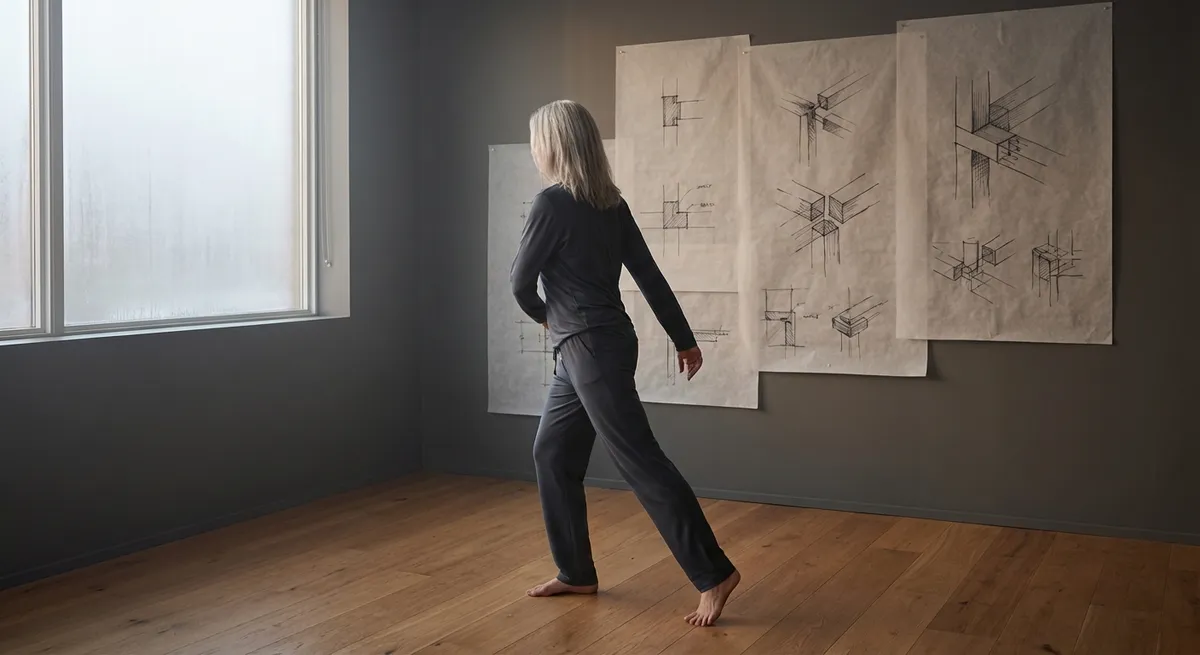
Mobility is not simply about how far you can reach or how low you can squat. It is the quiet architecture beneath every elegant movement—how your joints glide, how your tissues respond, and how your body transitions from effort to ease. For those who value long-term joint health, mobility work is less a workout and more a curated ritual: deliberate, precise, and deeply intentional.
This is not about dramatic stretches or extreme ranges of motion. It is about cultivating control, nuance, and subtle strength around every joint, so that your body ages with continuity—not abrupt decline.
Mobility as Joint “Hygiene,” Not Just Flexibility
Most people chase flexibility and overlook mobility. Flexibility measures how far a passive structure (like a muscle) can lengthen. Mobility measures something more refined: your ability to actively control that range with strength, coordination, and stability.
For joint health, mobility is closer to daily hygiene than to performance training. Just as you would not skip brushing your teeth for a week, your joints benefit from regular, short “maintenance doses” of movement: gentle rotations of the hips, ankles, shoulders, and spine that keep cartilage nourished and synovial fluid circulating. These small practices, performed consistently, help reduce stiffness, improve circulation, and maintain joint space over time.
Think of it as micro-investing: brief, precise sessions (5–15 minutes) layered into your day—after waking, between meetings, or as a decompression ritual in the evening. The goal is not exhaustion but refinement: you’re waking up dormant ranges and reminding your body that these movements are still part of its vocabulary.
Exclusive Insight #1: Train End-Ranges as If They Were a Luxury Asset
Most people move confidently in the middle of their range of motion and become clumsy, weak, or protective at the edges. Yet it is precisely at those “end-ranges” that joints often become vulnerable—where cartilage, ligaments, and tendons are tested in real life.
Instead of avoiding end-ranges, approach them as a luxury asset that deserves protection through intentional training. Slow, controlled movements—such as easing gradually into the deepest part of a hip hinge, or rotating your neck to its comfortable limit under conscious control—teach your nervous system that these positions are safe, known, and supported by strength.
The key is tempo and tension:
- Move into the edge of your range, not beyond it
- Breathe steadily, never holding your breath
- Apply low but deliberate muscular tension to “own” that position for a few seconds
Over time, this end-range control can reduce the micro-panics your joints experience during sudden twists or unexpected steps, making daily life (from navigating stairs to catching yourself after a stumble) measurably more secure.
Exclusive Insight #2: Joint-Specific Routines Are More Powerful Than Generic Stretching
Generic stretching plans often lump the body into upper and lower halves. Refined mobility practice, by contrast, treats each joint like a distinct project with its own architecture and demands.
For joint-conscious individuals, it is far more effective to think in terms of:
- Neck and upper thoracic mobility for posture and tension relief
- Scapular (shoulder blade) glides and rotations for shoulder preservation
- Hip rotation (internal and external) for gait, balance, and back comfort
- Ankle dorsiflexion and plantar flexion for smooth walking, squatting, and stair-climbing
- Segmental spinal motion for distributing load evenly instead of overusing a single area
A sophisticated approach might mean 3–5 minutes dedicated specifically to the ankles before a walk, or a brief pre-bed ritual of shoulder circles and scapular slides to counteract a day at the desk. This precision builds joint intelligence: you begin to know which areas require support and how to offer that support without overworking the rest of the body.
Exclusive Insight #3: Rotation Is the “Forgotten Plane” That Protects Your Joints
Most daily movement happens forward and backward (sagittal plane). We sit, stand, walk, and bend in front of us. Side-to-side motion (frontal plane) gets a little attention. But rotation (transverse plane)—turning, spiraling, and twisting—is often neglected, even though it is essential for joint longevity.
Yet life is full of rotation: turning to look behind you, pivoting through the hips as you step off a curb, rotating your spine to reach into the back seat of a car. When we never train controlled rotation, those moments become stiff, jerky, and risky.
A refined mobility practice deliberately includes low-load rotational drills, such as:
- Gentle seated spinal rotations with a long, lifted posture
- Controlled hip circles, focusing on smooth arcs rather than big, sloppy movements
- Slow, pain-free neck rotations with the chin slightly drawn in (to avoid collapse at the cervical spine)
- Shoulder “halo” motions using a light object to encourage joint-friendly arcs
Rotation, done patiently and precisely, teaches your joints to share load instead of forcing one area (often the lower back or knees) to carry all the stress.
Exclusive Insight #4: Your Breath Dictates Your Joint’s Willingness to Move
Breath is often treated as an accessory to movement. In joint-focused mobility, it is a primary tool. Your nervous system interprets breath patterns as a signal of safety or threat. Shallow, held, or rushed breathing can make your tissues guard and tighten; deep, measured exhalations can invite release and improved motion.
Two refined breathing principles for mobility work:
Exhale into the restriction
When you encounter a limit in a stretch or joint rotation, pause and exhale slowly (4–6 seconds). This extended exhale can reduce sympathetic tone (the “fight or flight” response) and allow an extra few degrees of ease, without forcing.
Match breath tempo to movement tempo
For slow controlled joint circles or segmental spinal movements, use one full inhale for the first half of the movement and one full exhale for the second half. This pacing reduces jerky transitions and helps your brain map each new position with clarity.
The result is mobility work that feels less like wrestling your body and more like collaborating with it—subtle, calm, and sustainable.
Exclusive Insight #5: Micro-Stability Around the Joint Is as Valuable as Range
In the pursuit of “better mobility,” it’s easy to chase more range and forget about stability. Yet a joint that moves far but cannot stabilize quickly is actually more exposed to irritation and injury.
For joint health, cultivate micro-stability: the fine-tuned ability of small, local muscles to support a joint through its movement. This means occasionally adding very light resistance—such as a small loop band, a soft ball, or even the weight of your own limb—so that your muscles are actively participating, not just passively stretching.
Examples include:
- Holding a gentle isometric at the edge of a hip rotation, focusing on a steady contraction without pain
- Using a light band to create gentle resistance during ankle circles, so supporting muscles engage
- Adding a slow “hover” phase to a shoulder CAR (controlled articular rotation), pausing in the most challenging angle rather than rushing through it
This blend of motion and subtle strength teaches your joints to feel both free and anchored—a rare but powerful combination for longevity.
Curating a Personal Mobility Ritual
The most elegant mobility practice is not the most complex; it is the most consistent and contextually intelligent. Rather than chasing a long, unsustainable routine, design a minimalist ritual that respects your real life:
- Morning (3–5 minutes): Gentle neck, shoulders, and spinal mobility to “wake up” posture
- Midday (3–5 minutes): Hips and ankles to counteract sitting and refine walking mechanics
- Evening (5–10 minutes): Slow, breath-led rotation and end-range work, done calmly to support recovery and sleep
Use this as a base template and adapt with your own priorities: more focus on wrists if you type frequently, more hip work if you walk or run extensively, more thoracic rotation if you notice your upper back stiffening.
Over months and years, this subtle but deliberate investment creates something far more valuable than temporary flexibility: a body that moves with continuity, joints that remain responsive instead of reactive, and movement that feels quietly assured rather than precarious.
Conclusion
Mobility, approached with intention, becomes a form of preventative art: you are shaping how your joints will feel not only tomorrow, but a decade from now. By respecting end-ranges, honoring rotation, breathing with precision, and training stability as carefully as range, you create a refined internal environment where joints are protected, nourished, and respected.
In an age of quick fixes and extreme fitness trends, a sophisticated mobility practice stands apart. It is not loud, but it is lasting. It does not promise spectacle, but it delivers something far more precious: confident, graceful movement that endures.
Sources
- Harvard Health Publishing – The importance of stretching – Overview of flexibility, stretching, and how regular mobility-related practices support joint and muscle health
- Arthritis Foundation – Range-of-Motion Exercises – Practical guidance on joint-friendly range-of-motion work, particularly relevant for joint protection
- Mayo Clinic – Exercise and chronic disease – Explains how structured movement supports long-term health, including benefits to joints and overall function
- National Institute of Arthritis and Musculoskeletal and Skin Diseases (NIAMS) – Evidence-based information on arthritis and joint conditions, including movement and lifestyle recommendations
- Cleveland Clinic – Joint Health: Keeping your joints healthy – Clinical insights on strategies to maintain and protect joint health across the lifespan
Key Takeaway
The most important thing to remember from this article is that this information can change how you think about Mobility Exercises.