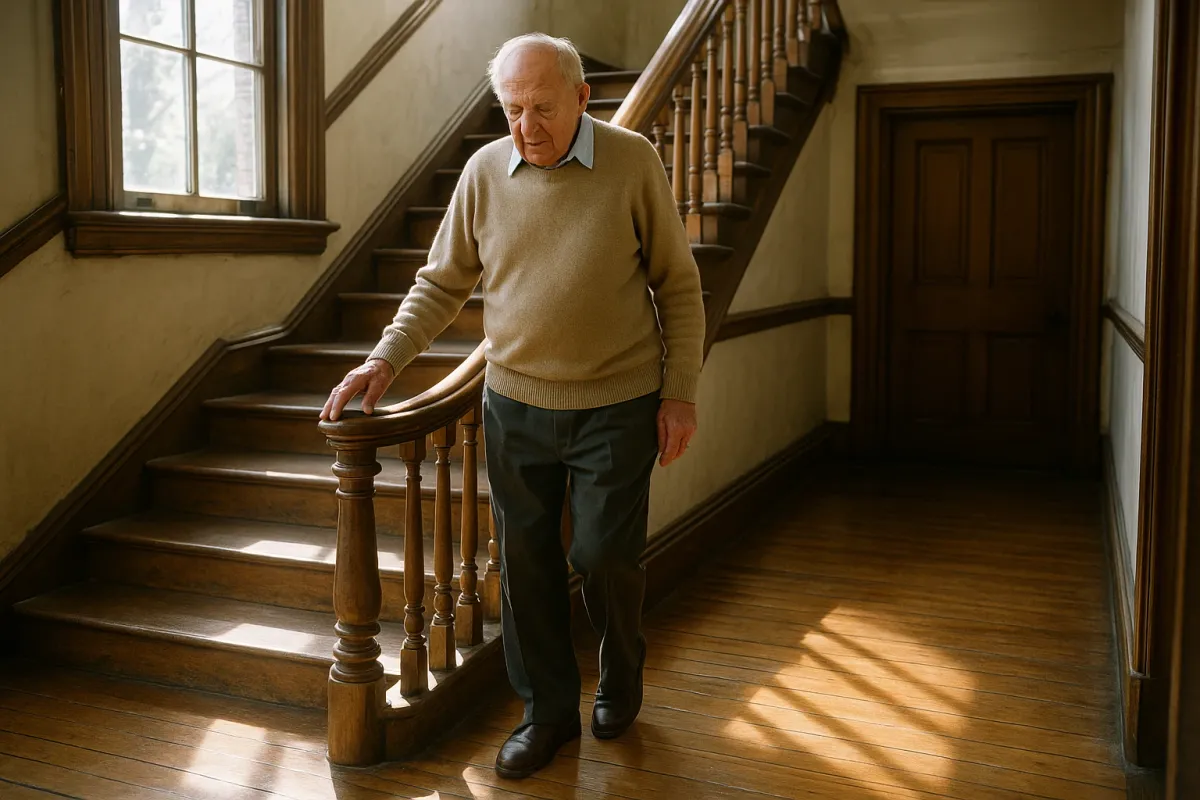
Sunlight on worn oak floors. A hand sliding along a banister polished by generations. A shallow step, taken without thinking. As new galleries of heritage homes trend across social media—like the recent “Beautiful Old Houses” feature showcasing century‑old craftsmanship—many of us are pausing not just to admire the details, but to long for something else: a life where the things we use every day are built to last. That longing shouldn’t stop at architecture. It is, in many ways, the perfect metaphor for how we care for our joints.
Those photographs of intricate moldings, generous stair treads, and high ceilings are going viral for their nostalgia. But beneath the aesthetics lies a more subtle lesson: durability comes from intelligent design, daily use, and respectful maintenance. Old houses stand the test of time for the same reasons healthy joints do. Inspired by this renewed fascination with historical craftsmanship, here are five refined, quietly radical insights for anyone who wants their joints to age with the same grace as those homes.
1. Heritage Homes Survive On Micro‑Maintenance—Your Joints Do Too
Architectural conservation has a simple rule: small, consistent care prevents catastrophic repair. Those “Beautiful Old Houses” didn’t survive a century because nothing ever went wrong; they survived because every creak, draft, and hairline crack was tended to early. The same is true of joint health—only our culture has trained us to ignore the early whispers until they become a roar.
Micro‑maintenance for joints looks deceptively modest: three minutes of morning range‑of‑motion, a brief mobility ritual before work, a short decompression sequence after a long drive. Research in osteoarthritis and sports medicine increasingly shows that low‑load, frequent movement nourishes cartilage and supports synovial fluid distribution far more effectively than sporadic, heroic workouts. Think of each small movement as re‑oiling a hinge, tightening a loose screw, or resealing a drafty window. A stiff ankle that gets daily circles will age very differently from one that is only “addressed” when it becomes a medical problem. The most sophisticated joint strategy isn’t dramatic—it’s quietly relentless.
2. Elegant Proportions Matter: How “Room Geometry” Shapes Your Gait
One reason those old‑world interiors feel so inviting is proportion: stair heights, door widths, and rail placements were often designed with real human use in mind. Compare that to today’s world of too‑high bar stools, sofa cushions that swallow you whole, and beds that require a small leap of faith every morning. The geometry of our spaces is silently training our joints, for better or worse.
Joint‑aware living means scrutinizing proportions with an architect’s eye. Are your stairs shallow enough that your knee can glide over your foot without collapsing inward? Is your preferred chair at a height where your hips are level with or slightly above your knees, so you can rise without a heave? Is there a handhold where you instinctively reach when stepping into the shower or out of the car? These small spatial choices change the load patterns that your hips, knees, and spine absorb thousands of times per week. Investing in better proportions—raising a workstation, lowering a shelf, adjusting stair rail heights—often yields more lasting joint comfort than yet another high‑end gadget or supplement. It is ergonomics, elevated to the level of design.
3. Patina, Not Decay: Redefining “Wear and Tear” As Intelligent Adaptation
Those viral photographs of weathered stone steps and softened floorboards are celebrated, not lamented. We call it patina—a visible record of lives well lived. Yet when it comes to our joints, we default to harsher language: “wear and tear,” “degeneration,” “bad knees.” The contrast is stark, and it shapes how we age.
Contemporary research in osteoarthritis is moving away from the idea of joints as parts that simply erode with time, and toward a more nuanced understanding of adaptation. Repeated stress without recovery, inadequate muscular support, low‑grade inflammation, and metabolic health all influence whether a joint becomes fragile or resilient. The goal is not to avoid use but to cultivate intelligent use—load that is varied, supported by strong musculature, and buffered by good sleep, nutrition, and stress management. Like a well‑loved staircase, your joints will change over decades. The question is whether those changes resemble graceful patina or premature decay. Reframing “I’m getting old” into “My joints are adapting—am I guiding that process?” is a surprisingly powerful act.
4. Craftsmanship Is Invisible: The Muscles That Quietly Protect Your Joints
Walk through a perfectly restored townhouse and you rarely see the structural genius—only the finished surfaces. The hidden beams, joists, and reinforcements carry the real load. Joint health has its own unseen craftsmanship: deep stabilizing muscles and subtle neuromuscular control that most people never consciously train.
For the knees, it’s not your visible quadriceps that matter most day‑to‑day, but the harmony between your hips, glutes, calves, and feet. For the spine, it’s not simply “a strong core,” but the orchestration of your diaphragm, pelvic floor, deep abdominals, and multifidi. Elite physical therapists and performance coaches are increasingly focusing on these fine‑tuned systems: slow, controlled single‑leg work; foot intrinsic strengthening; tempo‑based hip and trunk control; breath‑led postural training. On social media, you’ll see the grand gestures—heavy lifting, dramatic stretches—but the joints that truly endure are supported by unglamorous, precise work that almost looks too simple. When you prioritize that invisible craftsmanship, every step, twist, and reach becomes quieter, more supported, and more sustainable.
5. Preservation Requires Boundaries: Learning To Say No With Your Body
Historic preservation laws exist to protect irreplaceable buildings from short‑sighted decisions—demolition for convenience, cheap renovations, harsh alterations. Your joints deserve similar advocacy. In an age of hustle culture and performative productivity, there is a quiet luxury in having strong bodily boundaries.
This might mean declining yet another back‑to‑back meeting so you can walk between commitments instead of sitting continuously. It could be refusing workouts that prize intensity over control when your knee is giving you clear, early feedback. It might look like insisting on a break during long flights so your hips and ankles can move, even if everyone else stays seated. These choices rarely go viral, but they are as consequential as preserving an original staircase instead of replacing it with something trendier but fragile. When you treat your joints as heirlooms—assets to be protected for decades, not just used for the next quarter—you start making different decisions. The result is not fragility, but a calm, confident sense of physical sovereignty.
Conclusion
The sudden fascination with beautifully preserved old houses is about more than aesthetics. It’s a reminder that things built—and cared for—to last have a presence that newness can’t replicate. Your joints are no different. With micro‑maintenance instead of neglect, thoughtful proportions instead of convenience, patina instead of panic, invisible craftsmanship instead of cosmetic strength, and clear boundaries instead of constant overuse, your body can become its own quiet masterpiece of durability.
A century from now, today’s trending interiors will be judged by how well they’ve aged. The same will be true of the way you move through the world right now. Caring for your joints with this level of intention is not merely healthy—it is, in a very real sense, a form of everyday luxury.
Key Takeaway
The most important thing to remember from this article is that this information can change how you think about Joint Care.