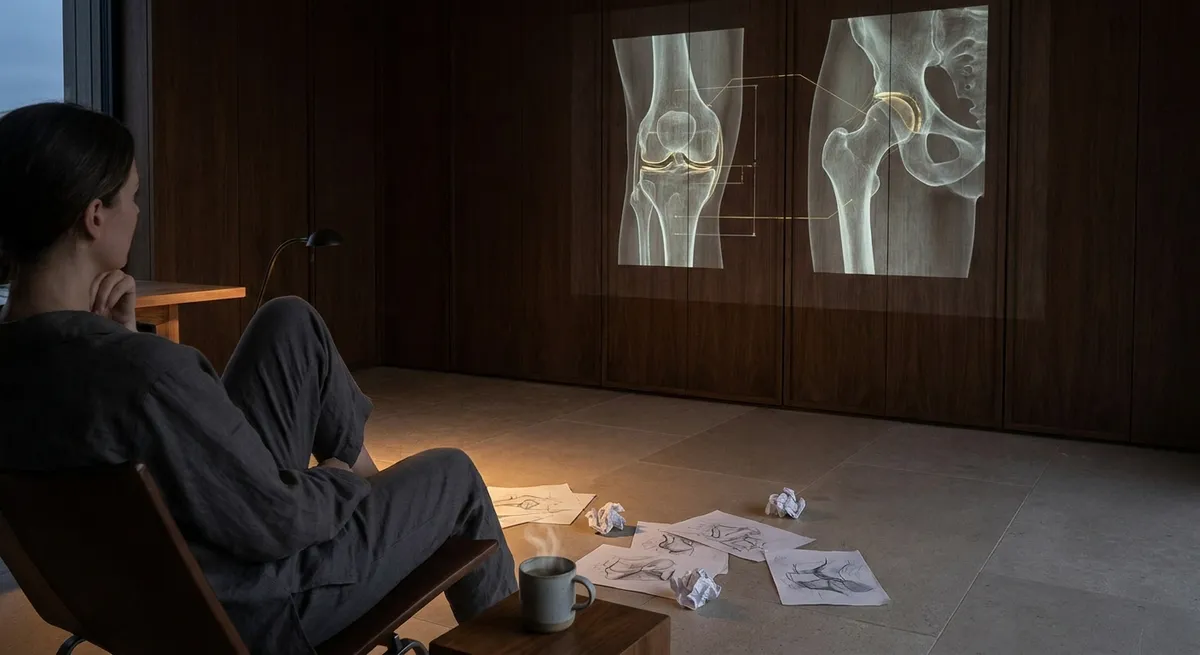
Graceful movement is not an accident of youth or good fortune; it is an architecture—planned, refined, and quietly reinforced over time. For those who care deeply about how they move, joint health is less a medical concern and more a lifestyle signature. It determines how you step into a room, how long you stay active in the pursuits you love, and how comfortably you inhabit your own body.
This is a perspective shaped not by quick fixes, but by thoughtful choices. Below are five exclusive insights designed for those who want their joint care to be as considered and elevated as the rest of their life.
1. Treat Cartilage Like a Luxury Fabric, Not a Disposable Material
Most people think of cartilage as a passive padding; in reality, it behaves more like a finely woven textile that responds to how it is treated. High-impact strain, repetitive poor mechanics, and chronic inflammation act like friction and heat on silk—subtle at first, then abruptly visible.
Cartilage relies on cyclical compression and release—through intelligent movement—to draw in nutrients from joint fluid. Too little use, and it’s undernourished; too much, and it’s abraded. The refined approach is “tailored loading”: choosing movement that challenges joints without overwhelming them. This might mean favoring smooth, full-range strength work over repetitive pounding cardio, or alternating higher-impact days with low-impact, joint-conscious training.
Paying attention to micro-signals—slight stiffness on waking, faint grinding, or delayed soreness—allows you to adjust before real damage occurs. Just as you wouldn’t wear a cashmere coat in a downpour, avoid insisting on high-impact performance when your joints are clearly asking for a different strategy.
2. Build a Precision Support System: Muscles as Joint Guardians
Well-conditioned muscles are the quiet guardians of joint integrity. They absorb shock, guide alignment, and prevent the subtle “wobble” that, over years, accelerates wear. But refined support is not about raw strength; it’s about precision.
For the knees, this could mean strengthening not only the quadriceps, but also the hip abductors and external rotators so the knee tracks gracefully rather than collapsing inward. For the shoulders, it involves training the often-neglected rotator cuff and scapular stabilizers, allowing smooth, controlled arm movement instead of compensatory strain.
Think of your training as curating a support team around each joint. Choose exercises that improve control at the end ranges of motion (where joints are most vulnerable) and integrate balance drills to refine neuromuscular coordination. The goal is to move as if every step and reach were being filmed in slow motion—clean lines, smooth transitions, and no wasted effort.
3. Use Inflammation as a Sophisticated Feedback Loop, Not an Enemy
Inflammation is often framed as an adversary, but in a cultivated approach to joint care, it becomes a nuanced feedback tool. Acute inflammation—a short-lived, targeted response after a new workout or minor strain—is a normal signal of adaptation. Chronic, low-grade inflammation, however, is the quiet saboteur of joint longevity.
Your task is to become a connoisseur of your own inflammatory patterns. Do your joints feel subtly swollen and dull after certain foods, late nights, or alcohol-heavy weekends? Does a specific training style leave you feeling heavy and thick-jointed rather than pleasantly worked?
Aligning your routine with anti-inflammatory nutrition—favoring omega-3–rich fish, olive oil, nuts, deeply colored vegetables, and minimal ultra-processed foods—acts like upgrading from harsh fluorescent lighting to warm, flattering illumination for your joints. Supporting sleep quality and managing stress (through breathwork, meditation, or simply well-guarded downtime) further reduces the background “noise” of inflammation, giving your joints a calmer internal environment in which to thrive.
4. Curate Your Daily Micro-Movements With the Same Care as Your Work
Joint health is not determined only by your workouts; it is designed in the thousands of micro-movements you repeat daily. The way you sit at your desk, step off a curb, lift a suitcase, or cradle your phone exerts a quiet but cumulative influence.
A refined joint-care strategy involves re-editing these habits. For example, if your work is primarily seated, consider how often your hips and knees are locked at right angles, and whether your spine is subtly flexed forward all day. Integrating intermittent “posture resets,” standing or walking breaks, and brief mobility sequences can undo hours of stagnation in minutes.
Likewise, consider repetitive asymmetries: always carrying a bag on the same shoulder, habitually crossing the same leg, or sleeping in one twisted position. These small biases write themselves into tissue over time. Trading them for more symmetrical, mindful patterns is akin to adjusting the lighting, angle, and framing of your everyday life—small refinements that dramatically change the long-term picture.
5. Think in Decades, Not Weeks: A Long-View Strategy for Joint Elegance
Most fitness goals are set in weeks or months; joints, however, respond to the math of years and decades. The question is not just whether your current regimen “works,” but whether it is sustainable for the person you want to be 10, 20, or 30 years from now.
Adopting a decade-scale mindset shifts the criteria. Instead of asking, “How hard can I push?” you begin asking, “What level of strength, mobility, and ease can I maintain or deepen over time?” This might mean cycling training intensities across the year, deliberately scheduling recovery weeks, and staying open to evolving your favorite activities rather than clinging to a single identity as a runner, lifter, or cyclist.
Proactive check-ins—such as periodic consultations with a physical therapist, sports medicine specialist, or movement-focused clinician—let you detect small issues before they become constraints. In this long-view framework, every choice either compounds in favor of future freedom or quietly erodes it. Treat each session, each stretch, each rest day as a deposit into your “movement capital”—one that pays out as the ability to live your later years with the same sense of agency and elegance you value now.
Conclusion
Resilient joints are not a given; they are crafted. The process is quiet, intentional, and deeply personal—less about heroic effort and more about consistently elevated choices. By treating cartilage with respect, surrounding joints with intelligent muscular support, listening to inflammation instead of warring with it, refining your daily micro-movements, and thinking in decades rather than weeks, you create a kind of understated luxury: the ability to move with ease, confidence, and grace over a lifetime.
Your body will not thank you with applause; it will thank you with silence—the absence of pain, the fluidity of motion, the simple freedom to do what you love. That, in the end, is the most sophisticated expression of joint care.
Sources
- Centers for Disease Control and Prevention – Arthritis Basics - Overview of arthritis, risk factors, and general joint health considerations
- Harvard Health Publishing – Exercising with Arthritis - Discusses how targeted exercise supports joint function and reduces pain
- Mayo Clinic – Osteoarthritis: Symptoms and Causes - Explains how cartilage wears over time and the role of joint loading
- NIH – Anti-Inflammatory Diet: Road to Good Health - Outlines how nutrition and inflammation intersect with long-term health
- Hospital for Special Surgery – Joint Preservation and Cartilage Restoration - Details strategies for protecting cartilage and maintaining joint integrity
Key Takeaway
The most important thing to remember from this article is that this information can change how you think about Joint Care.