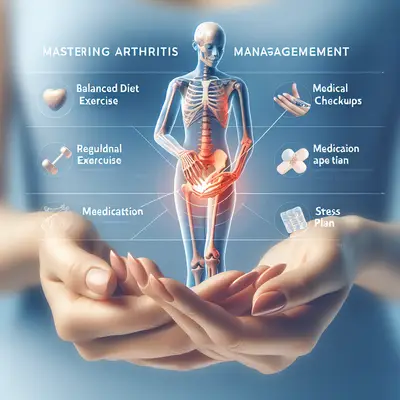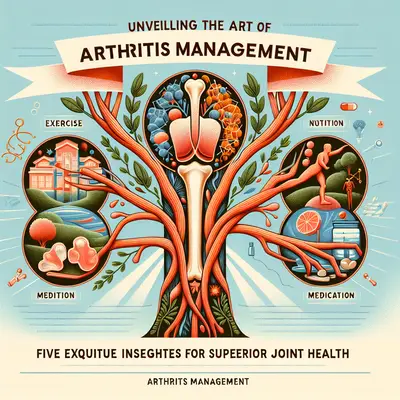
Arthritis does not merely touch the joints; it rearranges the rhythm of everyday life. Yet within that disruption lies an opportunity: to design a way of living that protects, nourishes, and even refines how your body moves through the world. This is not about quick fixes or generic tips; it is about cultivating a precise, informed strategy that lets you stay ahead of inflammation rather than constantly chasing it. Below, you’ll find five exclusive, research‑aligned insights that serious joint‑health connoisseurs can use to elevate their arthritis management from reactive to quietly strategic.
Precision Inflammation Control: Thinking Beyond “Pain Days”
Most people respond to arthritis when it flares; those who age gracefully with joint disease learn to manage the terrain between flares. Instead of waiting for a “bad day,” consider inflammation as a continuum that you monitor and modulate daily.
This begins with understanding that osteoarthritis and inflammatory forms of arthritis (like rheumatoid arthritis or psoriatic arthritis) are driven not only by mechanical wear, but also by complex immune and metabolic pathways. Subtle cues—morning stiffness that lingers a bit longer, a joint that feels “thicker,” or a slight decline in grip strength—can signal inflammation rising before overt pain appears.
Keeping a short daily log of stiffness duration, joint warmth, sleep quality, and stress levels provides an early‑warning system. When you see patterns, you can respond preemptively: adjust your activity load, prioritize sleep, lean into anti‑inflammatory nutrition, and—crucially—speak with your clinician about whether your medical regimen needs fine‑tuning. Arthritis medications work best when they’re part of an anticipatory strategy, not an emergency response. Over time, this style of monitoring transforms you from a passive recipient of symptoms into the chief strategist of your joint health.
Load, Not Just Movement: Curating the Weight Your Joints Carry
“Keep moving” is common advice, but for someone serious about joint preservation, it’s incomplete. The elegant question is: what movement, under what load, and at what frequency genuinely protects your joints?
Joints dislike chaos more than they dislike work. Intermittent, unpredictable, high‑impact loads—such as sudden bursts of intense activity after sedentary periods—can be far more provocative than consistent, moderate loading. High‑quality research shows that well‑structured strengthening, especially around hips, knees, and core, supports joint alignment and reduces pain by stabilizing how forces travel through cartilage and bone.
Consider your week as a “load portfolio.” Blend three key elements: (1) low‑impact aerobic work (like cycling, swimming, or brisk walking), (2) targeted strength training with controlled tempo and impeccable form, and (3) short mobility sessions that keep surrounding tissues supple. The goal is not just to move more, but to distribute mechanical stress in ways your joints understand and can adapt to—like offering them a predictable, well‑designed workload instead of random strain.
For those with inflammatory arthritis, collaboration with a physical therapist or exercise‑experienced rheumatology professional can refine this further. They can help you set load “ceilings” and “floors,” so you avoid both harmful overexertion and the deconditioning that follows excessive rest.
Micro-Recovery: Short, Strategic Pauses as Joint Insurance
Recovery is often imagined as an end‑of‑day event, but for joints under chronic inflammatory pressure, recovery is more effective when it is discreetly woven throughout the day. Think of this as micro‑recovery: small, intentional pauses that prevent inflammation from gaining momentum.
Sitting for prolonged periods stiffens synovial joints and can weaken the surrounding musculature over time. On the other hand, uninterrupted standing or repetitive tasks can overtax specific joints. The refined solution is to alternate: brief walking breaks every 30–60 minutes, gentle range‑of‑motion drills at your desk, or two minutes of focused stretching after a long call.
These micro‑interventions do more than feel pleasant. They help promote synovial fluid circulation, maintain joint lubrication, and support venous return, which in turn helps reduce swelling. Adding short, scheduled “joint care interludes”—for example, an afternoon heat pack for hands, or a five‑minute guided relaxation for jaw and neck tension—compounds the benefit. Over weeks, these tiny rituals add up to less end‑of‑day pain and a quieter inflammatory profile, without requiring dramatic change to your schedule.
Metabolic Elegance: Aligning Nutrition With Joint Biology
Nutrition advice for arthritis often stops at “eat anti‑inflammatory foods,” but those who are deliberate about joint health benefit from a more nuanced metabolic strategy. Arthritis—especially osteoarthritis—is increasingly recognized as part of a broader metabolic ecosystem, influenced by body composition, glucose regulation, and low‑grade systemic inflammation.
Excess visceral fat, for instance, is not just extra weight on joints; it is metabolically active tissue that secretes inflammatory molecules. Thus, a modest, sustainable reduction in body fat—achieved through a combination of nutrient‑dense eating and activity—can relieve both mechanical stress and biochemical inflammatory pressure.
Instead of extreme diets, aim for metabolic elegance: steady blood sugar, abundant polyphenols and omega‑3 fats, adequate protein, and controlled ultra‑processed foods. Prioritize:
- Lean proteins (fish, legumes, tofu) to support muscle around vulnerable joints
- Colorful vegetables and berries for antioxidant and polyphenol support
- Extra‑virgin olive oil, nuts, and seeds for healthy fats linked with reduced inflammation
- Whole grains and fiber to steady glucose and support a healthier gut microbiome, which emerging research links to immune regulation and arthritis activity
A registered dietitian familiar with arthritis can help you translate these principles into meals that are both protective and pleasurable, ensuring that joint‑supportive eating feels like a lifestyle, not a restriction.
Data-Driven Calm: Using Validated Tools Without Becoming Obsessed
The most sophisticated arthritis management blends subjective experience with objective data—without letting metrics become their own source of stress. Pain is real, but it is also influenced by sleep, mood, and context. Relying solely on “how it feels today” can make planning erratic; ignoring how it feels is equally unwise.
Validated tools, such as patient‑reported outcome scales used in rheumatology, can anchor your perceptions. Simple adaptations inspired by these tools—rating your joint pain, stiffness, and function on a 0–10 scale once or twice a week—create a clean record of trends over time. Pair this with periodic step counts or activity tracking, and you can see, for example, whether rising pain coincides with decreased movement, fragmented sleep, or increased stress.
This data becomes powerful in clinical conversations. Instead of saying, “It’s been worse lately,” you can say, “Over the last six weeks, my morning stiffness scores rose from 3/10 to 6/10, and my average daily steps dropped by 25% despite no changes in my routine.” Such clarity helps your clinician adjust medications, recommend targeted therapy, or investigate new symptoms more precisely.
The key is to treat data as a quiet compass, not a verdict. Check in regularly but briefly, then return to living. The goal is to guide your decisions with evidence while preserving a sense of calm mastery over your condition.
Conclusion
Arthritis management at its highest level is neither frantic nor resigned. It is deliberate, informed, and quietly consistent. By anticipating inflammation before it peaks, curating the loads your joints carry, weaving recovery into your day, aligning metabolism with joint biology, and using data to refine rather than dominate your choices, you elevate your approach from coping to crafting.
Your joints respond not just to what you do occasionally, but to the quality and precision of what you do repeatedly. When those repetitions are guided by insight rather than habit, arthritis stops feeling like an adversary and becomes a variable you skillfully manage—leaving more energy for the parts of life that matter most to you.
Sources
- [Centers for Disease Control and Prevention – Arthritis Basics](https://www.cdc.gov/arthritis/basics/index.html) – Overview of arthritis types, risk factors, and management strategies
- [Arthritis Foundation – Benefits of Exercise for Arthritis](https://www.arthritis.org/health-wellness/healthy-living/physical-activity/getting-started/the-benefits-of-exercise) – Evidence-backed guidance on activity, loading, and joint protection
- [National Institutes of Health – Osteoarthritis Information (NIAMS)](https://www.niams.nih.gov/health-topics/osteoarthritis) – Detailed discussion of osteoarthritis mechanisms, risk factors, and treatment options
- [Mayo Clinic – Anti-inflammatory Diet: How to Choose the Right Foods](https://www.mayoclinic.org/healthy-lifestyle/nutrition-and-healthy-eating/in-depth/anti-inflammatory-diet/art-20046368) – Explores dietary patterns and nutrients relevant to inflammation and long-term health
- [Harvard T.H. Chan School of Public Health – Obesity, Inflammation, and Arthritis](https://www.hsph.harvard.edu/obesity-prevention-source/obesity-and-arthritis/) – Examines the metabolic and inflammatory links between excess weight and arthritis severity
Key Takeaway
The most important thing to remember from this article is that this information can change how you think about Arthritis Management.