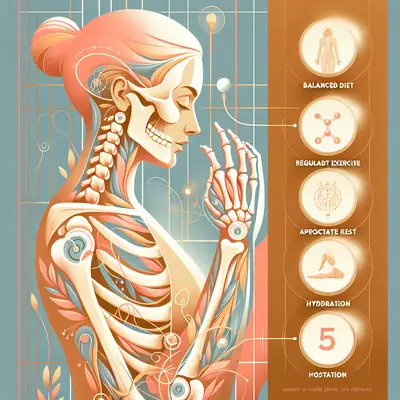
Healthy living is often marketed as intensity: harder workouts, stricter diets, faster results. Yet for those who value longevity, elegance, and ease of movement, the true luxury lies in alignment—of posture, of daily choices, of how we treat the joints that carry us through every interaction, every flight of stairs, every evening walk.
This is not about chasing perfection. It is about curating a lifestyle in which your joints are quietly protected, supported, and refined by the small decisions you make all day long. Below are five exclusive, high-level insights designed for those who view joint health as a long-term investment in quality of life, not just a response to pain.
1. Think in Decades, Not Days: The Long-Horizon Joint Strategy
Most health advice is optimized for the immediate: quick relief, rapid results, urgent fixes. Joints, by contrast, respond to compounding habits over years. The micro-choices of today—your chair height, your walking surfaces, your shoe selection—become the structural realities of your 50s, 60s, and beyond.
Begin to evaluate decisions through a “decade lens.” When you choose high heels for hours, a heavy bag on one shoulder, or a soft couch that collapses your spine, imagine the cumulative load on your knees, hips, and spine over 10 or 20 years. This reframing is not restrictive; it is liberating. It allows you to prioritize joint-literate comfort that still feels elevated: structured seating instead of sagging sofas, beautifully designed supportive footwear instead of trendy but unsupportive styles, and carry solutions that distribute weight symmetrically.
Healthy living for joint longevity is less about heroic interventions and more about quiet consistency. The earlier you adopt this long-horizon strategy, the more grace you preserve in your future movement—even if your joints feel entirely “fine” today.
2. Sculpted Strength: Training Muscles as a Protective Framework
Muscle is not just for aesthetics or performance; it is the most elegant protective framework your joints will ever have. Strong, well-balanced muscles act like a custom support system that reduces stress on cartilage, ligaments, and tendons. For joint-focused healthy living, strength training is not optional—it is foundational.
Prioritize controlled, joint-respectful strength work over explosive, high-impact trends. Think slow, precise squats that target glutes and quadriceps to support the knees; hip hinging exercises (like deadlifts done correctly) to stabilize the spine; and thoughtful upper-body training to support shoulder integrity. Muscles should feel responsive, not overtaxed—strong but supple, like well-crafted architecture that can absorb pressure gracefully.
Equally important is symmetry. Many people unknowingly overload one side of the body: always carrying a bag on the same shoulder, favoring one leg while standing, or turning habitually to one direction. Over time, such patterns can create uneven wear in joints. A sophisticated strength approach includes unilateral exercises—working one side at a time—to identify and correct subtle imbalances. This is where working with a knowledgeable physical therapist or trainer attuned to joint mechanics can be invaluable.
3. Joint-Intelligent Movement Throughout the Day, Not Just in the Gym
One hour at the gym cannot offset 10 hours of slumping at a desk, collapsing into a car seat, or scrolling with your neck craned forward. For joint health, the “in-between” hours matter as much as your dedicated workouts. The true mark of a refined healthy lifestyle is how you inhabit your body in the mundane moments.
Begin to see your environment as an extension of your joint-care philosophy. Adjust your workspace so your hips and knees are at roughly 90 degrees, feet grounded, shoulders relaxed, screen at eye level. Choose chairs with adequate lumbar support—or augment them thoughtfully—rather than defaulting to whatever is available. Even the way you stand in line can be upgraded: distribute weight over both feet, soften the knees, and lengthen through the crown of the head instead of locking joints and sinking into one hip.
Micro-movements throughout the day are powerful: ankle circles under a desk, light hip mobilizations when you stand, gentle spinal rotations when you step away from your screen. These mini-practices keep synovial fluid moving within joints, which is critical for nourishment and comfort. It is a subtle shift from “I work out” to “I move well all day”—and your joints will register the difference.
4. Nutritional Refinement: Feeding Cartilage, Not Just Curbing Cravings
Nutrition for joint health is far more nuanced than simply “eating healthy.” Cartilage, connective tissue, and bone each have distinct needs, and a sophisticated approach acknowledges that what you eat directly shapes the environment in which your joints exist.
First, consider inflammation as an ongoing conversation, not a crisis. Diets rich in colorful vegetables, berries, extra-virgin olive oil, nuts, seeds, and fatty fish (such as salmon or mackerel) are associated with lower systemic inflammation—a quieter, calmer internal setting for joints that are already under mechanical stress. At the same time, chronic high sugar intake, ultra-processed foods, and excessive alcohol can amplify inflammatory pathways that sensitize joints over time.
Second, attend to structural nutrients: adequate protein to support the muscles that safeguard your joints; omega-3 fatty acids to support joint comfort; calcium and vitamin D for bone integrity; and, where appropriate, collagen-rich foods or supplements, which emerging research suggests may support cartilage when combined with regular loading exercises. Hydration is also non-negotiable: well-hydrated tissues glide more smoothly, and even mild dehydration can subtly impact joint comfort and performance.
Healthy living through nutrition becomes deeply refined when you ask not just “Will this satisfy me?” but also “Will this nourish the structures that keep me moving freely years from now?”
5. Precision Recovery: Elevating Rest Into a Joint-Centric Ritual
In many wellness narratives, rest is positioned merely as the absence of activity. For joint longevity, rest deserves the status of a deliberate ritual, designed with as much intention as your workouts or meals.
Sleep is the most powerful—and often most overlooked—joint recovery tool. During high-quality sleep, tissues repair, inflammatory processes regulate, and muscles recover so they can better support joints the following day. Prioritize a sleep environment that aligns the spine: a mattress that is not excessively soft or rigid, a pillow that supports neutral cervical alignment, and a sleeping position that does not torque the hips or shoulders night after night.
Beyond sleep, incorporate deliberate decompression: gentle stretching routines that respect, rather than force, your current range of motion; low-impact circulation practices like walking, cycling, or water-based movement that promote blood flow without overloading your joints; and, when appropriate, strategic use of heat or cold therapy after joint-demanding days.
Think of recovery as luxurious maintenance for a high-performance system. You are not “doing nothing”—you are actively preserving joint integrity so that you can move through the coming decades with understated strength and ease.
Conclusion
Healthy living for joint longevity is not a single habit or hack; it is an ecosystem. It is the way you stand at a kitchen counter, the shoes you choose for a city walk, the quality of your sleep, the protein on your plate, and the care with which you build strength and symmetry.
When you begin to treat your joints as assets to be curated rather than problems to be fixed, the entire tone of your lifestyle shifts. Movement becomes something to protect, not take for granted. The result is a quiet luxury that cannot be bought: the ability to step, bend, reach, and rise with comfort, control, and confidence—year after year.
Sources
- [NIH: Joint Health and Aging](https://www.nia.nih.gov/health/osteoarthritis) - Overview from the National Institute on Aging on osteoarthritis, joint changes with age, and protective strategies
- [Harvard Health: The Importance of Strength Training](https://www.health.harvard.edu/staying-healthy/strength-training-builds-more-than-muscles) - Explains how strength training supports joints, balance, and long-term mobility
- [Mayo Clinic: Anti-Inflammatory Diet and Chronic Disease](https://www.mayoclinic.org/healthy-lifestyle/nutrition-and-healthy-eating/in-depth/anti-inflammatory-diet/art-20045839) - Discusses how dietary patterns influence inflammation and overall joint comfort
- [Arthritis Foundation: Protecting Your Joints](https://www.arthritis.org/health-wellness/healthy-living/physical-activity/other/joint-protection-tips) - Practical guidance on joint-protective movement, body mechanics, and daily habits
- [Cleveland Clinic: Sleep and Physical Recovery](https://health.clevelandclinic.org/why-sleep-is-so-important-to-your-health) - Outlines how sleep supports tissue repair, inflammation regulation, and physical resilience
Key Takeaway
The most important thing to remember from this article is that this information can change how you think about Healthy Living.