There is something undeniably soothing about the internet’s current obsession with impossibly fluffy cats. The viral success of photo threads like “People Are Loving This Online Group That Is Dedicated To Sharing Pictures Of The Fluffiest Cats Ever” is not an accident. In a year defined by digital fatigue and chronic stress, millions are gravitating toward soft, visual comfort—micro‑moments of calm that feel like a warm blanket for the nervous system.
At first glance, these dreamy, cloud‑like cats may seem far removed from the rigor of mobility training or arthritis management. But look more closely, and a quiet health trend emerges: we are increasingly trying to heal at home, to create living spaces—and daily rituals—that feel restorative, gentle, and grounding. For those living with joint pain, that shift can be transformative, if it’s done intentionally rather than passively scrolling.
Below, five refined, joint‑smart insights inspired by this “fluff culture” moment—designed for people who want their homes, habits, and nervous systems to feel as soft as the cats populating their feeds.
1. Comfort Is Not Laziness: How “Soft Spaces” Protect Your Joints
The popularity of fluffy‑cat communities speaks to a collective craving for softness—visually, emotionally, physically. For joints, that softness is not indulgence; it’s a strategy. Chronic joint stress is often fueled by hard surfaces, sharp transitions (sitting to standing, bed to floor), and environments that demand micro‑bracing all day long.
A joint‑intelligent home borrows from the aesthetic of those viral photos: layered, cushioned, and forgiving. Think supportive—but not over‑plush—seating that allows the hips to sit slightly higher than the knees, a firm mattress with a soft top layer, and strategic use of well‑placed floor cushions or low benches to reduce the distance your body has to travel when you move. This is not about turning your living room into a pillow fort; it’s about reducing impact on your knees, hips, and spine every single time you stand, twist, or shift your weight.
The key distinction: softness with structure. A deeply sagging sofa can be as punishing for arthritic joints as a stone bench. Aim for environments that look inviting but are biomechanically considerate—surfaces that feel like a gentle welcome, not a trap your joints must fight their way out of.
2. The “Cat Stretch” Reimagined: Micro‑Mobility As A Daily Luxury
Those viral fluffy cats are endlessly photographed mid‑stretch—spines arched, paws extended, entire bodies lengthening with unselfconscious precision. Cats stretch not because it’s a workout, but because it’s built into how they transition between rest and action. That is precisely where many humans with joint pain go wrong.
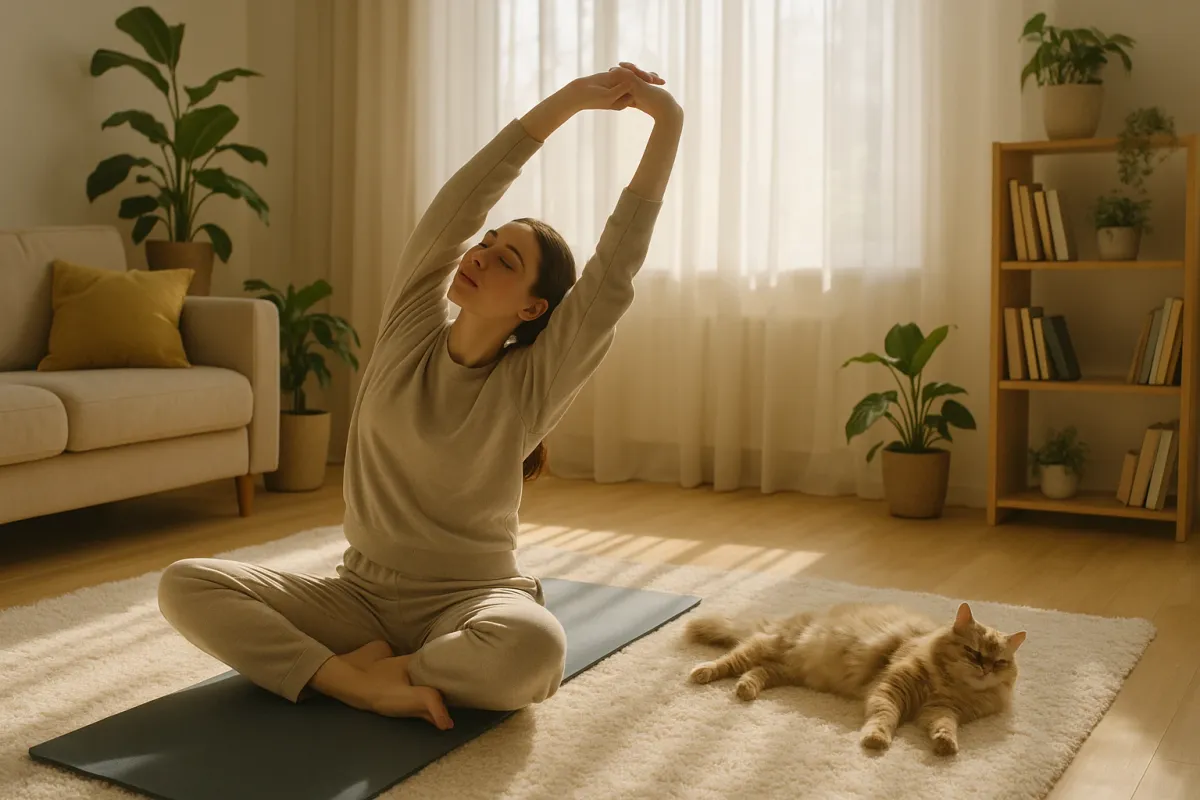
Instead of reserving movement for a 60‑minute workout block, joint‑smart living treats mobility as a luxury ritual woven throughout the day. Before you stand from a chair, rotate your ankles and gently pump your knees. After a long call, stand, reach your arms overhead, and let your spine gently curve like a cat waking from a nap. Before bed, glide your shoulders forward and back, circling slowly to “rinse” the stiffness of the day.
These micro‑stretches do not need athleisure, equipment, or fanfare. They need only your attention. Think of them as the health equivalent of a cashmere throw—subtle, elevated, and exquisitely kind to your joints. Over weeks and months, these small, frequent, cat‑like resets often do more for stiffness and pain than occasional intense exercise sessions bracketed by long, static days.
3. Nervous System First: Why Soothing Feeds Can Actually Ease Pain
There is a reason fluffy‑cat threads are thriving alongside mental‑health comics and wholesome content online: people are intuitively regulating their nervous systems. Emerging research continues to underline what those with chronic pain know viscerally—stress, anxiety, and hyper‑vigilance amplify pain signals. A calmer nervous system is not a luxury for those with arthritis; it is part of the treatment plan.
Curating a “soft” corner of your digital life—accounts centered on calming visuals, gentle humor, serene nature, animals at rest—can offer micro‑doses of down‑regulation throughout the day. This isn’t escapism if it is done intentionally. Short, targeted exposure to soothing imagery can lower heart rate, ease muscle tension, and reduce the unconscious bracing around painful joints.
The refined approach is to be deliberate. Instead of letting algorithms decide, build a small, private list of accounts that leave your body feeling physically softer after you scroll. Then pair those 60–90 seconds of viewing with one tiny physical cue—unclenching the jaw, lowering the shoulders, exhaling slowly, resting the tongue on the floor of the mouth. Over time, your brain begins to associate these visual comforts with a full‑body exhale, turning a viral trend into a personalized pain‑modulation tool.
4. From Lap Cat To “Lap Lab”: Designing Rest Positions That Heal, Not Harm
One of the quiet pleasures of a fluffy cat is the weight of them on your lap: grounding, warm, and gently immobilizing. For people with knee, hip, or lumbar issues, however, long periods in a poorly supported “lap” position can be quietly destructive—whether there’s a cat there or not.
Turn that lap into a “lab” for precision rest. First, address angles: ideally, hips are slightly open (not sharply flexed), knees at or just below hip height, and feet fully supported. A small cushion under the sit bones can tip the pelvis forward, reducing strain on the lower back. A pillow beneath the knees can gently unload both knee and hip joints when reclining. Even your choice of what rests on your lap—a laptop, a book, a purring cat—can be used as a cue to check in with joint alignment.
The sophisticated mindset shift: rest is not the absence of strategy. Rest becomes a crafted position in which circulation is optimized, joints are neutrally aligned, and the nervous system is invited to soften. If a cat chooses that moment to join you, you’ve created an almost clinically perfect excuse not to move abruptly—a subtle but powerful protection against impulsive, joint‑aggravating motions.
5. Shedding, Renewal, And The Art Of Letting Go Of “Old” Movement Stories
Anyone who has lived with a fluffy animal knows: the shedding is relentless. Fur on clothing, furniture, carpets—a constant, tangible reminder that the animal is continuously renewing itself. For those living with joint pain, the more dangerous accumulation is often invisible: outdated stories about what your body “should” be able to do, or how movement “used to” feel.
Joint‑smart living in this cultural moment invites a different kind of shedding. Letting go of the expectation that a walk must look like it did at 25. Releasing the belief that a “real workout” requires impact, intensity, or soreness. Allowing yourself to trade punishing routines for elegant, sustainable ones without branding it as failure.
Use the metaphor actively. When you lint‑roll pet hair from your coat, ask: what belief about my body am I ready to peel away with this? When you vacuum another ghost‑trail of fluff from the rug, consider which rigid standard about strength, mobility, or appearance you’re willing to clear from your mental environment. What remains is not resignation, but refinement—movement and self‑care calibrated precisely to the body you inhabit now, not the one you nostalgically recall.
Conclusion
The internet’s love affair with impossibly fluffy cats might seem like a charming distraction from “serious” health concerns. In reality, it reflects a deeper cultural turn toward softness, comfort, and nervous‑system repair—exactly the conditions under which painful joints can begin to thrive rather than simply endure.
By treating your home like a sanctuary, your feed like a curated calm space, your stretches like quiet rituals, and your rest positions as thoughtfully as your work setup, you transform everyday living into a form of subtle, ongoing therapy. The goal is not to mimic a cat’s life of leisure, but to borrow its wisdom: move often, rest deeply, stretch instinctively, and inhabit your body with unhurried grace. In a world growing ever louder, this quiet luxury of movement may be the most powerful health upgrade of all.
Key Takeaway
The most important thing to remember from this article is that this information can change how you think about Healthy Living.