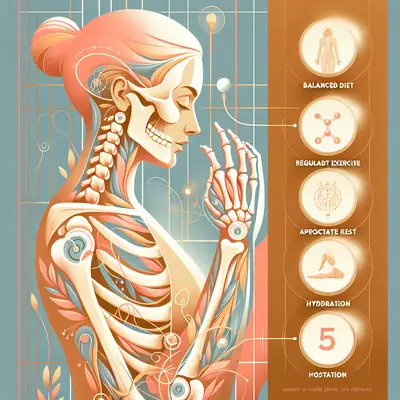
Healthy living, at its most refined, is not a performance—it's a quiet accumulation of wise choices that allow your body to move with conviction and ease. For those who care deeply about joint health, “wellness” is no longer a vague aspiration; it is a design project, with every decision shaping the way you stand, walk, and inhabit your day. This is not about chasing intensity or perfection, but about cultivating the kind of strength, calm, and precision that lets your joints feel unhurried—even when life is not.
Below are five exclusive, often-overlooked insights for people who take joint health seriously, and who value a lifestyle that feels as considered as it looks.
Precision Strength: Training the Small Muscles That Quiet the Joints
Most fitness advice obsesses over large muscle groups, but joints often depend more on the quieter, stabilizing muscles that rarely trend on social media. These small muscles—around the hips, shoulders, ankles, and spine—act like a discreet support staff, refining the way force travels through your body. When they are trained intelligently, your joints no longer have to “absorb” every misstep or abrupt movement; instead, the load is distributed with grace.
Think of slow, highly controlled movements rather than explosive exhibitions: single-leg balance work with a light reach, slow step-downs from a low platform, or side-lying hip work that targets the deep stabilizers rather than just the visible glutes. Gentle is not the same as easy; when done with precision, low-load strength training can feel surprisingly demanding. The goal is to teach your joints that they are never alone—there is always muscular support ready to respond.
Consistency, not spectacle, is what transforms joint comfort. Two or three short sessions per week of focused, stability-oriented strength training can meaningfully alter how your joints experience daily life, from climbing stairs to sitting through long meetings. Over time, this “background strength” becomes a form of quiet luxury: you simply move, without thinking about whether your joints will protest.
The Anti-Inflammatory Palette: Curating a Daily Menu That Protects Cartilage
Healthy living for your joints is, in many ways, a culinary art. Inflammation is not just a lab value or a medical term—it’s a texture you can feel in your body: stiffness upon waking, swelling after activity, or a vague sense of heaviness in your limbs. While no single ingredient is a cure, a well-curated daily menu can tilt your system toward calm rather than irritation.
Think in terms of patterns, not superfoods. A Mediterranean-leaning approach—rich in extra-virgin olive oil, oily fish (like salmon, sardines, and mackerel), nuts, seeds, leafy greens, and deeply colored fruits and vegetables—has been consistently linked with reduced markers of inflammation and improved outcomes in people with joint conditions such as rheumatoid arthritis. These foods supply omega-3 fatty acids, polyphenols, and antioxidants that help moderate the body’s inflammatory responses.
Equally important is what you de-emphasize: ultra-processed foods with long ingredient lists, sugary beverages, and frequent refined carbohydrates, which can nudge inflammatory pathways upward over time. Instead of strict prohibition, adopt a standard: reserve indulgences for when they are genuinely special, and let your everyday meals feel calm, simple, and clean. Elegance in eating is not about restriction, but about clarity—knowing which foods leave your joints feeling quietly supported, rather than subtly inflamed.
Rhythmic Recovery: Designing Daily Micro-Rest for Joint Longevity
For joint health, rest is less about occasional days off and more about the rhythm of your entire day. Joints dislike extremes—hours of stillness followed by sudden intensity, or relentless impact with no chance to recalibrate. The most joint-friendly lives are not necessarily the least active ones; they are the most rhythmically varied.
Consider your day as a series of short “movement and recovery” intervals. If you sit for work, stand and walk briefly every 45–60 minutes, even if only for 2–3 minutes. If your job keeps you on your feet, deliberately introduce brief offloading moments: leaning gently on a counter, using a footrest to alternate leg support, or taking a seated pause where joints are unloaded but not locked. These micro-rests allow cartilage to reabsorb nutrients from synovial fluid and give ligaments and muscles a gentle reset.
Even exercise can be structured with joint-aware intervals: pairing low-impact strength work with short mobility sequences, or alternating walking with slower, more mindful strides and deep breathing. Over time, your joints begin to experience the day as a wave, not a cliff—no abrupt, punishing spikes, just an elegant alternation of demand and relief. This is not idleness; it is strategic restoration.
Sleep as Structural Care: How Nighttime Shapes Your Daytime Joints
Sleep is often discussed as a mental health or productivity tool, yet it quietly governs the inner life of your joints. During deep sleep, your body runs a sophisticated repair program: inflammatory signals are recalibrated, tissues recover from microstress, and pain thresholds often reset. When sleep is insufficient or fragmented, even minor joint irritations can feel amplified, and low-grade inflammation can become more persistent.
For joint-conscious living, aim less for a rigid “perfect” bedtime and more for a reliable, protective routine. A cool, dark, quiet environment; screens put away 30–60 minutes before bed; and a consistent sleep window—even on weekends—form the backbone. If joint discomfort tends to wake you, consider the ergonomics of your sleep: a pillow that keeps your neck in neutral alignment, a mattress that supports without sagging, and side-sleeping with a pillow between the knees to ease hip and lower back loading.
Gentle pre-sleep rituals—such as a warm shower, light stretching focused on hips and upper back, or a few minutes of diaphragmatic breathing—signal to your nervous system that it is safe to downshift. Over time, quality sleep becomes one of the most sophisticated forms of joint care: invisible to everyone else, but deeply felt when you rise and realize your body feels lighter, not older, than the day before.
Nervous System Elegance: Calming the Body to Calm the Joints
Pain is not just a mechanical event; it is a conversation between your tissues and your nervous system. When stress becomes chronic, your body’s “volume knob” for pain often turns upward—ordinary joint signals are interpreted as more threatening, leading to heightened discomfort even without major structural change. The modern luxury, then, is not simply stronger joints, but a calmer nervous system interpreting those joints.
In practice, this means treating stress management not as an optional extra, but as part of your joint health strategy. Practices such as slow nasal breathing (for example, inhaling for four counts, exhaling for six), short mindfulness sessions, or simply a quiet daily walk without headphones can gradually downshift sympathetic (fight-or-flight) arousal. For some, gentle mind-body disciplines—like tai chi, yoga, or Pilates—offer both movement and regulation, training the body and the nervous system simultaneously.
The elegance lies in subtlety: you do not need hour-long rituals. Five to ten minutes of intentional calm, practiced daily, can shift how your brain processes joint sensations. Over months, this can translate into less pain, more confidence in movement, and a life where your joints are no longer the loudest voice in the room, but one of many balanced signals.
Conclusion
Healthy living for joint-conscious individuals is not about grand gestures. It is about the quiet accumulation of good decisions—training the small stabilizing muscles that keep joints composed, curating an anti-inflammatory plate, building rhythmic micro-rest into busy days, protecting sleep as structural care, and cultivating a calmer nervous system that listens to the body without overreacting.
This is the quiet luxury of strength: the ability to move without negotiation, to plan your days around what you wish to do rather than what your joints will allow. When lifestyle is designed with this level of precision, joint health ceases to be a limitation and becomes an understated, powerful asset.
Sources
- [Harvard Health Publishing – Foods that fight inflammation](https://www.health.harvard.edu/staying-healthy/foods-that-fight-inflammation) - Overview of dietary patterns and specific foods associated with lower inflammation
- [Arthritis Foundation – Exercise and Arthritis](https://www.arthritis.org/health-wellness/healthy-living/physical-activity) - Guidance on strength, flexibility, and low-impact activity for joint health
- [National Institutes of Health – Sleep and Health](https://www.nhlbi.nih.gov/health/sleep-deprivation) - Explains how sleep affects overall health, inflammation, and pain perception
- [Mayo Clinic – Chronic stress puts your health at risk](https://www.mayoclinic.org/healthy-lifestyle/stress-management/in-depth/stress/art-20046037) - Describes the impact of ongoing stress on the body and pain experience
- [Centers for Disease Control and Prevention – Physical Activity and Arthritis](https://www.cdc.gov/arthritis/basics/physical-activity-overview.html) - Evidence-based recommendations on safe activity patterns for people with joint concerns
Key Takeaway
The most important thing to remember from this article is that this information can change how you think about Healthy Living.