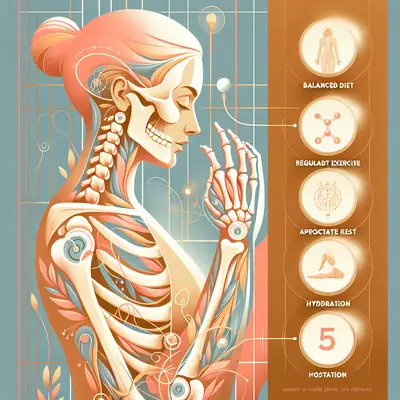
The most elegant thing about a person is often not what they wear, but how they move. There is a quiet luxury in standing up without hesitation, walking without calculation, and bending without a second thought. For those who prioritize joint health, healthy living is not a trend—it is a long game of precision, restraint, and intelligently chosen rituals. This is wellness, edited: fewer gimmicks, more intention, and a deep respect for the architecture of the body that carries you through every room you enter.
Below, you’ll find a refined perspective on healthy living through the lens of joint longevity—anchored by five exclusive insights that go beyond standard advice and speak directly to those who expect more from their health strategy.
Reframing Healthy Living Through the Lens of Joint Longevity
Healthy living is often discussed in broad, generic strokes: eat well, move more, sleep enough. For joints, however, the details matter. The way you move, the order in which you strengthen supporting muscles, the surfaces you stand on, and even how you rest between demands can either preserve your cartilage or quietly erode it over time.
Joints age not only with years, but with patterns—repetitive strain, chronic low-grade inflammation, and poorly distributed load. The goal is not simply “staying active” but cultivating an environment in which your joints are consistently well-informed: your muscles respond quickly, your nervous system is calm yet alert, your alignment is intelligent rather than rigid.
This is a more curated approach to wellness. It isn’t about perfection; it is about refinement—subtle upgrades that make every step, reach, and twist feel more assured, more supported, and ultimately, more sustainable.
Exclusive Insight 1: Precision Strength Over Generic Fitness
Most fitness advice focuses on burning calories or building visible muscle. Joints, however, thrive on precision strength—targeted, intelligently dosed work that reinforces the specific structures responsible for alignment and load distribution.
Instead of asking, “Did I work out today?” consider, “Did I train the muscles that protect my joints?”
Key shifts to embody precision strength:
- Train stabilizers first, prime movers second. Muscles like the gluteus medius, deep hip rotators, lower traps, and deep neck flexors quietly govern joint positioning. When they are weak, joints absorb forces they were never meant to handle.
- Favor multi-plane control over single-plane repetition. Real life rarely moves in a straight line. Lunges with slight rotation, step-downs with lateral stability, and controlled diagonal reaches train your joints for the textured reality of everyday motion.
- Use tempo as a luxury tool. Slow, controlled eccentric movement (the lowering phase) conditions tendons and cartilage exposure to load, giving joints time to adapt rather than react.
- Resist the urge for maximalism. Heavy lifts can be compatible with joint health when expertly programmed, but for many, submaximal strength with superb technique yields greater durability and fewer setbacks.
In this paradigm, a “good workout” is one you don’t feel as strain the next morning, but as a quiet sense of capability and joint confidence.
Exclusive Insight 2: Micro-Alignment Throughout the Day Is More Potent Than One Perfect Workout
A single, flawless workout cannot compensate for eight hours of poor posture or static sitting. For joints, what you do most of the day quietly outweighs what you do once a day.
This is where micro-alignment becomes a refined daily discipline:
- Recalibrate your standing posture every time you wait. In line, on a call, at the kitchen counter: stack ribs over pelvis, soften the knees, feel equal weight through the tripod of each foot (heel, base of big toe, base of little toe). Think tall, but not tense.
- Interrupt static positions with 30–60 second “joint resets.” Gentle ankle circles under the desk, a few deep squats holding onto a countertop, scapular retractions leaning against a wall—these small movements nourish cartilage with fresh synovial fluid and wake up coordination.
- Audit your environment, not just your body. A slightly too-low laptop, a sofa that collapses your hips and spine, or a chair without lumbar support can accumulate strain in your neck, hips, and knees. One elegantly chosen chair or adjustable workstation can offer more relief than any single stretch.
- Move often, not just hard. Changing positions—sitting, standing, walking, leaning, gently stretching—creates variety in how your joints bear load. Variety is a powerful anti-aging strategy for cartilage.
Healthy living for joint longevity is as much about these frequent, subtle adjustments as it is about formal exercise. You are not correcting your posture once; you are curating it all day.
Exclusive Insight 3: Inflammation Management as a Daily Aesthetic, Not a Crisis Response
Most people only discuss inflammation when there is a flare, a swelling, or a diagnosis. But for joint health, the truly transformative work happens in the quiet: the meals you choose, the sleep you protect, the stress you refuse to normalize.
Think of your anti-inflammatory lifestyle as a daily aesthetic—understated, consistent, quietly powerful:
- Elevate the quality of your fats. Prioritize omega-3–rich sources (fatty fish like salmon or sardines, walnuts, flaxseed, chia) and minimize industrial seed oils frequently used in processed foods. This helps modulate systemic inflammation that can influence joint pain and stiffness.
- Cultivate an elegantly sparse ingredient list. Fewer ultra-processed foods, fewer mysterious additives, fewer sugar spikes. Whole, well-prepared, minimally processed foods support weight management, metabolic stability, and less inflammatory burden on joints.
- Treat sleep as a performance tool, not a luxury. During deep stages of sleep, the body orchestrates tissue repair and regulates inflammatory signaling. Poor sleep has been associated with increased pain sensitivity and worsened arthritis symptoms.
- Refine your approach to stress, not just your schedule. Chronic stress drives inflammatory pathways that can amplify joint discomfort. Embedding short, deliberate nervous system resets—slow breathing, brief body scans, quiet walks without devices—can lower this baseline fire.
Anti-inflammatory living does not need to be performative. It is simply steady, consistent support so that joints exist in a more forgiving internal environment day after day.
Exclusive Insight 4: Joint-Friendly Cardio Is an Artful Balance, Not a Compromise
Many people with joint concerns assume they must choose between cardiovascular fitness and comfort. In reality, the right balance of load, impact, and frequency can make joint-friendly cardio a powerful ally rather than an adversary.
Reframing cardio for joint longevity:
- Think “rhythmic nourishment” over punishment. Low-to-moderate–impact activities—such as walking on varied terrain, cycling, elliptical work, or swimming—create rhythm in joints that supports lubrication, cartilage nutrition, and muscular endurance.
- Use intensity with precision, not bravado. Shorter intervals of slightly higher effort, interspersed with generous recovery, are often better tolerated by joints than long, punishing efforts. The goal is to feel worked, not worn down.
- Prioritize surfaces as carefully as you do footwear. Grass, tracks, and quality treadmills are kinder to knees and hips than unyielding concrete. Even indoor flooring matters; a thin mat between you and a hard surface can subtly protect your joints over time.
- Respect joint feedback as valuable data, not a nuisance. A temporary increase in joint awareness after a new cardio routine can be normal. Persistent, sharp, or escalating pain is a message to refine intensity, volume, or form—not something to push through to prove resilience.
Healthy living at a high standard means fitness that feels sustainable. Cardio should leave you feeling clearer, warmer, and more open in your joints—not apprehensive of your next step.
Exclusive Insight 5: Recovery Is the Quiet Architect of Joint Resilience
In many wellness narratives, recovery is framed as optional, indulgent, or secondary. For joints, recovery is the architect—the element that decides whether your current efforts become lasting strength or deferred damage.
Elevating recovery from afterthought to strategy:
- Schedule recovery with the same respect as training. Rest days, lighter movement days, and active recovery sessions (gentle yoga, walking, mobility work) are not signs of weakness; they are the infrastructure that allows progress without erosion.
- View mobility work as joint self-care, not a warm-up checkbox. Controlled articular rotations (CARs), targeted stretching, and mindful range-of-motion work signal to your joints that they are safe to access and maintain full movement—critical in preventing stiffness and compensatory patterns.
- Incorporate heat and cold with intention, not habit. Heat can help relax surrounding muscles and reduce stiffness before movement, while cold may be useful after acute flare-ups or higher-load days. Thoughtful timing amplifies benefits.
- Respect the subtle early signs of overload. Slight morning stiffness that resolves with gentle movement, mild joint “awareness,” or a sense of fragility after a new routine are cues to adjust. Ignoring these signs in favor of “pushing through” is where many long-term joint issues begin.
Sustainable joint health is not built in heroic sessions, but in how consistently you allow your body to recover, remodel, and return stronger.
Conclusion
Elegance in movement is not an accident. It is the result of hundreds of quiet decisions—how you stand, what you eat, how you train, how you rest, and whether you listen when your joints whisper before they ever need to shout.
Healthy living, when viewed through the refined lens of joint longevity, becomes less about chasing extremes and more about curating your everyday: precision strength, micro-alignment, anti-inflammatory habits, joint-conscious cardio, and reverent recovery. For those who expect a high standard of comfort and capability from their bodies, this is the true definition of luxury—strength that does not announce itself, but simply allows you to move through your life with ease, confidence, and enduring grace.
Sources
- Arthritis Foundation – Exercise and Arthritis – Overview of how different forms of physical activity support joint function and reduce arthritis symptoms
- Harvard Health Publishing – The right way to strengthen your muscles – Evidence-based guidance on strength training principles, including joint-protective approaches
- National Institute of Arthritis and Musculoskeletal and Skin Diseases (NIH) – In-depth information on osteoarthritis, joint changes, and the role of lifestyle in symptom management
- Mayo Clinic – Anti-inflammatory diet: Road to good health – Explains how dietary patterns influence inflammation and long-term health, including joint health
- Cleveland Clinic – Joint-Friendly Fitness – Practical guidance on designing exercise routines that protect and support vulnerable joints
Key Takeaway
The most important thing to remember from this article is that this information can change how you think about Healthy Living.