Sometimes the most sophisticated lessons in movement are hiding in the most unexpected places—like a split‑second before a cat launches an attack.
A recent viral gallery titled “45 Pics Of Cats Moments Before They’re About To Attack Their Owners” has been making the rounds online, celebrated for capturing that delicious millisecond of tension: pupils wide, shoulders coiled, weight perfectly balanced. Beyond the comedy, though, there’s something remarkably instructive here for anyone serious about joint health and mobility.
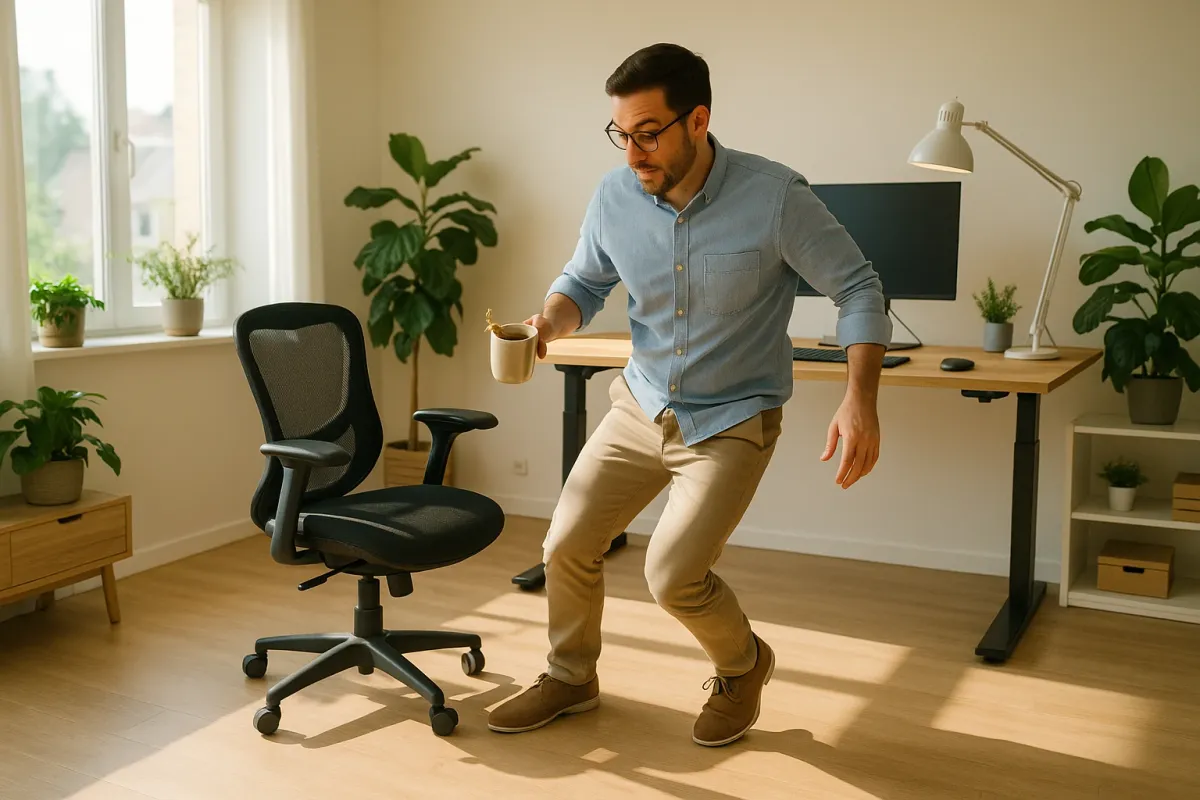
Those photos freeze what most of us have lost: instinctive micro‑adjustments, subtle weight shifts, and fluid readiness. Cats do not “work out” their joints; they inhabit them. In an era of immaculate home offices and long, elegant stillness at a screen, that feline readiness might be exactly the model your hips, knees, and spine have been missing.
Below, explore five refined, joint‑savvy insights—each paired with practical mobility rituals—that translate this viral fascination with feline reflexes into a luxurious, sustainable way of moving through your own day.
1. Readiness, Not Rigor: Training Your “Reflex Posture” Instead Of Your Sit
Those viral cat photos do not show relaxation; they show poised readiness. The spine is long, the shoulders are away from the ears, the weight is slightly forward on the balls of the feet or paws. It’s not a “pose” to hold endlessly—it’s a position the body can leave in any direction at a moment’s notice.
Most of us, by contrast, train the opposite: a fixed sitting posture that we hold for hours. Over time, this deconditions the small stabilizing muscles around the hips, knees, ankles, and spine. The result is stiffness, clumsier balance, and a greater reliance on big muscle groups that pull on already stressed joints.
Try a “readiness reset” every hour: stand with feet hip‑width apart, knees softly unlocked, weight slightly more on the mid‑foot than the heels. Gently lengthen the back of your neck as if the crown of your head were drawn upward. Allow your arms to hang heavy, then lightly swing them forward and back. This takes less than 60 seconds, yet re‑awakens dormant stabilizers and tells your joints: we are meant to move, not simply endure. Over weeks, this micro‑habit becomes a surprisingly elegant antidote to the desk‑bound slouch.
2. Micro‑Pouncing: Luxurious, Low‑Impact Power For Ankles, Knees, And Hips
In the viral cat images, the “attack” is never actually chaotic. It is a beautifully controlled transfer of energy—the body shifts, loads, and releases through the feet and hips. Humans often lose this pattern; we go from static to explosive (a sudden sprint, a mis‑step on the stairs) with stiff ankles and untrained knees, leaving cartilage and ligaments to absorb more force than they should.
You don’t need to jump like a cat to reclaim this pattern. A micro‑version is enough and far kinder to your joints:
- Stand near a wall or countertop for light support.
- Place feet hip‑width apart, knees soft.
- Gently shift weight forward onto the balls of your feet without lifting your heels, then back toward the heels without locking the knees.
- Add a subtle “pre‑pounce”: bend the knees a few degrees, hinge slightly at the hips as if considering a jump, then smoothly return to standing tall—no actual jump.
Ten slow, deliberate repetitions deliver a surprisingly rich training effect: ankles learn to absorb load, knees learn to align over toes, and hips relearn their role as powerful, protective drivers of movement. Think of it as low‑impact strength woven into your day rather than reserved for the gym.
3. The Art Of The Controlled Swipe: Shoulder Mobility Without The Strain
Those pre‑attack frame‑by‑frame shots reveal another detail: the cat’s forelimbs are lifted with an almost theatrical control. The shoulder joint—the most mobile joint in the body—is open, supported by a strong back, not hanging from a weak neck.
Many modern shoulder problems stem from the opposite pattern: we reach overhead or across the body with tight chests, under‑active upper backs, and a neck doing far too much of the work. Over time, the delicate structures of the shoulder—bursa, rotator cuff tendons, labrum—bear loads they were never meant to carry solo.
A refined, joint‑respectful “controlled swipe” drill can rebalance this elegantly:
- Sit or stand tall, collarbones broad, ribs stacked over the pelvis.
- Extend one arm forward at shoulder height, palm down, as though you’re about to gently “bat” something.
- Without shrugging the shoulder, slowly sweep the arm out to the side, then slightly behind you, maintaining a soft bend in the elbow.
- Focus on feeling the shoulder blade glide smoothly along your ribcage.
- Return with the same control, as if moving your arm through warm water rather than air.
Perform 6–8 slow sweeps per side. This simple motion nourishes the shoulder capsule, trains the shoulder blade to support the arm through a full arc, and subtly strengthens the rotator cuff without the harsh pulling or heavy loading that can irritate sensitive joints. It’s shoulder skincare, not shoulder bootcamp.
4. Tension With A Release: Why Your Joints Crave Cycles, Not Constant Bracing
Look closely at the photographs of cats mid‑lunge: muscles engage, but once the pounce is complete, there is an immediate return to ease. Short bursts of tension, followed by genuine softness. Humans often get stuck halfway—muscles remain quietly braced long after the movement ends, especially through the hips, jaw, and lower back. The nervous system never fully clears the “threat,” so joints marinate in subtle, chronic compression.
A mobility practice that honors joint longevity must honor this cycle: tension with an explicit, deliberate release. One sophisticated way to infuse this into your daily routine is through “contrast mobility”:
- Choose a joint complex—your hips, for instance.
- Perform a small, controlled strength action: a slow bodyweight squat to a chair, pausing briefly just before you sit, then standing back up.
- Immediately follow with a gentle mobility flow for the same area: lying on your back, draw one knee toward your chest, then slowly make small circles with the hip, changing directions.
This pairing—strength, then softness—sends a powerful signal to your nervous system that it is safe to let go after effort. Over time, this decreases resting muscle tone around the joint and improves the way synovial fluid nourishes cartilage. The net feeling is unmistakable: lighter, yet more stable—a rare balance most people assume only youth can buy.
5. Precision, Not Drama: Reducing Wear With Thoughtfully Small Ranges
Perhaps the most underappreciated lesson from those pre‑attack photos is the absence of wasted drama. The movements are economical. Every millimeter has purpose. Joints, especially irritated ones, respond exceptionally well to this kind of precision—small, clean arcs rather than aggressive stretches or exaggerated contortions.
A premium approach to mobility leans on “submaximal ranges”: staying just shy of the end range, where joints are most vulnerable, and polishing the middle. Over time, this builds control and confidence, allowing the end ranges to open naturally without forcing them.
Try this with your spine, a central player in overall joint comfort:
- Sit tall on the edge of a chair, feet grounded.
- Gently rotate your torso to the right—only about 30–40% of what you think your full twist would be. Stop before any pulling.
- Pause and breathe into your ribs for two slow breaths, feeling the gentle rotation.
- Return to center and repeat left.
- After a few rounds, notice if your available motion has quietly increased without any sense of strain.
This kind of understated mobility work respects the cumulative story of your joints—prior injuries, mild arthritis, subtle asymmetries—and chooses elegance over aggression. It is movement that anticipates a future, not just a workout.
Conclusion
The internet may be laughing at cats caught mid‑attack, but your joints have something more serious to gain from those images: a reminder that true mobility is quiet, subtle, and always ready—never rigidly posed, never chronically braced.
By weaving micro‑readiness into your posture, practicing low‑impact “pounce” patterns, refining controlled shoulder sweeps, cycling tension with intentional release, and honoring smaller, cleaner ranges of motion, you begin to live more like the creatures whose joints almost never seem to betray them.
This is the understated luxury of modern joint care: not expensive gadgets or extreme regimes, but a daily choreography of intelligent, minimal movements—barely visible from the outside, profoundly protective from within.
Key Takeaway
The most important thing to remember from this article is that this information can change how you think about Mobility Exercises.