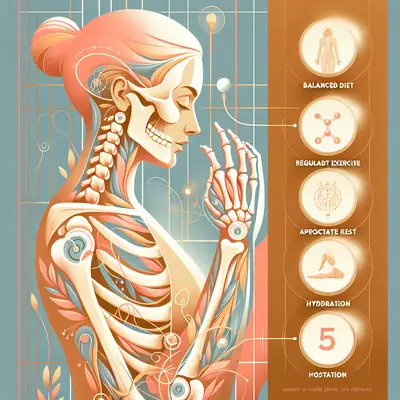
A life built around healthy joints does not require spectacle; it requires discernment. The most powerful shifts are rarely dramatic—often they are small, precise refinements that compound over years into ease, grace, and strength. For those who take their bodies seriously, joint health becomes less about “fixing pain” and more about curating a daily environment in which your joints are consistently respected.
Below are five exclusive, highly specific insights designed for people who demand more from their bodies—and from their health advice. Each one is less a “tip” and more a ritual: a deliberate, repeatable choice that quietly preserves your capacity to move beautifully for decades.
1. The “First Ten Minutes” Principle: How You Start Moving Sets the Tone
Most people think about joint care in terms of workouts or injuries. In reality, your joints are profoundly influenced by the first ten minutes of your waking movement—the way you transition from rest to load.
When you stand up in the morning, your synovial fluid is more viscous and your connective tissues are subtly less responsive, particularly if you sleep cool. Going immediately from bed to stairs, high-intensity exercise, or heavy lifting asks your joints to perform before they are adequately “warmed” from the inside out. Over years, those micro-demands accumulate.
A joint-conscious “first ten minutes” might include slow ankle circles before stepping out of bed, gentle knee extensions while seated, a controlled spine roll-down and roll-up, and a few deliberate hip hinges without weight. The goal is not stretching; it is lubrication. You are asking your joints to wake up, circulate synovial fluid, and reintroduce load in careful increments.
This is not a workout. It is closer to turning on the lights dimly before opening the curtains to full sun. People who treat the first ten minutes as a ritual—and not an afterthought—often report fewer “mystery aches” and a greater feeling of readiness throughout the day.
2. Precision Loading: Teaching Joints the Difference Between Stress and Strain
Strong joints are not the result of avoiding stress; they are the result of teaching your body how to handle it with precision. The distinction between stress and strain is subtle but crucial:
- Stress is deliberate, progressive, and recoverable.
- Strain is chaotic, unmeasured, and leaves lingering irritation.
A joint-focused approach to loading favors controlled mechanical stress in well-defined ranges of motion. That might look like slow, tempo-based squats where you can feel exactly where your knees track, or single-leg Romanian deadlifts with moderate weight to build hip and ankle intelligence. Load becomes a language you use to educate your tissues, not a test you hope to survive.
One elegant rule: for joint-specific exercises, prioritize clarity over intensity. If you cannot feel which joint is bearing the load and how it is aligning, the weight or complexity is too high. This is where machines, cables, resistance bands, and guided bodyweight work can be better early tools than maximal free-weight training.
Over time, this precision loading encourages stronger cartilage support, better neuromuscular control, and more confident movement. The goal is a joint that knows, from repeated constructive stress, how to behave under pressure—on the stairs, on the court, or on an unexpected uneven surface.
3. Micro-Friction Management: Reducing the Invisible Wear of Daily Life
Most conversations about joint friction focus on cartilage. Yet, in daily life, the more modifiable sources of “wear” involve habits that create needless micro-friction—tiny, repetitive insults that rarely feel catastrophic in the moment but collectively degrade comfort and resilience.
Consider a few subtle but high-impact examples:
- Footwear drift: Shoes with compressed midsoles, poor arch support, or worn heels alter the way your knees and hips track with every step. If you walk several thousand steps a day, that misalignment becomes a chronic, low-grade sandpaper effect on your joints.
- Desk torque: Sitting slightly twisted toward one screen or always crossing the same leg creates a long-term rotation bias. Over months and years, certain facets of the spine and hip capsule endure more torque than they were designed to handle at rest.
- Uneven load rituals: Always carrying your bag on the same shoulder or your toddler on the same hip builds asymmetric tension patterns that joints eventually have to negotiate with every movement.
Micro-friction management is a refined form of environmental editing. It means rotating bags between shoulders, replacing shoes before they visually “collapse,” aligning screens directly in front of you, and varying your seated postures throughout the day. These are not dramatic interventions, but they systematically strip away unnecessary friction, preserving your joints’ “wear budget” for the things you truly care to do.
4. Nutritional Subtlety: Building Cartilage and Calm, Not Just “Anti-Inflammation”
For a joint-focused lifestyle, nutrition extends beyond the generic guidance to “eat anti-inflammatory foods.” The more nuanced question is: What quiet, daily inputs support both joint structure and inflammatory restraint, without extremes or fads?
Consider three underappreciated dimensions:
Cartilage-supportive building blocks
Cartilage is not easily “rebuilt,” but it does respond to consistent availability of raw materials and a low-inflammatory environment. Collagen-rich foods (such as bone broth or gelatin-containing dishes) and adequate vitamin C support collagen formation, while sufficient protein intake helps preserve the muscles that protect your joints.
Inflammation modulation rather than suppression
Healthy joints exist in an environment of well-regulated inflammation—not zero inflammation. Mediterranean-style eating patterns, with olive oil, fatty fish (omega‑3s), nuts, and a diversity of plant fibers, have been shown to support joint comfort and systemic health without resorting to extreme exclusions or rigid rules.
Glycemic elegance
Wild swings in blood sugar can amplify systemic inflammatory signals. A pattern of slower-digesting carbohydrates, pairing carbs with protein and fat, and prioritizing fiber helps create a smoother metabolic backdrop in which your joints operate. This is less about dieting and more about creating a calm internal chemistry.
Viewed this way, nutrition for joint health is not a “hack.” It is a quiet, daily choice to keep your structural materials plentiful, your inflammatory response measured, and your metabolic terrain steady.
5. Recovery as Curation: Strategic Stillness and Intelligent Motion
Recovery is often misinterpreted as either complete rest or passive waiting between workouts. For joint-conscious individuals, recovery is an active curation of what kind of stillness and what kind of motion the body experiences.
High-quality joint recovery has three pillars:
- Deliberate decompression
This may involve supported positions where the spine, hips, and knees are unloaded—such as lying with calves elevated on a chair, or using a gentle traction pillow. The objective is to periodically give weight-bearing joints a chance to “breathe” without demand, especially after days of prolonged standing or impact.
- Circulatory movement without challenge
Light walking, controlled range-of-motion drills, or easy cycling encourage nutrient delivery to cartilage and clearance of inflammatory byproducts without adding mechanical stress. The intention is circulation, not exertion.
- Boundaries around overuse
An often-ignored aspect of recovery: consciously saying no. Declining an additional high-impact class when your knees feel subtly “dull,” or swapping a run for a swim when your ankles feel heavy, is not a sign of fragility; it is a sign of sophisticated body governance.
When recovery is treated as a curated experience rather than an afterthought, joints are given the one thing they rarely receive in our over-scheduled world: time and conditions optimized for repair rather than survival.
Conclusion
A life centered on joint health is less about restriction and more about refinement. It is the art of choosing high-quality load over chaotic strain, thoughtful nutrition over reactive dieting, and curated recovery over aimless rest. The rituals described here—the first ten minutes of your day, precision loading, micro-friction management, nutritional subtlety, and intelligent recovery—do not announce themselves loudly. They work quietly, in the background, upgrading the texture of your movement year after year.
For those who value both performance and longevity, joints are not merely hinges; they are the architecture of every experience that requires movement. To live well is to care for that architecture with intention, patience, and a certain quiet elegance.
Sources
- Centers for Disease Control and Prevention – Arthritis and Physical Activity - Overview of how appropriate physical activity supports joint function and reduces arthritis-related symptoms
- Harvard Health Publishing – Foods that fight inflammation - Evidence-based discussion of dietary patterns and nutrients that influence inflammation
- National Institutes of Health – Collagen Supplementation and Joint Health - Research review on collagen peptides and their potential effects on joint comfort and cartilage
- Arthritis Foundation – Cartilage: What It Is and What It Does - Explanation of cartilage structure, function, and factors that influence its health
- Mayo Clinic – Exercise: 7 benefits of regular physical activity - Describes systemic benefits of exercise, including musculoskeletal and joint-related advantages
Key Takeaway
The most important thing to remember from this article is that this information can change how you think about Healthy Living.