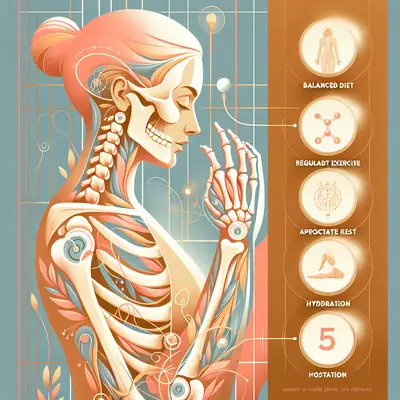
Health, at its most refined, is not a performance but a practice—subtle choices layered day after day. For those attentive to joint health, this practice becomes its own discipline: a deliberate way of moving, eating, and resting that protects the intricate architecture of cartilage, ligaments, and bone. This is not about extremes or athletic bravado; it is about preserving the quiet luxury of pain‑free motion for as long as possible.
What follows is an elevated, science-informed approach to daily living, built around five exclusive insights that matter deeply when joint longevity is the priority. Each one is small on its own; together, they create a powerful, protective environment for your joints.
Rethinking Impact: The Precision of “Micro-Load” Movement
We often imagine joint-friendly living as a binary: either we avoid impact altogether or we endure punishing workouts. The reality is more nuanced. Joints respond best to measured mechanical load—what could be called “micro-load movement”: frequent, modest, well-aligned stress that signals cartilage and bone to remain robust without tipping into inflammation.
Research on osteoarthritis and activity patterns suggests that completely avoiding impact can actually weaken surrounding musculature and bone density, while excessive or poorly aligned impact accelerates wear. The art lies in the middle: walking on varied surfaces, controlled stair climbing, light tempo changes on an indoor bike, or short bouts of bodyweight strength throughout the day.
Instead of a single intense workout framed by hours of sitting, imagine a day punctuated by refined, intentional micro-movements:
- A precise 3–5 minute movement break every hour: calf raises, gentle lunges, wall sits.
- Walking meetings with a focus on posture—ribs stacked over hips, head aligned over shoulders.
- Small “range checks” after prolonged sitting: a few slow hip circles, ankle rolls, or seated knee extensions.
The goal is to nourish the joint with movement, never to exhaust it. Think of your joints as preferring chamber music to stadium rock: layered, rhythmic, controlled rather than chaotic and overwhelming.
Strength as Joint Armor: Targeting the Often-Neglected Stabilizers
Traditional fitness advice celebrates large muscle groups—quads, glutes, biceps. For joint health, the silent heroes are often the deeper stabilizers: the rotator cuff around the shoulder, the small gluteal muscles around the hip, the intrinsic muscles of the feet and ankles.
Weakness in these quiet stabilizers shifts force into the joint itself, especially at the knees, hips, shoulders, and spine. Over time, this can translate into pain, swelling, and accelerated cartilage breakdown. Clinical guidelines for osteoarthritis and chronic joint conditions increasingly emphasize strength training as core therapy, not an optional add-on.
A premium joint-conscious strength practice is not about lifting the heaviest weight in the room. It is about:
- Working in controlled tempo (slow, precise repetitions) rather than rushing.
- Prioritizing single-leg and unilateral work (split squats, single-leg deadlifts, single-arm rows) to reveal and correct side-to-side asymmetries.
- Training the “junction zones”: hips for knee protection, core for spinal protection, shoulders and mid-back for neck and upper-spine ease.
- Using resistance bands, cables, and light to moderate weights with impeccable form rather than sporadic bouts of maximal lifting.
Strength should feel like structural refinement, not punishment—a quiet layering of resilience around each joint.
Inflammation by Design: Curating a Joint-First Plate
A joint-conscious diet is not about restriction for its own sake; it is about designing an internal environment that is less hospitable to chronic inflammation. Low-grade systemic inflammation is closely linked with joint degradation, especially in osteoarthritis and inflammatory arthritides.
Three elegant nutritional principles stand out for joint health:
1. Color as a daily requirement, not an aesthetic choice.
Deeply pigmented fruits and vegetables—berries, dark leafy greens, red cabbage, beets, pomegranate—are rich in polyphenols and antioxidants that may help modulate inflammatory pathways. Each meal becomes an opportunity to “color-load” your joints.
2. Fat quality over fat quantity.
Omega-3 fatty acids from fatty fish (salmon, sardines, mackerel), walnuts, chia seeds, and flax have been linked to reduced inflammatory markers and benefits for rheumatoid arthritis symptoms. At the same time, a lighter hand with ultra-processed foods, deep-fried items, and heavily processed seed oils can gently tilt your system away from chronic inflammatory stress.
3. Strategic protein with connective tissue in mind.
Adequate protein supports muscle maintenance (essential for joint protection), while collagen-rich foods and gelatin-based broths may provide building blocks for cartilage and connective tissue. The evidence is still emerging, but some studies suggest collagen supplementation can modestly support joint comfort when combined with exercise.
Think of your plate not as a calorie ledger but as a curated, joint-supportive environment: fewer extremes, more consistency, and a bias toward fresh, minimally processed, color-rich foods.
Sleep as Structural Maintenance: Nightly Repair for Joint Tissues
Sleep is often framed in terms of mood and cognition; for joints, it is also a nightly appointment for repair. During deep sleep, the body orchestrates hormone cascades that regulate inflammation, cartilage turnover, and muscle recovery. Chronic sleep deprivation is associated with heightened pain sensitivity and increased inflammatory markers—an unkind combination for vulnerable joints.
A refined, joint-first sleep practice is less about perfection and more about predictability:
- Consistent timing: Retiring and waking within roughly the same window each day helps stabilize circadian rhythms that influence inflammation and tissue repair.
- Evening unwind that respects the body: Gentle stretching or restorative yoga, a warm shower, and a short digital “dim-down” can signal the nervous system to transition out of vigilance and into restoration.
- Temperature and support: A slightly cooler room, supportive mattress, and pillow alignment that keeps the spine neutral are subtle but meaningful. Waking with less stiffness is often the first sign you’ve dialed in the physical environment of your sleep.
Sleep is not idle time for your joints; it is when the maintenance crew quietly goes to work. Guarding it is not indulgent—it is foundational joint care.
Daily Friction: How You Move Through Ordinary Spaces Matters
The most overlooked determinant of joint comfort is not your workout—it is how you live in the mundane: how you rise from a chair, lift groceries, sit at a desk, or descend a flight of stairs. These “background movements” accumulate thousands of repetitions over a lifetime. Done poorly, they are a slow erosion; done well, they are a continual rehearsal of joint-friendly mechanics.
A joint-literate lifestyle brings a design mindset to everyday movement:
- Chair to stand as a training opportunity.
Instead of pushing yourself up with your hands, use your legs with your feet pulled slightly under you, chest tall, and knees tracking over the middle of the foot. Every sit-to-stand becomes a micro strength session.
- Stairs as precision, not speed.
Place the entire foot on each step, lightly engage the glutes, and keep the knee aligned over the second toe. Use the rail for guidance, not dependence.
- Carrying weight closer to your center.
Groceries, bags, and laptops held close to the torso create less shear at the spine and shoulders than long levers pulled away from the body.
- Desk posture as a moving target, not a fixed pose.
Even a “perfect” posture becomes problematic if held all day. The elevated approach is rotation: 20–30 minutes seated, a few minutes standing, a brief walk or stretch, then repeat. Think: dynamic alignment instead of static correctness.
Over years, this quiet attention to friction points—the way you move through doorways, kitchens, offices, and sidewalks—becomes one of the strongest protectors of your joints.
Conclusion
Joint health is not secured by a single supplement, device, or workout. It is the sum of countless small decisions: the way you load your body, the foods you choose, the care you take with sleep, and the mechanics you bring to everyday life.
By embracing micro-load movement instead of extremes, prioritizing stabilizing strength, curating an anti-inflammatory plate, treating sleep as structural maintenance, and refining how you move through ordinary spaces, you create a life that quietly but powerfully honors your joints.
This is the true sophistication of healthy living: not chasing intensity, but building a deliberate, sustainable environment in which your joints can remain strong, supple, and dependable for years to come.
Sources
- Centers for Disease Control and Prevention – Osteoarthritis - Overview of osteoarthritis, risk factors, and the role of physical activity and weight management in joint health.
- Harvard Health Publishing – How Strength Training Protects Your Joints - Explanation of why muscle strength and joint-stabilizing exercises are central to long-term joint protection.
- National Institutes of Health – Omega-3 Fatty Acids Fact Sheet - Details on omega-3 fatty acids, inflammation, and their potential benefits for joint-related conditions.
- Arthritis Foundation – The Connection Between Sleep and Arthritis - Discussion of how sleep quality affects pain, inflammation, and daily joint comfort.
- NIH – Exercise and Physical Activity: Your Everyday Guide - Guidance on incorporating safe, joint-conscious physical activity into daily life, with emphasis on strength, balance, and flexibility.
Key Takeaway
The most important thing to remember from this article is that this information can change how you think about Healthy Living.