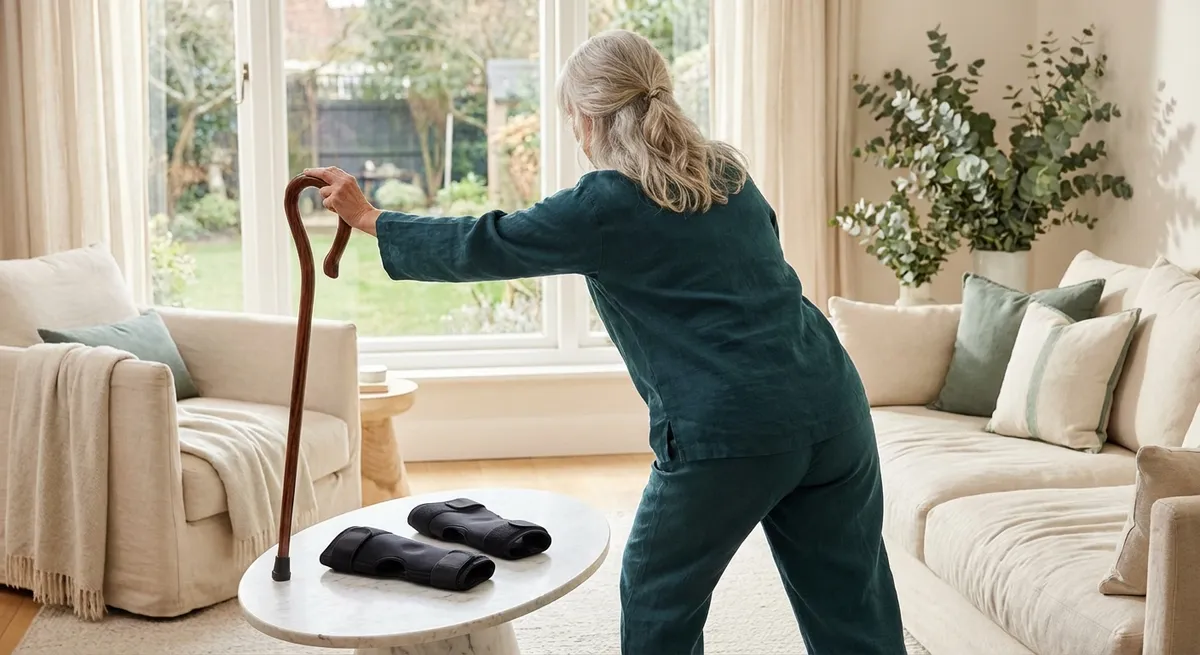
Living with arthritis is not merely a matter of “managing pain.” For many, it becomes a long-term relationship with their own body—one that asks for nuance, subtle adjustments, and a more discerning kind of self-care. The most effective strategies rarely feel dramatic. Instead, they’re the quiet refinements that, over time, create a life that feels less constrained and more intentionally designed around comfort and capability.
Arthritis does not define your identity, but it does reshape your priorities. When you begin to see your routine as a curated ecosystem for joint health—rather than a checklist of treatments—your days start to feel more deliberate, less reactive, and far more sustainable.
1. Treat Your Joint Load Like a Bank Account, Not a Crisis Response
Most arthritis advice focuses on what to do when pain spikes, but the more powerful strategy is to think in terms of “joint budget” rather than “joint emergency.” Your joints have a finite capacity for load—repetitive strain, high-impact movement, prolonged positions—and each day represents a spending plan. Long grocery runs, hours at a laptop, or a busy day cooking for guests all “withdraw” from that budget. When you approach your schedule with this mindset, you start to allocate your energy more deliberately: spacing out demanding tasks, alternating sitting and standing, and planning restorative moments before your body is forced to demand them.
This approach is not about fragility; it’s about precision. Use visual cues—a weekly calendar with “high load” and “low load” days, for example—to map when your joints are most stressed. Then intentionally pair those heavier days with gentler evenings: warm soaks, light stretching, or a simplified dinner. This reframing helps reduce flare frequency, because you’re no longer simply reacting to pain, you’re anticipating and balancing it. Over time, your joints experience fewer extremes—and that consistency becomes its own kind of luxury.
2. Curate Micro-Movements Into Your Day Instead of Waiting for One Perfect Workout
Many people with arthritis either push through a single intense workout or skip movement altogether on painful days. A more elegant solution is to build “micro-movements”—small, intentional, low-resistance motions—throughout the day so your joints never stay in one state for too long. Think ankle circles while the kettle boils, gentle wrist rotations between emails, or standing hip shifts during phone calls. These are not throwaway gestures; they subtly nourish cartilage, support synovial fluid circulation, and keep surrounding muscles awake and responsive.
The sophistication lies in consistency, not intensity. Set a discreet timer every 45–60 minutes as a reminder to move a particular joint cluster: neck and shoulders for one interval, knees and ankles for the next, fingers and wrists after that. Choose movements that feel fluid, slow, and under control—never jerky or rushed. Over time, this scattered-yet-intentional motion weaves a protective pattern through your day, reducing stiffness and making “getting up” feel less like a negotiation with your body and more like a natural extension of how you live.
3. Design Your Environment as a Silent Partner in Pain Prevention
Arthritis management is often described as willpower—do your exercises, remember your medications, maintain your posture. Yet your environment can quietly undermine or elevate everything you’re trying to do. A thoughtfully arranged home or workspace becomes a silent collaborator in your comfort. Consider the height of your most-used surfaces: is your countertop encouraging you to lean and hunch, or does it allow you to stand tall and aligned? Are your most frequently reached items stored at a level that honors your joints, or are you constantly bending, twisting, and straining?
Begin with a single room where you spend the most time. Adjust chair height so your feet rest fully on the floor and your knees are at or slightly below hip level. Place heavier items—pots, cleaning products, bulk groceries—between mid-thigh and chest height to avoid constant deep bending or overhead reaching. Explore tools that amplify ease: jar openers, ergonomic handles, lightweight cookware, and lever-style door handles. These details may appear modest, but the reduction in micro-strain across an entire day, week, and year is profound. You are, in effect, designing a space that tells your joints: “You are considered here.”
4. Elevate Recovery to the Same Status as Exercise
Many people with arthritis have absorbed the message that “motion is lotion.” While movement is crucial, what often gets neglected is recovery as a deliberate practice—not just what happens when you stop moving. Recovery is when your tissues adapt, your inflammation settles, and your nervous system recalibrates. When you elevate recovery to the same importance as your exercise routine, your workouts become more effective and less punishing.
Think of recovery in layers. First, structural: gentle stretching, joint-friendly mobility work, and supportive sleep positions using pillows to maintain neutral joint alignment. Second, sensory: warmth from a bath, a heating pad on stiff joints, or contrast therapy if recommended by your provider. Third, nervous-system level: breathwork, guided relaxation, or a calming ritual before bed to dial down pain sensitivity. Building intentional micro-rituals around your recovery—like five minutes of supported stretching after a short walk, or a brief body scan in bed—transforms it from an afterthought into an integral part of your arthritis strategy. Your joints learn that effort is always followed by care, which can make movement feel less threatening and more inviting.
5. Partner With Your Data: Subtle Tracking Without Obsession
For those living with arthritis, data can be a powerful ally—when used with discernment. The goal is not to count every step or obsess over every ache but to notice patterns that are otherwise invisible. Instead of logging pain in a generic “1–10” format, consider richer, more nuanced observations: Where is the discomfort? Is it sharp or dull, hot or stiff, fleeting or persistent? What did the 24 hours before it feel like—sleep quality, stress level, weather changes, unusual foods, travel, footwear?
Create a simple, elegant system that feels sustainable: a few lines in a dedicated notebook, a minimalist note on your phone, or a structured template in a health app. Track only what you’re truly willing to review. Then, every week or two, look for subtle connections—perhaps your knees react to consecutive days of standing, or your hands respond to cold, ungloved mornings. Bring these patterns to your healthcare team not as complaints, but as insights. This shifts you from passive patient to informed partner, helping guide more precise adjustments to medication, physical therapy, or lifestyle. Thoughtful tracking doesn’t just document your arthritis; it refines how you live with it.
Conclusion
Arthritis management at its most sophisticated is not about chasing the next dramatic fix. It’s about cultivating a life where your joints are consistently considered—in how you schedule your days, move through small moments, arrange your spaces, recover from effort, and interpret your own signals. These refinements may feel subtle, but together they create a different texture to daily living: less friction, more intention, and a deeper sense that your body is not your adversary, but something you are continually learning to care for with precision and respect.
When you approach arthritis with this level of attentiveness, management becomes more than coping. It evolves into a carefully crafted way of living—one where comfort is not accidental, but quietly, deliberately designed.
Key Takeaway
The most important thing to remember from this article is that this information can change how you think about Arthritis Management.