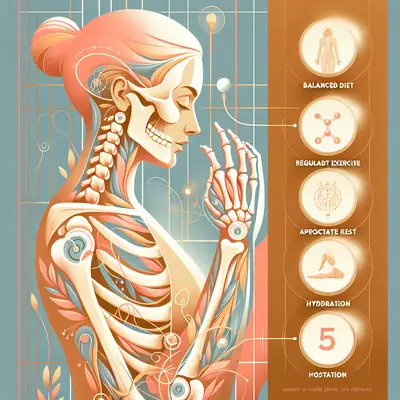
Healthy living, when viewed through the lens of joint health, is less about rigid rules and more about thoughtful design. Every choice—how you sit, what you eat, the way you move—quietly shapes the architecture of your joints for years to come. Instead of chasing quick fixes, this approach treats joint comfort as a byproduct of an elegant, well‑considered lifestyle. Below, we explore a refined perspective on healthy living for those who expect more from their bodies—and from their daily habits.
The Hidden Geometry of Posture: Aligning for Structural Grace
Posture is often reduced to “sit up straight,” but for joint‑conscious living, the conversation is more nuanced. True joint‑friendly posture is dynamic, not frozen—subtle shifts in weight distribution, micro‑adjustments of the pelvis, and a soft, lengthened spine. When your ears, shoulders, hips, knees, and ankles fall into relatively natural alignment, load is shared rather than concentrated, easing unnecessary strain on cartilage and soft tissue.
For those who spend hours at a desk, the key is not the perfect chair but the interplay of chair height, screen level, foot support, and movement breaks. Ideally, knees and hips rest at roughly 90 degrees, feet supported, with the screen at or just below eye level. Short, frequent posture resets—standing, rolling shoulders, gently rotating the neck—serve as structural “maintenance” rather than emergency repair. This is healthy living as ongoing architectural stewardship, not occasional renovation.
Nutritional Precision: Feeding Cartilage, Not Just Curves
Healthy eating, when fine‑tuned for joint health, becomes more precise than simply “balanced.” Cartilage, tendons, and ligaments rely on a supply of micronutrients, anti‑inflammatory compounds, and adequate protein to preserve their integrity. Omega‑3 fatty acids from fatty fish, walnuts, and flaxseeds help temper low‑grade inflammation that quietly degrades joint structures over time. Meanwhile, antioxidants from deeply colored produce—berries, spinach, red cabbage—act as subtle custodians, protecting tissues from oxidative stress.
Protein, often discussed in terms of muscle, is just as crucial for the collagen and matrix supporting your joints. Thoughtful inclusion of lean proteins, legumes, and, when appropriate, dairy or fortified alternatives can support both muscle and connective tissue. Even hydration plays a quiet, essential role: cartilage is heavily water‑dependent, and mild, chronic dehydration can leave joints feeling stiff, less lubricated, and less resilient under load. Here, healthy living becomes a form of biochemical curation, feeding not only your figure but your joint architecture.
Strength as Subtle Armor: Training the Muscles That Protect Joints
Strength training is often framed around aesthetics, but for those invested in joint health, it is best understood as tailored protection. Well‑conditioned muscles act like shock absorbers and stabilizers for your joints, reducing the impact that cartilage and ligaments must bear alone. This is not about maximal loads, but intelligent, joint‑aware strengthening: slow, controlled movements; impeccable form; and appropriate progression over time.
Focusing on key support areas—gluteal muscles for hip and knee protection, core and back muscles for spinal health, and shoulder stabilizers for upper‑body integrity—builds a kind of biomechanical insurance. Resistance bands, controlled bodyweight exercises, and well‑supervised weight work can be surprisingly gentle yet profoundly effective. Warming up before movement and cooling down afterward are not trivial rituals; they are deliberate methods of preparing tissues for load and then easing them back toward rest. In this framework, healthy living is a series of thoughtful investments in the muscular “armor” that allows joints to move with confidence.
Five Exclusive Insights for the Joint‑Focused Individual
These insights are designed for those who want to go beyond generic wellness advice and cultivate a more deliberate, high‑caliber relationship with their joints:
- Micro‑loading matters more than you think.
It is not just the gym session that shapes your joints, but the thousands of small loads you apply across the day—how you rise from a chair, the way you carry bags, the shoes you choose at home. Soft, supportive footwear indoors, avoiding consistently asymmetrical carries (like always shouldering a heavy bag on the same side), and using both hands when lifting moderate objects can markedly reduce cumulative joint stress.
- Temperature is a tool, not an afterthought.
Strategic use of heat and cold—warmth before activity to encourage tissue suppleness, cool therapy after heavier use to calm irritation—can transform joint comfort. A warm shower or heating pad prior to activity followed by a brief, targeted cold pack afterward can help joints tolerate and recover from daily demands with more elegance and less complaint.
- Sleep posture is joint therapy in slow motion.
Overnight positioning either nurtures or quietly strains your joints. Side sleepers often benefit from a pillow between the knees to keep hips and spine aligned; back sleepers may need a small pillow under the knees to reduce lumbar stress. A supportive mattress and pillow are not indulgences; for joint health, they are long‑term therapeutic tools operating six to eight hours a night.
- Your nervous system is the silent negotiator of joint pain.
Stress and poor emotional regulation can amplify pain signaling, making joints feel more inflamed than they objectively are. Practices such as slow breathing, brief mindfulness sessions, or gentle evening stretches do more than relax your mind—they shift your nervous system away from a heightened threat state, reducing how intensely your brain interprets joint signals. In refined healthy living, mental calm is considered part of the joint‑care protocol, not an optional luxury.
- Consistency outperforms intensity—especially for joints.
Cartilage and connective tissue respond best to moderate, recurring, well‑tolerated loads, not sporadic bursts of ambition. A 20‑minute, joint‑aware routine most days of the week—combining mobility, gentle strength, and balance—can be more protective than occasional, high‑impact workouts. A dedicated “joint hygiene” ritual, as non‑negotiable as brushing your teeth, turns joint care into a quiet, enduring standard rather than a reactive fix.
Movement as Gentle Craft: Curating Activities That Age Well
The most joint‑intelligent movement plans are curated with longevity, not just intensity, in mind. Low‑impact cardiovascular options—such as brisk walking on forgiving surfaces, cycling, or swimming—can nourish joint cartilage by rhythmically compressing and releasing it, assisting nutrient exchange without excessive wear. Think of it as a carefully calibrated massage for your joints from the inside out.
Balanced variety is key. Rotating activities through the week disperses load across different regions, reducing overuse in any single area. Mobility work—controlled joint circles, gentle range‑of‑motion exercises, and simple floor routines—keeps joints from “locking” into restricted patterns. Balance and proprioceptive training, like standing on one leg or using a balance pad, refine your body’s sense of position, helping prevent the subtle missteps and stumbles that can provoke joint injury. Healthy living, in this light, is less about intensity metrics and more about crafting a collection of movements that your joints can sustain with pleasure for decades.
The Subtle Power of Environment: Designing a Joint‑Smart Lifestyle
The environments you inhabit—home, office, even your car—quietly shape joint health. Thoughtful adjustments can turn ordinary spaces into allies. At home, this might mean placing frequently used items at waist to chest height to avoid repeated deep bending or overhead reaching. Choosing stable chairs with proper support instead of overly soft, sink‑in seating can preserve spinal and hip alignment, particularly during long conversations or work sessions.
In the workplace, a well‑arranged ergonomic station—chair height, desk setup, and screen position—pairs with scheduled micro‑breaks to prevent stiffness and overload. Even your social calendar can be joint‑intelligent: alternating high‑demand days (travel, events, long walks) with quieter, recovery‑minded days helps maintain a sustainable rhythm. In this sophisticated view of healthy living, joint health is not confined to the clinic or the gym; it is quietly embedded into the design of your surroundings.
Conclusion
Healthy living for joint health is not a single decision but a series of small, refined choices that accumulate into long‑term comfort and capability. When posture becomes intentional, nutrition precise, strength purposeful, and environment thoughtfully arranged, joints are no longer an afterthought—they become central to how you design your days. This is an elevated form of self‑care: subtle, consistent, and intelligently aligned with the way your body is built to move. Over time, that quiet refinement becomes its own reward—measured not in dramatic moments, but in the steady, confident ease with which you inhabit your life.
Sources
- Centers for Disease Control and Prevention – Arthritis and Physical Activity - Overview of why regular, appropriate movement is crucial for joint health and arthritis management
- Harvard Health Publishing – Foods that fight inflammation - Explores dietary patterns and nutrients that help reduce systemic inflammation affecting joints
- Johns Hopkins Medicine – Joint Health: Keeping your joints healthy - Practical guidance on posture, exercise, and lifestyle strategies to support long‑term joint function
- Mayo Clinic – Strength training: Get stronger, leaner, healthier - Evidence‑based overview of strength training principles relevant to supporting and protecting joints
- National Institute of Arthritis and Musculoskeletal and Skin Diseases (NIH) – Handout on Health: Osteoarthritis - Detailed description of how osteoarthritis affects joints and how lifestyle factors influence disease progression
Key Takeaway
The most important thing to remember from this article is that this information can change how you think about Healthy Living.