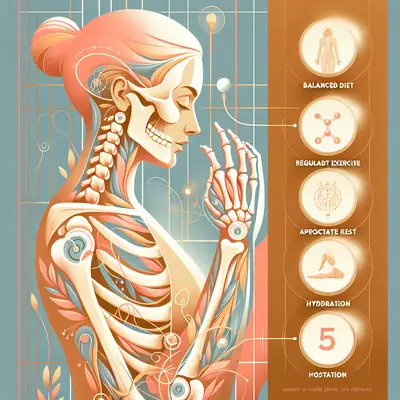
A truly elevated approach to healthy living does more than count steps or calories—it cultivates an internal environment where your joints are quietly, consistently protected. For those who prize longevity, performance, and ease of movement, joint health is not an afterthought. It is the structural foundation of a life lived fully and gracefully.
This blueprint is not about extremes or quick fixes. It’s about subtle, intentional choices that create a stable, low-inflammation ecosystem inside your body—one in which cartilage, ligaments, and synovial fluid are preserved, not depleted. Below are five exclusive, often-overlooked insights that sophisticated joint-conscious individuals increasingly rely on to maintain long-term resilience.
Micro-Loading: The Elegant Alternative to “No Pain, No Gain”
High-impact training and “all-out” workouts may build short-term fitness, but they can quietly erode joint structures over time—especially when layered on top of modern stress, poor sleep, and desk-bound days. A more refined strategy is micro-loading: small, carefully controlled doses of mechanical stress, applied consistently, to keep cartilage nourished and joints stable without flirting with injury.
Micro-loading respects that cartilage is avascular—it relies on compression and decompression cycles to receive nutrients from synovial fluid. Instead of punishing, sporadic sessions, think: shorter, high-quality bouts of strength work with perfectly controlled form and deliberate tempo. Half squats become full, supported squats over time. Light resistance bands evolve into moderate weights as your joints prove they can handle the load.
There is sophistication in restraint. Ending a training session with the sense that you could have done more—rather than barely surviving—often preserves joint integrity better than maximal effort. This approach is especially valuable for those managing early osteoarthritis or prior joint injuries who still desire strength and athleticism without accelerating wear.
Precision Inflammation Management: Beyond “Anti-Inflammatory” Buzzwords
Inflammation is not the villain it’s often made out to be; it is a vital healing response. The problem arises when low-grade inflammation becomes chronic, silently bathing joints in inflammatory mediators that accelerate cartilage breakdown. The refined approach is not to “eliminate inflammation” but to modulate it.
The foundation is metabolic stability: steady blood sugar, healthy body weight, and sufficient muscle mass. These reduce the inflammatory burden on joints far more effectively than sporadic supplements. From there, you deliberately curate your intake of pro- and anti-inflammatory influences. Omega-3–rich foods (such as fatty fish and flaxseed), extra-virgin olive oil, and polyphenol-rich plants (like berries, herbs, and green tea) help rebalance inflammatory pathways. Meanwhile, ultra-processed foods, excessive added sugars, and trans fats are treated as rare indulgences rather than staples.
Equally important is the recognition that sleep, stress, and joint inflammation are tightly connected. Chronic stress hormones and fragmented sleep amplify inflammatory signaling. An elegant joint-health strategy includes a strict sleep architecture—consistent bedtime, dark cool room, minimal late-evening screens—as a non-negotiable, not a luxury. Great joints are not just built in the gym; they’re restored overnight.
Joint-First Movement Design: Architecting Your Day Around Alignment
Most people design their day around convenience and then try to “fit in” exercise. Those who protect their joints long term reverse that logic. They design the day around postural integrity, alignment, and frictionless movement—and let productivity fall into place around that.
Consider your default positions: the chair you sit in most, your driving posture, your laptop height, your phone use, your go-to shoes. Each of these acts as a low-level training stimulus, either reinforcing healthy joint angles or compounding subtle misalignments. Small, deliberate upgrades—such as setting your monitor at eye level, keeping feet flat and grounded while working, or choosing shoes with measured support rather than fashion-only priorities—accrue meaningful joint benefits over years.
Joint-first living also means structuring micro-movements throughout the day. Not step counts, but intentional joint exposures: gentle ankle circles under your desk, intermittent thoracic spine extensions over the back of a chair, or brief hip-opening sequences between meetings. These are not workouts; they are maintenance passes that keep synovial fluid moving and tissues from stiffening into dysfunctional patterns. Ignoring these “between the workouts” hours is a common, and costly, oversight.
Strategic Recovery: Elevating Rest to a Performance Tool
Recovery is often treated as passive—something that happens when you’re not training. In a joint-centric lifestyle, recovery becomes a precise, active practice designed to protect and regenerate connective tissue.
This begins with scheduling “low-friction days” where joints are intentionally spared from high-impact activities. On these days, circulation is encouraged with light walking, cycling, or water-based movement, but compressive and torsional joint loads are intentionally kept minimal. The intent is to create time for microscopic joint stresses to repair before they accumulate into pain.
Targeted recovery modalities—when used judiciously—become refined tools, not fads. Gentle heat can ease stiffness, while brief, measured cold exposure may help calibrate pain signaling and acute inflammation. Self-massage or myofascial work can relieve muscular tension that otherwise pulls joints out of ideal alignment. Yet the most powerful “recovery technology” remains exquisitely simple: appropriate training volume, sufficient protein intake, and consistently adequate sleep. Trends come and go; joints respond loyally to fundamentals executed with discipline.
Nutrient Strategy for Cartilage and Connective Tissue: Beyond Generic “Healthy Eating”
Healthy eating is a broad term; joint-focused nutrition is far more specific. Cartilage, tendons, and ligaments have unique structural needs, and your diet can either meet or neglect them.
Collagen synthesis, for instance, depends on adequate protein, vitamin C, and certain amino acids such as glycine and proline. Thoughtfully integrating collagen-rich foods (like slow-cooked meats, bone broth, or carefully selected collagen supplements) alongside vitamin C sources (citrus, berries, bell peppers) provides your body the building blocks for ongoing joint maintenance. This is not a miracle fix—but over years, it can support healthier connective tissue turnover.
Bone health, which underpins joint stability, requires sufficient calcium, vitamin D, vitamin K, and magnesium. Rather than chasing single “joint supplements,” a more elegant strategy integrates diverse mineral-rich foods—leafy greens, small bones-in fish like sardines, fermented foods, nuts, and seeds—within a Mediterranean-style or similarly whole-food pattern shown to be joint-friendly.
Finally, hydration is often treated as an afterthought, yet synovial fluid—the lubricant of your joints—is water-based. Consistent, moderate hydration and limiting excessive alcohol are quiet, powerful protections. The refined approach is not perfection, but a pattern: meals and beverages that repeatedly nudge your internal environment toward resilience rather than erosion.
Conclusion
Joint health is often only appreciated when it begins to fade. Those who prioritize it early and consistently understand that every choice—how you train, how you rest, how you stand, work, and eat—either writes a quiet premium for lifelong mobility or a quiet debt.
Healthy living, in this elevated sense, is not a project of extremes. It is the art of orchestrating micro-loading instead of overtraining, modulating inflammation instead of oversimplifying it, designing your environment around alignment, elevating recovery into a deliberate practice, and feeding your connective tissues with intention. Done well, the reward is not just less pain—it is the freedom to move through life with grace, power, and longevity.
Sources
- Arthritis Foundation – Cartilage: What It Is and How to Protect It – Overview of cartilage function, nutrition, and protective strategies
- Harvard Health Publishing – Foods That Fight Inflammation – Evidence-based summary of dietary patterns that support lower chronic inflammation
- National Institute of Arthritis and Musculoskeletal and Skin Diseases (NIAMS) – Handout on Joint Health – Government resource outlining fundamentals of joint protection and healthy lifestyle habits
- Mayo Clinic – Exercise: 7 Benefits of Regular Physical Activity – Explains systemic benefits of exercise, including its role in joint and bone health
- Harvard T.H. Chan School of Public Health – The Nutrition Source: Protein – Details on protein needs and sources, relevant to collagen and connective tissue maintenance
Key Takeaway
The most important thing to remember from this article is that this information can change how you think about Healthy Living.