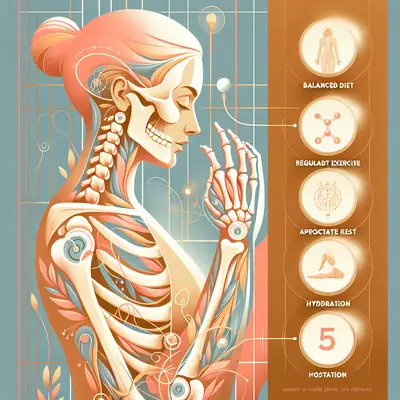
Healthy living is often framed as a sprint toward weight loss or short‑term goals. For those who care about joint health, it’s something different: a long, elegant arc of choices that preserve ease, strength, and quiet confidence in movement. Your joints remember every step, every late-night habit, every skipped stretch. This is not about perfection—it’s about cultivating a lifestyle where your daily rituals subtly, consistently, and intelligently safeguard your mobility.
Below are five exclusive, often-overlooked insights for people who prioritize joint health as a central part of their healthy living philosophy—not an afterthought.
Insight 1: Joint Health Begins in the Micro-Movements, Not Just the Workouts
Most people focus on the 45 minutes in the gym and ignore the other 15+ hours they’re awake. For joints, the opposite often matters more: it’s the micro‑movements that accumulate into either resilience or strain.
Prolonged stillness—sitting at a desk, driving, scrolling—compresses certain joint surfaces while leaving others underused. Over time, this fosters stiffness, imbalanced muscle tension, and altered mechanics that show up as “mysterious” knee, hip, or neck pain. The solution is not constant exercise, but curated interruptions.
Set a quiet intention to move every 30–45 minutes, even for 90 seconds: stand and shift your weight through your feet, perform a few slow calf raises, circle your wrists and ankles, and gently rotate your neck and shoulders within a comfortable range. These small, frequent movements rehydrate cartilage, re-engage stabilizing muscles, and prevent your body from “forgetting” its full range. Think of it as luxury-level maintenance—like regularly servicing a finely tuned car rather than waiting for a breakdown.
Insight 2: Strength Training as Joint Insurance—With a Precision Bias
Healthy living narratives often glorify cardio, but for joints, properly designed strength training is a form of long-term insurance. Strong muscles act as elegant shock absorbers, reducing load on cartilage, ligaments, and tendons. But the benefit is extremely dependent on how you train.
Instead of chasing maximal weights or high repetition sets that leave you battered, adopt a precision‑biased approach:
- Prioritize alignment over intensity: knees tracking over toes, neutral spine, controlled tempo.
- Favour multi‑joint, functional movements—squats, hip hinges, rows, and push variations—over isolated machines alone.
- Focus on eccentric control (the lowering phase), which conditions tendons and improves joint stability.
- Use moderate resistance that allows you to move with poise, not strain; you should finish a set feeling challenged but organized, not chaotic.
For those with existing joint sensitivity, lighter external loads combined with slow tempo and higher awareness can be infinitely more therapeutic than “no pain, no gain” bravado. Strength, in this context, is about integrity, not spectacle.
Insight 3: Anti-Inflammatory Living Is a Pattern, Not a Single Superfood
Healthy living is often reduced to the latest superfood or supplement. For joints—especially if you have arthritis or a family history of it—the reality is subtler: it’s the anti‑inflammatory pattern of your life that matters, not a singular hero ingredient.
An anti-inflammatory lifestyle blends nutrition, sleep, and stress regulation:
- Nutrition: Emphasize colourful vegetables, berries, olive oil, nuts, seeds, legumes, and fatty fish such as salmon or sardines. These patterns resemble the Mediterranean-style diet, which has consistently been associated with lower systemic inflammation and improved joint symptoms in arthritis.
- Glycemic stability: Large blood sugar swings may amplify inflammatory pathways. Aim for meals that combine protein, healthy fats, and fibre to keep energy and mood steady.
- Refined restraint: Highly processed foods, excessive added sugars, and trans fats don’t just affect your waistline; they may heighten inflammatory markers that joints are exquisitely sensitive to.
- Alcohol and sodium awareness: Occasional indulgence is not the problem; chronic excess is. Both can worsen swelling and disrupt sleep—two silent antagonists of joint comfort.
Viewed through a joint‑centric lens, “healthy eating” becomes less about aesthetic goals and more about building a biochemical environment in which your cartilage and connective tissues can quietly thrive.
Insight 4: Sleep as the Silent Architect of Joint Recovery
Sleep is often discussed in terms of mental clarity or productivity, but joints depend on it just as profoundly. Overnight, your body orchestrates tissue repair, modulates inflammatory processes, and recalibrates pain sensitivity. Inadequate or fragmented sleep doesn’t just make you tired; it can heighten your perception of pain and slow healing.
Subtle refinements can upgrade sleep into a true joint‑recovery ritual:
- Temperature: A cool, dark environment supports deeper sleep stages, where much of tissue repair occurs.
- Positioning: Side sleepers may benefit from a pillow between the knees to keep hips, knees, and spine aligned; back sleepers might use a small pillow under the knees to reduce lumbar tension.
- Consistency: Regular bedtimes stabilize circadian rhythms, which in turn influence hormonal cascades linked to inflammation and tissue renewal.
- Digital boundaries: Reducing stimulating screen time in the hour before bed helps your nervous system shift from vigilant to restorative, which is essential when you’re asking your body to heal damaged or stressed joints.
Treat sleep not as a passive collapse at day’s end, but as a carefully curated environment where your joints quietly receive the attention they deserve.
Insight 5: Nervous System Calm as a Hidden Lever for Joint Comfort
Stress is often discussed in psychological terms, but its impact on joints is physiologic and tangible. Chronic stress elevates cortisol and other mediators that can promote inflammation, alter muscle tone, and increase your baseline perception of pain. It also leads to subtle behavioural shifts—more sitting, less activity, poorer food choices—that amplify joint strain over time.
For joint‑conscious individuals, nervous system regulation isn’t a luxury; it’s strategy:
- Breathwork: Slow, diaphragmatic breathing—such as inhaling for four counts, exhaling for six—can reduce sympathetic nervous system activation, easing muscle tension around vulnerable joints.
- Mindful movement: Practices like tai chi, gentle yoga, or Pilates integrate coordination, balance, and controlled motion—crucial for joint stability—while simultaneously calming the mind.
- Micro‑rituals of decompression: A five‑minute body scan, a short walk without your phone, or a warm bath in the evening can reset a hypervigilant system.
As your nervous system becomes less reactive, your muscles stop clenching defensively, joint loading becomes smoother, and discomfort often diminishes. Healthy living, in this refined sense, is as much about how your body “listens” to the world as how it moves through it.
Conclusion
A life built around joint-conscious healthy living is not defined by restriction or fear of movement. It is defined by discernment—choosing micro‑movements over stagnation, precision in strength over reckless intensity, patterns of nourishment over trendy fixes, restorative sleep over heroic late nights, and nervous system calm over constant urgency.
When these elements converge, joint health ceases to be a fragile concern and becomes a quiet asset—a foundation that allows you to walk, reach, bend, and explore with an ease that feels both grounded and refined. Over years and decades, that is the true mark of a premium approach to health: mobility you barely have to think about, sustained by choices you make every single day.
Sources
- [Centers for Disease Control and Prevention – Arthritis and Physical Activity](https://www.cdc.gov/arthritis/basics/physical-activity-overview.html) - Overview of how regular, appropriately dosed movement supports joint health and arthritis management
- [Harvard T.H. Chan School of Public Health – The Nutrition Source: Anti-inflammatory Diet](https://www.hsph.harvard.edu/nutritionsource/anti-inflammatory-diet/) - Evidence-informed guidance on dietary patterns that help reduce systemic inflammation
- [National Sleep Foundation – Sleep and Pain](https://www.thensf.org/sleep-and-pain/) - Explores the bidirectional relationship between sleep quality and pain perception
- [Arthritis Foundation – Strength Training With Arthritis](https://www.arthritis.org/health-wellness/healthy-living/physical-activity/exercise/strength-training-with-arthritis) - Practical recommendations for resistance training that supports joint integrity
- [National Center for Complementary and Integrative Health – Tai Chi and Qi Gong](https://www.nccih.nih.gov/health/tai-chi-and-qi-gong-in-depth) - Reviews evidence on mind–body practices for balance, pain, and overall function
Key Takeaway
The most important thing to remember from this article is that this information can change how you think about Healthy Living.