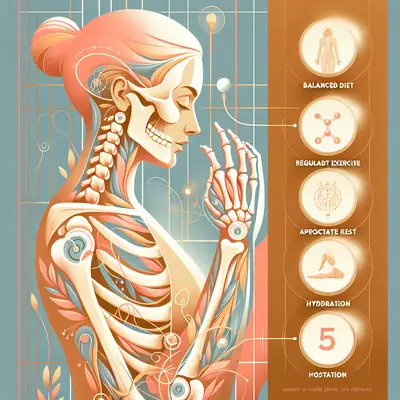
Healthy living, when viewed through the lens of joint health, becomes something more curated than casual. It is less about rigid rules and more about precision: small, deliberate decisions that quietly protect cartilage, nourish connective tissue, and preserve effortless movement well into later decades. For those who value longevity with grace—not just lifespan, but “move-span”—joint health becomes a central design principle in how they live, train, and recover.
Below, we explore a refined approach to healthy living with five exclusive, under-discussed insights tailored for people who prioritize superior joint care.
The Micro-Loading Principle: How You Carry the Day Matters More Than How You Train
Most joint-conscious people focus on their workouts but overlook their “micro-loads” — the subtle ways they load their joints across the other 15+ waking hours.
Every handbag worn on one shoulder, every slouched hour at a desk, every time you twist instead of turning your whole body compounds into a silent, daily load profile on your joints. Over months and years, those micro-choices can matter more than your three weekly strength sessions.
A refined approach to joint health treats the entire day as a loading landscape. Bags are cross-body or balanced; laptops are elevated to eye level; sofas are chosen not only for aesthetics, but for how they support the spine and hips. Even standing posture shifts from “upright” to “stacked”: ears over shoulders, ribs over pelvis, weight balanced evenly over both feet.
Exclusive joint-health insight: begin tracking not just your “workouts,” but your “wear-outs”—the everyday patterns that slowly fatigue specific joints. Adjusting how you carry, sit, stand, and twist may quietly remove thousands of unnecessary load cycles from your knees, hips, and spine each week.
Precision Hydration: Synovial Fluid as Your Body’s Liquid Luxury
Hydration is often discussed in vague, athletic terms, but for joint-focused individuals, water is not just about performance or skin clarity—it is literally about lubrication.
Synovial fluid, the viscous liquid that cushions and nourishes joints, is strongly influenced by hydration status and movement. Under-hydration can contribute to thicker, less efficient joint fluid; over time, this can alter how comfortably joints glide and rotate. For those who value premium joint health, water intake becomes a deliberate ritual rather than a casual afterthought.
Quality matters as much as quantity. A balance of electrolytes (especially sodium and potassium) supports fluid balance inside and around joint tissues, while an overall nutrient-dense diet helps maintain the environment that cartilage cells require to function. Pairing hydration with gentle movement—such as slow, controlled range-of-motion exercises—is especially powerful: fluid is not just present; it is circulated.
Exclusive joint-health insight: create “hydration-with-motion” pairings. Instead of simply drinking a glass of water, follow it with 60–90 seconds of light joint mobility: ankle circles, knee bends, hip rotations, wrist and shoulder rolls. You’re not simply hydrating; you’re distributing that hydration into the tissues that need it most.
Strength as Architecture: Training for Alignment, Not Just Muscle
Typical fitness advice focuses on visible muscle groups; elegant joint living focuses on the architecture behind them. For long-term joint health, the question is not “How strong am I?” but “Where is my strength located, and is it balanced?”
Spine-stabilizing muscles, deep hip rotators, scapular stabilizers, and the small muscles of the feet are often undertrained, yet they dictate how load travels through the joints. When those smaller architectural muscles are weak or uncoordinated, larger muscles and passive structures—ligaments, tendons, cartilage—are forced to absorb stress they were never meant to handle alone.
A refined program includes strength work that feels subtle yet transformative: tempo-based squats and lunges, single-leg balance drills, controlled carries with impeccable posture, and pulling movements that integrate the upper back rather than over-using the neck and shoulders. The goal is to build a body where forces are shared across tissues, not concentrated in one vulnerable joint.
Exclusive joint-health insight: evaluate your training by asking, “Where does this movement distribute load?” Well-designed exercises move stress away from a single joint and into a well-orchestrated chain involving feet, hips, core, and shoulders. This quiet redistribution, over time, is what preserves cartilage and tendons.
Quiet Inflammation Management: Sophisticated Nutrition for Subtle Protection
Anti-inflammatory eating is often reduced to catchphrases and superfoods, but joint-conscious individuals benefit from a more nuanced, evidence-informed approach. Chronic, low-grade inflammation does not simply affect blood markers; it shapes how joints age, how frequently they ache, and how quickly they recover.
A refined anti-inflammatory pattern is built on consistent, not extreme, decisions. Fatty fish (like salmon, sardines, or mackerel) for omega-3s; a spectrum of deeply colored vegetables and berries for polyphenols; extra-virgin olive oil and nuts for healthy fats; and thoughtfully chosen whole grains and legumes for fiber-driven gut health. This last piece—gut health—is increasingly recognized as a quiet mediator of systemic inflammation, impacting joint comfort over time.
Rather than harsh elimination rules, the joint-focused approach leans into quality and frequency: how often you include supportive foods matters more than rare “perfect” days. Supplements, such as omega-3 capsules or vitamin D, can be layered in cautiously and in consultation with a healthcare professional, especially for those with arthritis or early degenerative changes.
Exclusive joint-health insight: build an “anchor meal” that you repeat regularly—a beautifully composed plate you know supports your joints, such as grilled salmon, olive-oil-dressed leafy greens, and a side of lentils or quinoa. Repetition of this kind does more for long-term inflammation than sporadic, reactive cleanses.
Recovery as a Daily Standard: Elegant Restorative Rituals for Joints
Healthy living is often framed around what you do; joint longevity is equally defined by what you allow yourself not to do. Recovery is not laziness—it is disciplined restraint that gives cartilage, tendons, and ligaments time to adapt and repair.
Sleep quality is one of the most underrated joint-health tools. During deep sleep, tissues undergo repair, and pain perception is recalibrated. Poor sleep amplifies pain sensitivity and systemic inflammation, subtly eroding joint comfort. Those who prioritize joint health treat their bedroom as carefully as their training space: dark, cool, quiet, and technology-light.
Beyond sleep, elegant joint recovery involves gentle decompression practices: time spent lying on the floor with the legs elevated, short sessions of deliberate breathwork to relax muscle guarding, and occasional use of heat or cold in a structured, not haphazard, way. Even the weekly calendar can be designed with joints in mind—alternating higher-load days with lighter movement days, rather than stacking everything into three consecutive days of stress.
Exclusive joint-health insight: develop a “joint reset” ritual lasting 10–15 minutes at the end of most days—a consistent sequence of low-load movements, gentle stretches, and breathwork performed on the floor. Over months, this ritual can become a quiet insurance policy against accumulating stiffness and micro-irritation.
Conclusion
For those deeply invested in healthy living, joint integrity is not a side concern—it is the foundation that allows every other wellness investment to pay dividends over time. When you refine your approach to hydration, loading, strength, nutrition, and recovery through the specific lens of joint preservation, your daily habits become something more deliberate: a crafted environment in which your joints are protected, nourished, and respected.
This is the essence of elevated joint living: not louder effort, but more intelligent design. The reward is movement that feels as composed and effortless in your later years as it does today—proof that your joints have been quietly, consistently well cared for.
Sources
- National Institute of Arthritis and Musculoskeletal and Skin Diseases (NIAMS): Handout on Health – Osteoarthritis - Overview of osteoarthritis, risk factors, and joint protection principles
- Harvard T.H. Chan School of Public Health – Healthy Eating Plate & Anti-Inflammatory Diet - Evidence-based nutrition guidance, including anti-inflammatory dietary patterns
- Arthritis Foundation – Joint Protection and Exercise - Practical recommendations on movement, joint loading, and exercise for joint health
- Cleveland Clinic – Synovial Joints and Synovial Fluid - Medical explanation of synovial joints, function of synovial fluid, and relevance to movement
- Centers for Disease Control and Prevention (CDC) – Sleep and Chronic Conditions - Relationship between sleep, inflammation, chronic disease, and overall health
Key Takeaway
The most important thing to remember from this article is that this information can change how you think about Healthy Living.