Cultivated joint health is not won in dramatic moments at the gym or in the surgeon’s office. It is shaped quietly—by the chair you choose, the way you step off a curb, the depth of your sleep, and the rituals you repeat without noticing. For those who expect their bodies to sustain a full, vibrant life well into later decades, “healthy living” becomes less about discipline and more about design: curating an environment, a schedule, and a set of micro‑habits that make joint comfort the default, not the exception.
Below are five exclusive, often overlooked insights for people who are serious about preserving joint grace and reliability—whether you are managing early arthritis, recovering from overuse, or simply determined to move well as long as you live.
1. Micro-Loading: The Quiet Strategy Behind Durable Joints
Most conversations about joint health are dominated by the extremes: heavy lifting or total rest, high-intensity training or gentle stretching. What’s rarely discussed is the power of “micro‑loading”—deliberately dosing your joints with small, frequent, intelligently chosen forces throughout the day.
Micro‑loading treats your joints like a high-end material: it needs regular, modest stress to stay strong and responsive, but it degrades under sudden, intense strain. Instead of a single punishing workout followed by long hours of sitting, think in terms of brief movement “infusions”: standing calf raises while the kettle boils, controlled sit-to-stands from a chair between emails, gentle hip rotations when you step away from your desk.
This approach encourages cartilage nourishment through regular movement of synovial fluid, supports muscle tone without overuse, and improves joint position awareness (proprioception) in a way that formal exercise alone cannot. Over weeks and months, micro‑loading quietly recalibrates your baseline: joints feel “warmer,” less stiff, and more prepared for the unexpected—a sudden sprint for a train, a long day of travel, or an impromptu hike.
For those with existing joint concerns, micro‑loading also sidesteps the boom‑and‑bust cycle: instead of flaring symptoms with rare, intense efforts, you cultivate capacity with gentle, sustainable repetition.
2. Precision Strength: Training the Muscles That Actually Protect Your Joints
Generic strength training advice often misses a critical nuance: not all muscle is equally protective. For joint longevity, where you build strength matters as much as how much you build.
Around the knees, it is not just the visible quadriceps that matter, but the deep stabilizers and the hamstrings that balance them. For hips, overlooked muscles like the gluteus medius and deep rotators help keep the femur tracking smoothly, sparing cartilage and ligaments from excessive shear. Around the shoulders, the rotator cuff and scapular stabilizers control movement quality—transforming every reach, lift, and push into a smoother, less abrasive action.
Think of precision strength as a tailored suit for your joints: aligned, balanced, and understated, rather than bulky or decorative. Refined joint-focused training often includes:
- Slow, controlled single-leg work (e.g., supported single-leg squats or step-downs) to refine alignment.
- Light resistance band exercises that target rotator cuff and hip stabilizers.
- Isometric holds at mid-range positions, training joint stability where you actually live during daily tasks, not just at the extremes of motion.
Over time, this strategy transforms your joints from passive hinges into well-supported engineering systems, where muscles and soft tissues share the load intelligently. The result is less wear, fewer painful “pinches,” and more confidence in movement, especially on uneven ground or during complex, multi-directional activity.
3. Tension Hygiene: The Underestimated Link Between Calm Muscles and Comfortable Joints
Many people monitor posture or steps per day, but almost no one monitors muscle tone at rest—the quiet tension your body carries even when you think you are “relaxed.” This baseline tension can be the difference between joints that glide and joints that grind.
Chronic low-level muscle tightness subtly alters joint mechanics. Tight hip flexors tilt the pelvis, increasing load on the lumbar spine and hips. Overactive upper traps elevate the shoulders, compressing the joint space and straining the neck. Jaw clenching radiates down into the cervical spine, transforming simple head turns into stiff, guarded movements.
“Tension hygiene” is the practice of regularly scanning and resolving this background tension before it shapes your cartilage wear patterns and irritates your joint capsules. It can be cultivated through:
- Brief, structured body scans during the day: head to toe, noticing and softening unnecessary contraction.
- Short exhalation-focused breathing (longer exhale than inhale), which signals your nervous system to release muscular guard.
- Gentle, targeted mobility work at predictable tension zones: hips after sitting, upper back and shoulders after screens, calves after standing.
The sophistication here is subtle: instead of forcing flexibility or pursuing dramatic stretches, you’re curating a nervous system that doesn’t chronically over-protect. In turn, your joints move more precisely, experience less abrasive contact, and feel less “braced” without your permission.
4. The Joint-Smart Food Pattern: Beyond "Anti-Inflammatory" Buzzwords
Nutrition advice for joint health is often reduced to slogans—“eat anti-inflammatory foods,” “avoid sugar.” The reality is both simpler and more nuanced: joints thrive on consistency, quality fats, and smart support for the tissues that surround them.
Rather than chasing single “superfoods,” consider a joint-smart food pattern:
- Consistent omega-3 intake (from sources like fatty fish, walnuts, or algae-based supplements) helps modulate inflammatory pathways that can sensitize joints.
- Sufficient protein, spaced throughout the day, supports the muscles, tendons, and ligaments that protect your joints. Under-eating protein while staying active is a quiet way to undermine joint support.
- Color diversity in vegetables and fruits delivers antioxidants that help manage the oxidative stress linked to chronic joint irritation.
- Thoughtful carbohydrate quality—focusing on minimally processed, fiber-rich sources—can help stabilize blood sugar swings that may influence systemic inflammation and pain sensitivity.
For many, the elegant solution is a rhythm, not a rule: a daily pattern where each meal contains some high-quality protein, a rich source of colorful plants, and a carefully chosen fat source that favors monounsaturated and omega‑3 fats over trans and heavily processed fats.
What distinguishes a refined approach is not restriction, but discernment. You are not simply “avoiding bad foods”; you are quietly shaping the biochemical environment in which your joints must function every single day.
5. Environmental Curation: Designing Spaces That Make Movement Gentle on Joints
We often think of joint health as something we carry within our bodies, but in practice, it is heavily influenced by the spaces we inhabit. Your home, workspace, and routines can either conspire against your joints or become silent allies in their preservation.
Consider how thoughtful environmental curation can protect joints without demanding constant willpower:
- Desk and chair height that allow hips and knees to rest at roughly 90 degrees, feet supported, and wrists neutral reduces subtle, chronic joint stress in the neck, shoulders, and lumbar spine.
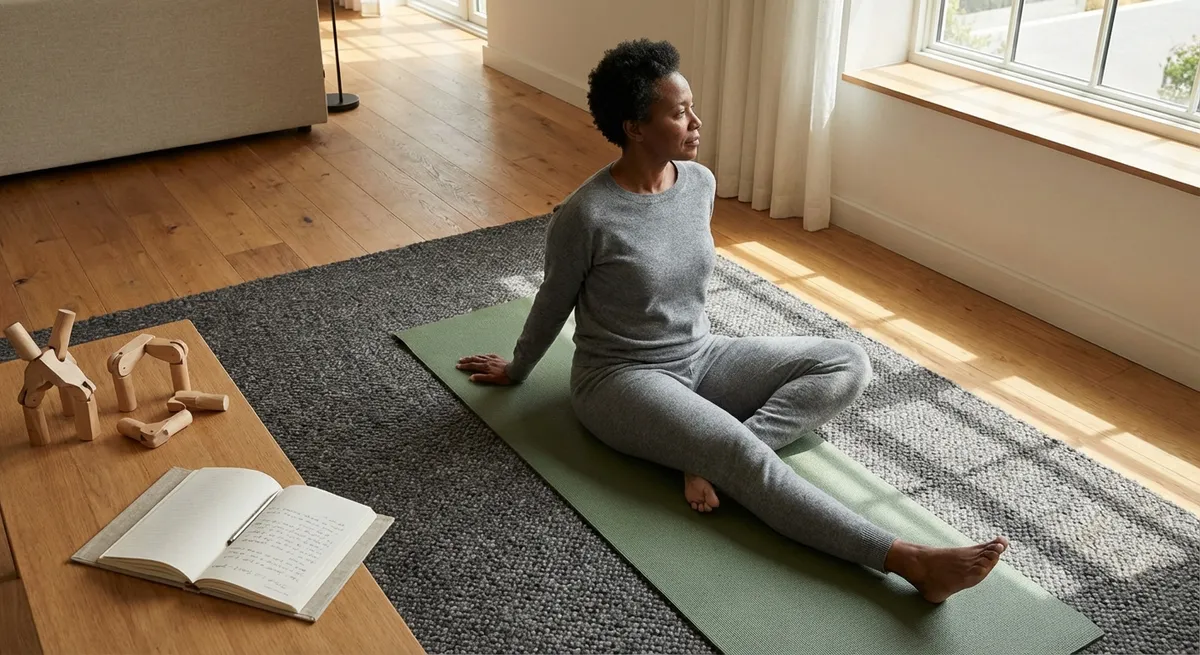
- Strategically placed “movement cues”—a yoga mat near your desk, a massage ball by the sofa, resistance bands near the kitchen—turn micro‑breaks into joint-supportive rituals instead of sedentary ones.
- Footwear choices at home, especially if you have sensitive knees, hips, or lower back: supportive, cushioned options can reduce impact on hard floors without sacrificing elegance.
- Thoughtful storage that keeps frequently used items between shoulder and mid-thigh height, limiting repetitive overhead reaching or deep bending that can aggravate vulnerable joints.
This is not about wrapping yourself in bubble wrap; it is about designing a built environment that aligns with how your joints are engineered to function. When your space is quietly optimized for joint comfort, healthy choices become frictionless and sustainable.
Conclusion
Cultivated joint health is less about heroic interventions and more about quiet mastery—of movement, tension, nourishment, and environment. Micro‑loading instead of overloading. Precision strength instead of generic workouts. Tension hygiene instead of brute-force stretching. A joint-smart food pattern rather than restrictive trends. And spaces deliberately arranged to respect how your body moves.
For those who expect their joints to carry them gracefully through demanding careers, rich social lives, and active later years, this is not overthinking—it is refinement. The reward is a life in which motion feels trustworthy and comfortable, not fragile or tentative. Over time, these subtle choices accumulate into something powerful: the lived experience of ease.
Sources
- National Institute of Arthritis and Musculoskeletal and Skin Diseases – Handout on Joint Health – Overview of joint structure, function, and general strategies to protect joint health
- Harvard Health Publishing – Foods that Fight Inflammation – Evidence-based discussion of dietary patterns and inflammation relevant to joint comfort
- Arthritis Foundation – Exercise and Arthritis – Guidance on safe, joint-friendly activity and the role of muscle strength and movement
- Mayo Clinic – Joint Pain: Causes, Symptoms and Treatment – Clinical perspective on joint pain contributors and management approaches
- Cleveland Clinic – Ergonomics and Musculoskeletal Health – Practical insights into environmental and ergonomic changes that reduce joint and musculoskeletal strain
Key Takeaway
The most important thing to remember from this article is that this information can change how you think about Healthy Living.