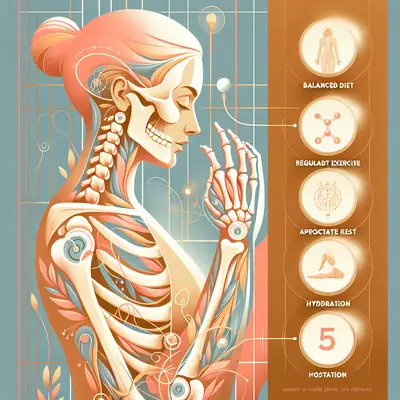
Healthy living, when viewed through the lens of long-term joint vitality, becomes less about short-lived resolutions and more about an enduring standard of care. It is not simply “staying active” or “eating well,” but curating a lifestyle in which every choice quietly protects your cartilage, supports your ligaments, and preserves your capacity to move with grace. This approach is measured, evidence-informed, and deeply intentional—tailored for those who value both performance and longevity.
Below are five exclusive, often overlooked insights that elevate joint-conscious healthy living from functional to exceptional.
The Micro-Load Principle: How You Move Between Workouts Matters More Than You Think
Most people focus on what happens during a workout, yet your joints are negotiating load from the moment you get out of bed to the moment you sit down at night. These “micro-loads” — how you stand while making coffee, how you descend stairs, how you twist to reach for your bag — quietly accumulate into either joint resilience or joint irritation.
A joint-savvy lifestyle starts with neutral alignment as a default. That means stacked joints (shoulders over hips, hips over knees, knees over ankles) during ordinary tasks, with hips—not the lower back or knees—leading most bending and lifting. Pausing briefly before transitions (such as standing up or pivoting) to organize posture reduces shearing forces on the knees and spine. Choosing supportive, stable footwear for your most active hours rather than just for workouts can also dramatically lower repetitive strain. When “between moments” are treated as movement practice rather than dead space, your day becomes a low-intensity joint-protection program.
Precision Strength: Targeting the Muscles That Quietly Guard Your Joints
Healthy living for joint longevity demands more than generic strength training; it calls for targeted support of the muscles that directly stabilize and guide joint motion. Two regions are especially consequential: the deep hip musculature and the muscles supporting the shoulder blade complex.
Deep hip stabilizers (including the gluteus medius and deep rotators) influence knee tracking, pelvic control, and even the way forces travel through the spine. When they are weak or under-recruited, the knees and lower back often absorb the difference. Similarly, the small but powerful scapular stabilizers (such as the lower trapezius and serratus anterior) help keep the shoulder joint centered and smooth, especially with overhead or repetitive arm work.
Healthy living with a joint-first lens means deliberately incorporating:
- Slow, single-leg work (such as controlled step-downs or supported single-leg squats)
- Lateral movements (side steps with bands, controlled side lunges)
- Scapular-focused exercises (wall slides, prone Y and T raises, serratus “push-up plus”)
The goal is not just strength, but refined control—muscles that switch on at the right time, in the right sequence, so your joints glide rather than grind.
Strategic Inflammation Management: Beyond “Anti-Inflammatory” as a Buzzword
Inflammation is not the enemy; uncontrolled, chronic inflammation is. For those who prioritize joint health, the question is not “How do I eliminate inflammation?” but “How do I guide it intelligently?” Healthy living in this context blends nutrition, sleep, and stress mastery into a quiet ecosystem of joint protection.
From a dietary perspective, favor patterns that support metabolic and inflammatory balance: abundant colorful vegetables, omega-3–rich foods (like fatty fish, walnuts, flax), and minimally processed whole grains. Maintaining a healthy body weight is one of the most powerful, underappreciated levers for joint longevity — excess weight significantly increases load on weight-bearing joints, especially knees and hips, and correlates with higher risk of osteoarthritis.
Equally sophisticated is the role of recovery. High-quality sleep helps regulate inflammatory pathways and allows joint tissues to repair. Managing psychological stress is not simply about mood; chronic stress can amplify inflammation and pain signaling. Meditation, breathwork, and deliberate downtime are not indulgences; they are part of a clinically meaningful joint strategy.
Fascia, Hydration, and the “Glide” Factor
Many joint-focused conversations stop at muscle and bone, leaving out the connective tissue matrix—fascia—that surrounds and links everything. This web of tissue influences how forces move through the body and how freely your joints can glide. When fascia becomes dehydrated or restricted, movement feels stiff and effortful even if the joint itself is structurally sound.
A refined joint-health routine acknowledges that hydration is not only about the bloodstream, but also about tissues. Adequate fluid intake throughout the day, alongside mineral balance (especially sodium, potassium, and magnesium), supports the quality of synovial fluid and fascial glide. Gentle, dynamic movements such as slow controlled circles, flowing mobility drills, and light morning stretching encourage fluid distribution within joint capsules and surrounding tissues.
Adding occasional self-massage tools (like a soft foam roller or massage ball) can further improve fascial elasticity and comfort when used with restraint and intention. The aim is a supple network of tissues that allow joints to move with minimal resistance—movement that feels smooth, not sticky.
Load Intelligence: Curating Activity So Your Joints Last, Not Just Last Week
Joint-conscious healthy living is not anti-impact; it is impact-aware. Joints thrive on appropriately dosed load — it nourishes cartilage, maintains bone density, and keeps connective tissues robust. The key is load intelligence: progressively varied, thoughtfully cycled, and sensitive to feedback.
For many, this means blending low- and moderate-impact activities across the week: walking on varied terrain, strength training, cycling, swimming, and occasional higher-impact work (such as short bouts of jogging or light plyometrics) if tolerated and medically appropriate. Rather than chasing intensity for its own sake, you prioritize consistency and thoughtful progression.
Equally crucial is listening to early warning signs. Persistent swelling, deep joint ache that does not settle with rest, or pain that consistently appears with the same movement are signals to recalibrate rather than push through. A sophisticated approach is to adjust volume, speed, or range of motion first, rather than abandoning movement entirely. In partnership with a clinician or physical therapist, you can design a personal “joint playbook” that clarifies which movements are building resilience and which require modification.
Conclusion
Healthy living for joint longevity is an art of refinement: small, deliberate upgrades that compound over years into preserved mobility, quieter joints, and a greater sense of physical freedom. By attending to micro-loads during daily life, cultivating precision strength in key stabilizers, guiding inflammation intelligently, honoring fascia and hydration, and practicing load intelligence, you create a lifestyle that does more than avoid injury—it actively invests in your future movement.
For those who expect their bodies to remain capable, elegant, and responsive well into later decades, joint-focused healthy living is not a niche consideration; it is the standard.
Sources
- [Centers for Disease Control and Prevention – Osteoarthritis Basics](https://www.cdc.gov/arthritis/basics/osteoarthritis.htm) - Overview of osteoarthritis, risk factors (including weight and joint load), and management strategies
- [Harvard Health Publishing – How Inflammation Affects Your Joints](https://www.health.harvard.edu/pain/how-inflammation-affects-your-joints) - Explains the role of inflammation in joint health and approaches to managing it
- [Mayo Clinic – Exercise: 7 Benefits of Regular Physical Activity](https://www.mayoclinic.org/healthy-lifestyle/fitness/in-depth/exercise/art-20048389) - Details how consistent exercise supports joints, bones, and overall health
- [Hospital for Special Surgery – Joint Preservation and Arthritis Prevention](https://www.hss.edu/condition-list_joint-preservation-arthritis-prevention.asp) - Discusses strategies to protect joints and delay or prevent arthritis
- [National Institute of Arthritis and Musculoskeletal and Skin Diseases (NIH)](https://www.niams.nih.gov/health-topics/joint-health) - Provides evidence-based information on joint structure, function, and ways to maintain joint health
Key Takeaway
The most important thing to remember from this article is that this information can change how you think about Healthy Living.