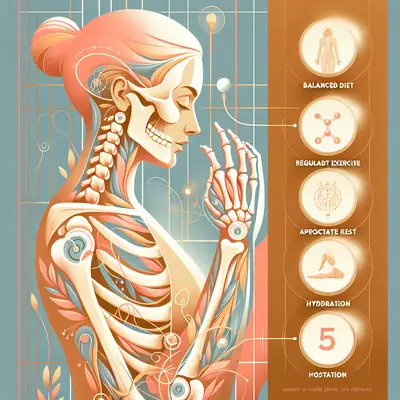
Healthy living, when viewed through the lens of joint health, is less about dramatic overhauls and more about meticulous refinement. It is the quiet discipline behind how you stand in line, descend a staircase, or reach for a suitcase overhead. For those who prioritize long‑term mobility, the goal is not simply to move without pain—it is to design a lifestyle in which each habit, each micro‑decision, quietly protects cartilage, nurtures connective tissue, and preserves ease of motion well into later decades.
What follows is not a list of generic “joint tips,” but a set of five exclusive, joint‑centric insights—subtle but powerful refinements that discerning individuals can weave into a premium healthy‑living routine.
Insight 1: Treat Alignment as Daily Wear, Not Just Gym Technique
Most people reserve “good form” for the gym. Those focused on joint health understand that alignment is a form of mechanical nutrition—delivered all day long.
Think of your joints as hinges on a finely crafted door: they perform optimally only when forces move along their intended path. When you habitually stand with your weight slumped into one hip, lock your knees while waiting in line, or crane your neck toward a laptop, you create quiet but persistent torque across your joints. Over weeks and years, this becomes cumulative strain.
Begin to audit your “default” postures:
- When standing, distribute weight evenly between both feet, soften the knees slightly, and feel your ribs stack over your pelvis rather than pitching forward.
- When sitting, allow your hips and knees to rest at roughly 90 degrees, feet flat, with the screen at eye level to spare your neck and upper back.
- When carrying a bag, alternate sides or opt for a backpack or crossbody style that reduces unilateral loading.
These postural micro‑adjustments don’t just look more poised; they gently reorient the forces traveling through your joints, sparing cartilage and ligaments from unnecessary stress.
Insight 2: Engineer Your Environment to Default to Joint Protection
Healthy joints are rarely the product of willpower alone. They are the outcome of environments that make the “joint‑wise” choice the path of least resistance.
Subtle environmental engineering can transform your home and workspace into quiet allies of joint preservation:
- Kitchen and home layout: Keep your most‑used items between mid‑thigh and eye level. This reduces repetitive deep squats and overhead reaching that can strain knees, shoulders, and the lower back.
- Workstation design: Use an adjustable chair with lumbar support, a footrest if your feet don’t easily touch the floor, and a keyboard that allows your wrists to remain neutral. This protects finger, wrist, and elbow joints during long work sessions.
- Bathroom and bedroom supports: Install grab bars or a stable support near bathtubs and showers. Consider a slightly higher bed or mattress height to make transitions easier on knees and hips.
- Lighting and clutter: Good lighting and clear walkways reduce the risk of missteps, slips, and awkward joint‑loading during sudden corrections.
By designing your surroundings to reduce awkward angles, sudden twists, and overloaded joints, you transform joint care from something you “remember to do” into something your space silently enforces.
Insight 3: Train Your Muscles as Joint Guardians, Not Just for Strength
Muscles are not only about aesthetics or raw strength; they are your joints’ most loyal guardians. The quality of that guardianship, however, depends on more than how much you can lift.
A joint‑centric approach to training emphasizes:
- Controlled tempo: Slowing down movements—especially the lowering phase—teaches muscles and tendons to absorb force smoothly, reducing jarring impact on cartilage.
- End‑range control: Gentle, well‑supported work near the edges of your range of motion (such as controlled squats to a comfortable depth or slow overhead reaches with light resistance) trains your joints to be stable where they are most vulnerable.
- Balanced strength: Pair “front” and “back” muscle groups—quadriceps with hamstrings, chest with upper back, hip flexors with glutes. Symmetry in strength and flexibility helps ensure even loading through joint surfaces.
- Anti‑rotation and stability: Movements like carries, planks, and single‑leg balance drills challenge your body to resist unwanted motion, teaching your hips, knees, and spine to remain steady under real‑world conditions.
A well‑designed program, ideally discussed with a physical therapist or qualified trainer, becomes less about chasing numbers in the gym and more about curating the quality of support your joints receive with every step you take.
Insight 4: Curate an Anti‑Inflammatory Routine, Not Just an Anti‑Inflammatory Diet
Nutrition often takes center stage in joint conversations, and rightly so—chronic, low‑grade inflammation can quietly erode joint comfort. Yet the most sophisticated approach goes beyond a “healthy diet” and looks at an entire anti‑inflammatory routine.
From a dietary perspective, prioritizing:
- Fatty fish rich in omega‑3s (such as salmon, sardines, or trout)
- A wide spectrum of colorful vegetables and fruits (for antioxidants and polyphenols)
- Extra‑virgin olive oil, nuts, and seeds as primary fats
- Minimally processed foods with limited added sugars
creates a baseline nutritional environment that is less hospitable to chronic inflammation.
Equally important, however, are anti‑inflammatory lifestyle levers:
- Sleep as lubrication for the nervous system: Consistent, high‑quality sleep helps regulate immune responses and pain perception, allowing joints to recover from daily loads.
- Stress regulation: Chronic stress can amplify pain sensitivity and inflammatory signaling. Practices such as slow breathing, mindfulness, or gentle yoga can moderate this response.
- Thoughtful movement frequency: Short movement “intermissions” throughout the day—standing, walking, or stretching every 30–60 minutes—help circulate synovial fluid, delivering nutrients to cartilage that lacks its own blood supply.
Together, these inputs craft a physiological climate in which joints can function with greater comfort and resilience.
Insight 5: Practice “Foresight Movement” in Every Decade
The most elegant joint strategy is one that anticipates the decades ahead. Instead of simply asking, “How do my joints feel today?” ask, “What movements do I want to preserve at 60, 70, or 80—and what must I do now to keep them?”
This “foresight movement” mindset shifts your daily choices:
- If you wish to comfortably climb stairs later in life, you train your quadriceps and glutes with thoughtful squats, step‑ups, and uphill walking now.
- If you want to easily turn your head while driving in your seventies, you prioritize cervical mobility and upper back rotation drills today.
- If kneeling on the floor to play with grandchildren matters to you, you maintain hip and ankle mobility and gently practice getting down to and up from the floor with control.
Instead of waiting for pain to dictate your habits, you work backwards from the future life you want. Joints thrive on this kind of long‑range thinking, where consistency and small, respectful challenges accumulate into durable capacity.
Conclusion
Healthy living for joint‑conscious individuals is defined not by extremes but by refinement—how you stand, design your environment, train your muscles, curate inflammation, and anticipate the demands of future decades. When those elements align, joint care becomes less of a reaction to discomfort and more of a quiet, ongoing design project for your life.
By approaching movement as a daily craft rather than a chore, you grant your joints the luxury of being almost unnoticeable—moving reliably, comfortably, and gracefully in the background of everything else you choose to do.
Sources
- [CDC – Osteoarthritis: Risk Factors and Prevention](https://www.cdc.gov/arthritis/basics/osteoarthritis.htm) - Overview of osteoarthritis, risk factors, and preventive strategies relevant to joint‑wise living
- [Harvard T.H. Chan School of Public Health – Healthy Fats and Inflammation](https://www.hsph.harvard.edu/nutritionsource/omega-3-fats/) - Explains the role of omega‑3 fatty acids and diet in modulating inflammation
- [Arthritis Foundation – Protecting Your Joints](https://www.arthritis.org/health-wellness/healthy-living/managing-pain/joint-protection) - Practical guidance on body mechanics, joint protection, and daily strategies
- [Mayo Clinic – Exercise and Arthritis](https://www.mayoclinic.org/diseases-conditions/arthritis/in-depth/arthritis/art-20047971) - Discusses how appropriately designed exercise supports joint health and function
- [National Institute of Arthritis and Musculoskeletal and Skin Diseases (NIAMS)](https://www.niams.nih.gov/health-topics/osteoarthritis) - Evidence‑based information on osteoarthritis, joint structure, and treatment options
Key Takeaway
The most important thing to remember from this article is that this information can change how you think about Healthy Living.