Most viral office dramas don’t start with a kale smoothie; they start with a chair.
In a widely shared recent story, a new employee arrived at his sales job to find his personal, $1,800 Herman Miller Aeron chair repeatedly “borrowed” by a co‑worker—until the situation escalated so far that security and police were called. On the surface, it reads like corporate comedy. But beneath the meme‑ready absurdity lies a very modern truth: people are willing to fight—sometimes literally—for comfort at work, because their bodies are already paying the price of sitting.
At Joint Health Living, we see this as more than office gossip. It’s a real‑time signal that ergonomic awareness has finally gone mainstream. Yet there’s a quiet risk here: many people now equate joint‑smart living with simply buying the most expensive chair in the room. In reality, true joint luxury is less about the price tag on your seat and more about the precision of how you inhabit your day.
Below, we explore five refined, often overlooked insights that elevate “comfortable seating” into a full‑body joint‑wellness strategy—no police report required.
1. The Chair Is A Tool, Not A Throne: Why Dynamic Posture Outperforms Any Price Tag
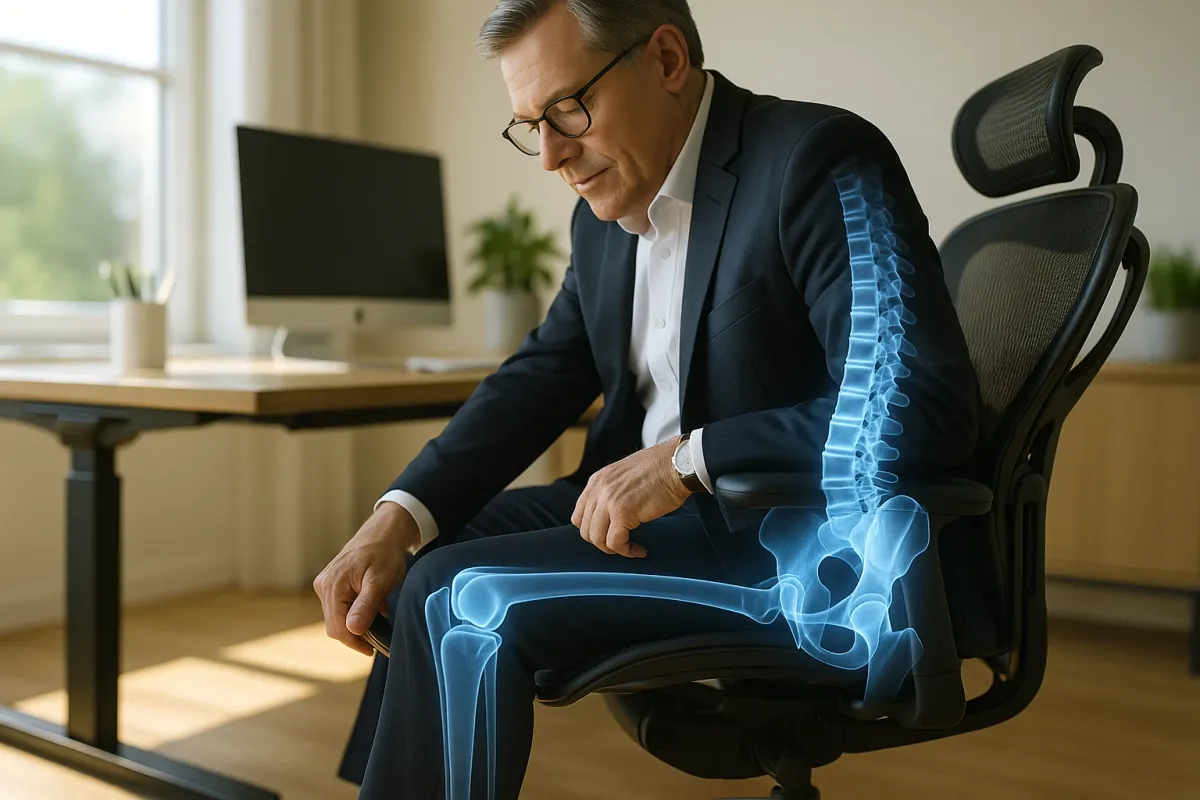
The Herman Miller Aeron became a design icon because it supported a new vision of work: long hours at a desk, optimized for comfort and productivity. Yet even the most exquisite ergonomic design cannot rescue a static body. Joints are living structures; they crave movement, load variation, and subtle shifts in position. When we treat a premium chair as a throne—a place to settle in and barely move—we unintentionally turn comfort into a slow insult to our hips, spine, and knees.
Dynamic posture is the true luxury upgrade. This means using the micro‑features of any chair—tilt, height, lumbar, armrests—as invitations to vary how you sit, not excuses to stay frozen. Adjust the seat pan so your hips are slightly above your knees, then occasionally lower or raise by a small margin through the day. Shift your lumbar support slightly every few hours to change the arc of your spine. Let your backrest support you part of the time, then sit more actively on your sit bones for a few short intervals. The nervous system thrives on these micro‑variations, and your joints respond with better lubrication, less stiffness, and a quieter ache at the end of the day.
2. Joint‑Smart Luxury Begins At The Floor: The Hidden Power Of Foot Position
Most ergonomic conversations begin at the backrest and end at the cushion, but for joint health, the real story starts at the floor. How your feet meet the ground dictates the rotational forces traveling through your ankles, knees, and hips. An exquisite chair paired with sloppy leg positioning is like wearing couture shoes two sizes too small—visually impressive, structurally unforgiving.
Aim for a grounded, symmetrical base: feet fully supported, roughly hip‑width apart, weight distributed evenly across heel and forefoot. Avoid the elegant‑looking, joint‑taxing habit of crossing one leg over the other for hours; that subtle hip rotation, repeated daily, can gradually irritate low back and knee structures. If your chair height forces your feet to dangle, no price tag can save your knees from the added strain—invest in a footrest or improvised support (a stable box, a low stool) so your joints are aligned, not suspended.
Your goal: when you glance down, your legs should resemble a poised, grounded stance—ready to stand at any moment—rather than a collapsed, tucked, or rotated position. That poised neutrality is one of the finest gifts you can offer your knees and hips, every single workday.
3. The Micro‑Intermission: Elevating “Getting Up For A Coffee” Into A Joint‑Renewal Ritual
The viral chair dispute highlights a common belief: if you can just secure “the right seat,” you can endure the workday. For joint longevity, endurance is the wrong metric; rhythm is the standard of excellence. Our cartilage nourishes itself not through stillness, but through cycles of compression and release—this is how joint fluid circulates and tissues stay supple.
Instead of glorifying marathon sitting sessions, curate micro‑intermissions. Every 30–45 minutes, stand and move for 60–120 seconds—not long enough to derail your focus, but sufficient to whisper to your joints, “You are not furniture.” Walk a slow loop around the room, gently roll your ankles, straighten and soften your knees, rotate your pelvis in small circles as though drawing a discreet figure‑eight.
These breaks don’t have to announce themselves to the entire office; they can be as subtle as pausing during a phone call or taking a standing moment while your computer compiles or updates. The premium mindset shift is this: consider movement breaks not as disruptions to productivity, but as maintenance of the instrument that creates your productivity—your body.
4. Precision Alignment: The Quiet Luxury Of Thoughtfully Arranged Screens And Surfaces
Many people now know how to adjust a high‑end chair, but far fewer align the rest of the workspace with equal care. When your screen is slightly too low, your neck carries the cost. When your keyboard is too high, your shoulders and elbows absorb the strain. Over time, this translates into compensations down the entire kinetic chain—especially in the thoracic spine, ribs, and even the way force travels into your hips and knees when you stand.
Aim for this quiet standard of excellence: your screen’s top third at or just below eye level, about an arm’s length away. Your forearms should rest near parallel to the floor, shoulders soft and relaxed—no subtle shrugging towards your ears. Wrists should hover in gentle neutrality, not bent sharply up or down. Even a laptop can be refined into a joint‑friendly setup with a simple riser and an external keyboard and mouse.
The true hallmark of a premium workspace is not the brand name stamped on your chair—it’s the sense that every object in your field has been arranged with deliberate respect for your body’s architecture. That visual coherence is often mirrored by a deep physical ease in your joints at day’s end.
5. Comfort Culture As A Long‑Term Joint Strategy, Not A Momentary Status Symbol
The viral tension over a luxury chair exposes something deeper about modern office life: comfort has quietly become a form of currency. Some people hoard it; others feel they must steal it. But for long‑term joint health, comfort must shift from being a contested object to a shared culture.
In practical terms, this means advocating not just for your own chair, but for an environment where everyone can sit, stand, and move in joint‑smart ways. If you lead a team, normalize brief movement pauses during long meetings. Encourage sit‑stand flexibility where possible. When your company upgrades furniture, bring joint‑health language into the conversation—supporting lumbar curvature, allowing feet to rest flat, enabling varied working heights.
At the individual level, treat comfort as a strategic investment rather than a rare indulgence: the shoes you commute in, the bag you carry your laptop with, the way you transition from work to evening movement all contribute to how your joints age. Opulence, in the context of joint health, is not excess; it’s the quiet, consistent choice to remove unnecessary strain from your body, year after year.
Conclusion
The office chair dispute that escalated all the way to an arrest feels, at first glance, like a sign of modern absurdity. Yet it also reveals how viscerally we now understand that what we sit in—and how we sit—shapes how we feel. For those who care about graceful, lifelong mobility, the lesson is not “buy the most expensive chair you can find.”
Instead, it is this: curate a life in which your joints are never an afterthought. Align your environment with the same discernment you bring to your schedule, your wardrobe, your nutrition. Let your seating, your screen, your micro‑movements, and your daily rituals reflect a quiet conviction: your body is worthy of thoughtful design.
That is the true luxury of modern healthy living—and it requires no police report, only consistent, elegant care.
Key Takeaway
The most important thing to remember from this article is that this information can change how you think about Healthy Living.