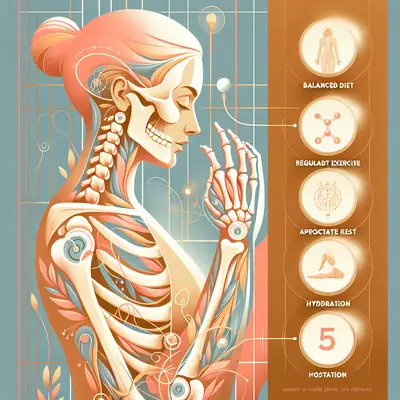
Healthy living for joint health is not a sprint toward dramatic transformation; it is a series of exquisitely small decisions, repeated with care. When those decisions accumulate—how you stand at the kitchen counter, what you reach for at breakfast, the way you transition from phone to pillow at night—your joints record each choice like a ledger. Over time, they respond with either stiffness and protest, or a quiet, enduring ease. This is an invitation to treat your joints as your most bespoke long‑term investment, and to curate your daily life accordingly.
Below are five exclusive, detail‑driven insights that reward the person who is already “doing the basics” and is ready to refine.
Insight 1: Curating Micro-Movements as a Daily Joint Signature
Most guidance on joint health focuses on workouts; far fewer conversations address what your joints endure in the other 23 hours of the day. Yet it is your “micro‑movements”—the way you pivot, reach, twist, and lower your body—that often define the long‑term comfort of your joints more than your time at the gym.
Begin by noticing your transitions: how you rise from a chair, get out of the car, or turn to pick something up. Each of these is an opportunity for either compressive strain or elegant alignment. Aim for fluidity rather than speed—think of standing as a controlled lift, not a push. Engage your hips first instead of hinging from your lower back or collapsing into your knees. When reaching for items on high or low shelves, position your feet and torso so you turn your whole body rather than torquing a single joint in isolation.
Over days and weeks, this intentionality rewires movement patterns. Your hips and spine share the workload more evenly, your knees and shoulders stop absorbing awkward angles alone, and your joints enjoy a life less defined by sudden jolts and more by considered, harmonious motion. Healthy living for joint health becomes less about what you do in a single workout and more about the choreography of your everyday life.
Insight 2: Designing a Joint-Conscious Morning Ritual
The first 30–45 minutes of your day can either amplify stiffness or gently dissolve it. A joint-conscious morning is not about dramatic routines; it is about a quiet, repeatable sequence that signals safety and mobility to your body from the moment you wake.
Before leaving the bed, take 2–3 minutes for gentle “mapping” of your joints: slow ankle circles in both directions, light knee bends while lying down, a subtle pelvic tilt, broad but relaxed shoulder rolls against the mattress. This wakes up synovial fluid—the natural lubrication in your joints—before you load them with weight. When you stand, give yourself the grace of a deliberate first walk to the bathroom or kitchen, focusing on longer, even strides rather than shuffling.
Consider your morning surfaces as well. A well‑cushioned but supportive mat where you typically stand to prepare breakfast or coffee can reduce repeated impact through your ankles, knees, and hips. If you commute, transform those first minutes of sitting into a posture reset: sit tall, plant your feet evenly, and notice whether you habitually lean into one hip or twist your spine. This is not about perfection, but about preventing your morning from becoming a daily rehearsal of joint‑unfriendly patterns.
When you treat your morning as a calibration window rather than a rushed blur, your joints encounter the rest of the day with more readiness and less resistance.
Insight 3: Elevating Nutrition from “Anti-Inflammatory” to Joint-Targeted
Many people vaguely “eat healthier” for joint comfort, but a refined approach goes beyond generic anti-inflammatory advice toward nutrient precision. Your joints are complex living structures—cartilage, bone, ligaments, tendons, and the synovial fluid that cushions movement. Each of these tissues has specific nutritional preferences.
For cartilage and connective tissue support, emphasize a steady intake of vitamin C (citrus, berries, peppers), which is essential for collagen synthesis, and include sources of high‑quality protein spaced throughout the day to provide the amino acids joints depend on for maintenance. Omega‑3 fatty acids from cold‑water fish (such as salmon, sardines, and mackerel), walnuts, and flaxseeds help modulate inflammation, which can ease joint discomfort over time.
Do not overlook the “structural minerals”: calcium, vitamin D, vitamin K2, and magnesium. Strong, well‑mineralized bone beneath your cartilage creates a stable foundation for joint surfaces. Fermented foods and fiber‑rich plants support a healthier gut microbiome, which emerging research links with systemic inflammation and immune modulation—both highly relevant to arthritis and generalized joint pain.
A premium nutritional approach is less about occasional superfoods and more about consistency: a daily rhythm of joint‑supportive nutrients that quietly and reliably fortify the tissues you intend to keep moving gracefully for decades.
Insight 4: Treating Rest as an Active Joint Strategy, Not an Afterthought
Healthy living is often misconstrued as relentless activity—step counts, training schedules, and productivity metrics. Yet for your joints, well‑designed rest is as strategic as movement. Recovery is when joint tissues respond to load, repair micro‑stress, and recalibrate.
Sleep is the most powerful of these rest strategies. Deep, high‑quality sleep helps regulate inflammatory pathways and supports hormonal balance that indirectly affects joint health. A consistent sleep schedule, a cool dark room, and a wind‑down routine that truly signals “off duty” to your nervous system are not indulgences; they are core joint‑care investments.
During the day, integrate “joint resets” instead of long stretches of immobility. For every 45–60 minutes of sitting or standing still, take 2–3 minutes to gently move your major joints through comfortable ranges: neck rotations, wrist circles, hip shifts, light calf raises. This avoids the stiffness and swelling that arise when joints are locked into one position for too long, particularly in weight‑bearing joints like the knees and hips.
Finally, discern the difference between restorative rest and total withdrawal. On days when your joints feel irritated, consider an active recovery approach—gentle walking, pool time, or slow cycling—rather than complete stillness. The goal is to give joints a softer workload, not to deprive them of the nourishing movement that keeps them lubricated and resilient.
Insight 5: Using Environment and Objects as Silent Joint Allies
Healthy living for joint health is not solely about what your body does; it is also about what your environment quietly asks of it. The furniture you choose, the shoes you wear, the height of your counters and screens—these details accumulate into either effortless support or chronic strain.
At home and work, examine the “default” positions your space encourages. Is your laptop always a little too low, drawing your neck forward? Do you often perch on a high stool that compresses the backs of your thighs and shifts stress into your knees? Slight adjustments—raising a screen to eye level, choosing a chair that lets your feet rest fully on the floor, or adding a footrest—can dramatically reduce repetitive joint stress over time.
When it comes to footwear, aim for quiet sophistication over trend. A supportive, well‑constructed shoe with appropriate cushioning and a stable heel height helps align your ankles, knees, hips, and spine with every step. If you spend many hours on hard flooring, consider placing subtly cushioned mats in the spots you stand longest—by the sink, your standing desk, or a frequently used counter.
Even small daily tools can become joint allies: kitchen utensils with ergonomic handles for those with hand or thumb sensitivity; lightweight cookware that spares the wrists; lever‑style door handles instead of knobs for arthritic fingers. Over time, these curated choices create a living environment that no longer fights your joints, but quietly collaborates with them.
Conclusion
Refined joint health does not hinge on a single breakthrough treatment or heroic workout. It emerges from a thousand discreet decisions: how you rise, what you eat, how you design your mornings, the way you honor rest, and the spaces you inhabit. When you approach these details with intention, your joints cease to be a source of constant negotiation and instead become reliable partners in the life you wish to lead.
Healthy living, in this elevated sense, is not louder effort but quieter precision. Your joints recognize the difference—and respond over time with a steadier, more graceful kind of comfort.
Sources
- [National Institute of Arthritis and Musculoskeletal and Skin Diseases (NIAMS) – Joint Health Overview](https://www.niams.nih.gov/health-topics/joint-health) - Evidence‑based information on joint structure, common conditions, and protective strategies
- [Arthritis Foundation – Lifestyle and Joint Health](https://www.arthritis.org/health-wellness/healthy-living) - Practical guidance on movement, rest, and daily living adaptations for joint comfort
- [Harvard T.H. Chan School of Public Health – Fats and Inflammation](https://www.hsph.harvard.edu/nutritionsource/fats/) - Explains the role of omega‑3 and other fats in inflammation relevant to joint health
- [Mayo Clinic – Anti-inflammatory Diet and Arthritis](https://www.mayoclinic.org/diseases-conditions/arthritis/in-depth/arthritis/art-20047971) - Discusses how nutrition and specific foods can influence arthritis symptoms
- [U.S. Department of Health and Human Services – Physical Activity Guidelines](https://health.gov/our-work/nutrition-physical-activity/physical-activity-guidelines) - Outlines evidence‑based activity recommendations, including guidance relevant to maintaining joint function
Key Takeaway
The most important thing to remember from this article is that this information can change how you think about Healthy Living.