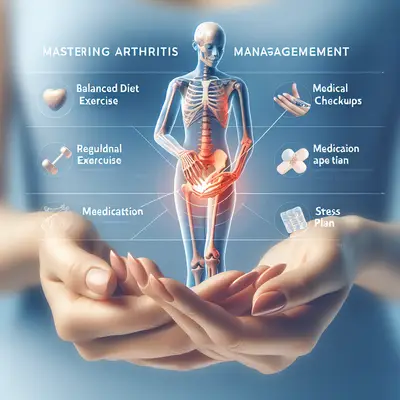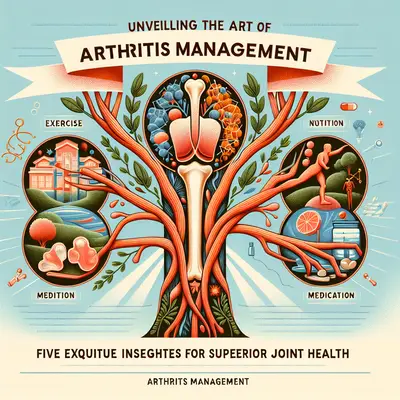
Arthritis management, when done well, is rarely dramatic. It is measured, intentional, and quietly transformative. Instead of chasing quick fixes, the most successful approach treats your joints as you would a heritage investment: protected, thoughtfully maintained, and elevated by small, consistent refinements.
This is an exploration of arthritis care that steps beyond basic advice and into more nuanced territory—five exclusive insights for those who want to steward their joint health with precision and discernment.
Reframing Pain: From Enemy to Informant
Most people treat pain as something to suppress at all costs. In refined arthritis management, pain becomes a data stream—neither villain nor ruler, but a signal to be interpreted with care.
Pain has qualities: sharp or dull, fleeting or lingering, predictable or erratic. Tracking these nuances—time of day, specific movements, even weather patterns—can reveal patterns that standard “1 to 10” pain scales simply miss. A sharp, brief twinge with rotation suggests something different than a slow, building ache under load.
This informed observation can help you and your clinician distinguish inflammatory pain from mechanical overload, allowing more precise adjustments in medication, exercise, and lifestyle. It can reveal which movements are safe but sensitive, and which must genuinely be avoided. Instead of reacting with blanket rest or blanket activity, you can respond with tailored micro-adjustments: a lighter load, a slower tempo, a shorter range of motion.
The sophisticated goal is not to eliminate all sensation, but to refine your relationship with it—pain as a feedback tool, not a dictator of your day.
Designing a Daily “Joint Environment” Instead of a Workout
Traditional advice often isolates movement into a scheduled “workout.” For joints that need careful stewardship, this can be too blunt an instrument. A more elegant approach is to design your entire day as a joint-supportive environment.
Consider three overlapping layers:
- Baseline posture: How your joints are positioned most of the time—at your desk, in your car, on your sofa—often matters more than the 30 minutes you spend exercising. Small upgrades like a slightly higher chair, a supportive footrest, or a wider keyboard can reduce subtle, constant strain on inflamed joints.
- Micro-movements: Gentle, frequent motion—ankle circles during calls, shoulder rolls while your coffee brews, slow sit-to-stand repetitions from a firm chair—serves as joint “nutrition.” These low-intensity, low-friction movements nourish cartilage and lubricate joints without provoking flares.
- Deliberate practice: This is your structured exercise—perhaps 15–30 minutes of carefully selected strength, mobility, and balance work. Rather than chasing intensity, arthritis-conscious training prioritizes movement quality and control over maximal effort.
Think of your joints as preferring a smooth, continuous “ambient soundtrack” of motion rather than explosive solos. A thoughtfully curated daily environment delivers this: unhurried, repeatable, and sustainable over years.
Strength as an Accessory, Not an Assault
For many with arthritis, strength training has a reputation for being risky, painful, or simply incompatible with joint disease. In reality, when approached with refinement, strength can be one of your most luxurious joint protections.
The key is to treat resistance as an accessory—something to be layered in delicately, not imposed as a test of will. This means:
- Sub-maximal loads: Lifting at a level where you finish your set feeling you could have done more, rather than pushing to your limit. This builds resilience without provoking flare-ups.
- Tempo and control: Slower, more deliberate movements often feel gentler on the joints while challenging muscles more deeply. A three-second lower, brief pause, and controlled rise can be far more joint-friendly than hurried repetitions.
- Smart leverage: Machines, resistance bands, water resistance, and even partial bodyweight exercises can all be curated to avoid extreme joint angles while still strengthening the surrounding musculature.
- Joint “preloading”: Mild activation of key muscles (for example, tightening the quadriceps before standing, or gently engaging your core before lifting) can help stabilize joints and reduce “loose” or jarring movements that irritate sensitive tissues.
Viewed this way, strength training is less like a high-intensity boot camp and more like tailored sartorial work: carefully fitted, adjusted, and refined until it supports you seamlessly.
The Overlooked Luxury: Sleep as an Anti-Inflammatory Tool
While supplements and procedures are often discussed in detail, sleep is frequently treated as an afterthought. For joint health, this is a costly oversight. High-quality sleep is among the most powerful—and underutilized—anti-inflammatory tools available.
Arthritis is deeply intertwined with immune and inflammatory pathways that are regulated in part by sleep. Fragmented or insufficient sleep is associated with higher pain sensitivity, delayed recovery, and increased inflammatory markers. Years of slightly substandard sleep can quietly predispose joints to ongoing irritation.
Sophisticated arthritis care treats sleep with the seriousness of a prescription:
- Temperature refinement: Cooler bedrooms (around 60–67°F / 15–19°C) have been shown to support more restorative sleep. For joints, this may be paired with localized warmth—like a heated blanket over specific areas—so the body rests cool while joints feel comforted.
- Tactile support: A mattress and pillow configuration that reduces pressure on sensitive joints is not indulgence; it is strategic. For side sleepers with hip or shoulder arthritis, a softer top layer or between-the-knees pillow can reduce night-time micro-wakening from discomfort.
- Pain timing: When appropriate and medically advised, timing certain medications or topical therapies in the evening can create a smoother pain landscape overnight, allowing deeper, less fragmented sleep.
In this paradigm, sleep is not just “rest”—it is a foundational treatment that magnifies the benefits of every other joint-care strategy you employ.
Personalized Calm: Curating Stress to Lower Joint Inflammation
Stress management advice is often generic and uninspired. Yet chronic psychological stress is known to amplify inflammation, increase pain perception, and erode resilience—exactly what someone with arthritis wants to avoid. The refinement lies in moving from vague “relaxation” to highly personalized calm.
A sophisticated approach begins by identifying your actual soothing inputs—what reliably shifts your nervous system out of urgency and into ease. For some, it is structured, almost ritualistic (a particular tea, a specific chair, a set time of evening reading). For others, it is sensory (warm water, certain music, natural light, or the texture of a knitted throw).
From there, you build micro-rituals that are:
- Predictable: Repeated at roughly the same time each day so your nervous system begins to anticipate them.
- Undemanding: They require no significant willpower, planning, or preparation—removing as many barriers as possible.
- Compatible with flares: They are accessible even on high-pain days (for instance, guided breathing, an audio book, gentle stretching in bed).
Paired with evidence-based methods—such as brief daily mindfulness, paced breathing, or restorative movement—these rituals help tame the stress-inflammation loop. The result is not a life without challenge, but a nervous system that no longer reacts to every stressor with a full inflammatory surge.
Conclusion
Elevated arthritis management is not built on dramatic interventions or rigid perfection. It emerges from the accumulation of thoughtful choices: listening to pain as information, curating a daily environment that supports movement, treating strength as a tailored accessory, honoring sleep as therapy, and crafting personal calm as a shield against unnecessary inflammation.
This approach takes arthritis out of the realm of pure limitation and into something more nuanced—a long-term relationship with your body where you are both attentive custodian and discerning collaborator. Over time, that quiet precision can yield what matters most: days that feel freer, joints that feel better supported, and a life that is no longer defined by your diagnosis.
Sources
- [Centers for Disease Control and Prevention – Arthritis Basics](https://www.cdc.gov/arthritis/basics/index.html) - Overview of arthritis types, risk factors, and management strategies
- [Arthritis Foundation – Manage Your Pain](https://www.arthritis.org/health-wellness/healthy-living/managing-pain) - Evidence-informed approaches to understanding and managing arthritis pain
- [National Institute of Arthritis and Musculoskeletal and Skin Diseases (NIAMS)](https://www.niams.nih.gov/health-topics/arthritis) - In-depth information on arthritis, treatments, and ongoing research
- [Harvard Health Publishing – Strength Training: A Powerful Tool for Arthritis](https://www.health.harvard.edu/staying-healthy/strength-training-a-powerful-tool-for-arthritis) - Discussion of how strength training can be safely integrated into arthritis care
- [Johns Hopkins Medicine – Sleep and Inflammation](https://www.hopkinsmedicine.org/health/wellness-and-prevention/the-connection-between-sleep-and-inflammation) - Explanation of the relationship between sleep quality, inflammation, and chronic disease
Key Takeaway
The most important thing to remember from this article is that this information can change how you think about Arthritis Management.