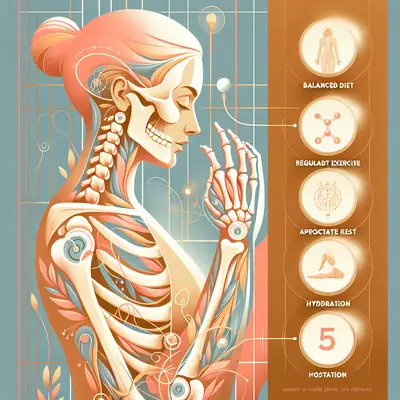
Healthy living, when viewed through the lens of joint preservation, becomes less about restriction and more about cultivated ease. It is the art of arranging your days so that every movement feels deliberate rather than demanding. For those who value longevity, elegance, and comfort in equal measure, joint health is not an afterthought—it is the quiet infrastructure that allows a sophisticated life to unfold without interruption. This is not about quick fixes or fads; it is about designing a lifestyle that quietly, consistently protects the architecture of your body.
Below are five exclusive, often overlooked insights—rooted in science yet refined in application—for individuals who regard their joints as assets to be preserved, not simply tolerated.
The Micro-Load Philosophy: How Tiny Forces Shape Joint Longevity
Most people worry about the “big” stresses—intense workouts, heavy lifting, dramatic injuries. Yet the most influential forces on joint health are frequently the smallest, repeated thousands of times a day. Every stair, every key typed, every subtle posture shift contributes micro-loads that either nurture or erode structural integrity over time.
Adopting a micro-load philosophy means curating these subtle forces with intention. For instance, slightly altering the angle of your wrist at the keyboard, choosing shoes with considered cushioning for daily wear (not only for workouts), or shifting weight evenly between both legs while standing can help distribute force more harmoniously through joints. The goal is not absolute stillness, but graceful variability—tiny changes in posture and position that prevent the same tissues from bearing the exact same load all day long. When you start to see micro-movements as an investment in joint longevity, daily life itself becomes a refined exercise in preservation rather than depletion.
The “Hydration Matrix”: Beyond Water for Joint Fluidity
“Drink more water” is clichéd advice; a joint-focused hydration strategy is far more nuanced. Synovial fluid—the lubricating liquid that cushions many of your joints—depends on adequate hydration, but also on circulation, movement, and the right balance of electrolytes and nutrients. Your goal is not simply to drink more, but to create a “hydration matrix” that supports the internal environment in which your joints operate.
This matrix includes steady hydration throughout the day rather than large, infrequent intakes; lightly salted or electrolyte-enhanced fluids during extended activity; and a diet that favors water-rich, anti-inflammatory foods such as cucumbers, berries, leafy greens, and citrus. Collagen-rich or gelatin-based dishes, when aligned with your dietary preferences, can support the building blocks of cartilage. Gentle movement, especially early in the day, further “activates” hydration by stimulating synovial fluid movement through the joint. The sophisticated perspective moves beyond the simple metric of ounces consumed and toward the quality, timing, and integration of hydration into a daily ritual designed to keep your joints quietly, consistently lubricated.
Precision Strength: Training the Muscles That Joints Secretly Rely On
Many exercise routines focus on visible muscles, yet joints are more dependent on the quieter stabilizers—muscles whose names most people never learn but whose strength determines whether movement feels effortless or precarious. This is the realm of precision strength: targeted conditioning of the deep support structures that allow joints to glide rather than grind.
For knee health, for example, this might mean prioritizing exercises that target the gluteus medius and the small hip rotators, which align the leg and reduce stress on the joint. For the spine, cultivating strength in the deep core and multifidus muscles can transform posture and diminish strain on intervertebral discs. Wrists and hands benefit from gentle grip work and forearm conditioning, especially for those who spend long hours typing or using handheld devices. Precision strength work is subtle rather than flashy—small ranges of motion, low loads, high control—but its impact on joint comfort and stability is profound. By treating these sessions as non-negotiable appointments with your future mobility, you align your routine with a more refined standard of care.
Circadian Movement: Aligning Joint Care with the Body’s Internal Clock
Most fitness guidance treats movement as time-agnostic: exercise whenever you can. For joint health, however, the timing of movement can be as influential as its intensity. Our tissues are not static; they follow circadian rhythms that affect stiffness, inflammation, hormone levels, and even pain sensitivity. Aligning your movement patterns with these rhythms is a subtle strategy with outsized benefits.
Joints often feel stiffer in the morning due to overnight immobility and fluid redistribution. Instead of launching directly into high-intensity activity, a brief, elegant morning ritual—gentle range-of-motion exercises, controlled stretches, and low-load activation—can “wake” the joints before the day’s demands begin. Midday, when body temperature and muscle elasticity tend to peak, can be ideal for strength training or more dynamic movement. Late evening is better suited to restorative mobility work that promotes circulation and signals the nervous system to downshift. By respecting the natural ebb and flow of your body’s internal clock, you transform exercise from a generic task into a tailored, time-sensitive tool for joint resilience.
The Inflammation Audit: Curating an Environment That Protects Your Joints
Inflammation is often discussed as if it were purely dietary, but for those intent on preserving joint comfort, a comprehensive “inflammation audit” is more appropriate. This means evaluating not just what you eat, but how you sleep, breathe, move, and even manage your calendar. Each of these variables can subtly influence systemic inflammation, which in turn shapes the trajectory of joint health.
Nutritionally, a pattern that prioritizes colorful vegetables, omega-3 rich foods (such as salmon, walnuts, and flaxseeds), high-quality proteins, and minimally processed ingredients supports a calmer inflammatory baseline. Equally powerful, though less frequently discussed, is the role of restorative sleep; chronic sleep debt is linked to heightened inflammatory markers and increased pain sensitivity. Stress management practices—breathwork, brief meditative pauses, or simply structured downtime—help modulate the nervous system, which directly influences perceived joint pain. Even your schedule matters: back-to-back commitments with no buffer leave little room for movement breaks, hydration, or recovery. An inflammation audit is an ongoing, refined practice: you systematically reduce the “background noise” in your life so your joints can operate in an internal environment that is as calm, clear, and supported as possible.
Conclusion
Healthy living for joint-conscious individuals is not defined by extremes or rigid rules. It is expressed in small, deliberate design choices—the way you load your body, hydrate strategically, train with precision, move in sync with your natural rhythms, and curate an environment that keeps inflammation in check. When you approach joint health with this level of refinement, comfort becomes less a matter of luck and more the result of thoughtful engineering. The reward is a body that can support not just daily function, but a lifestyle of sustained elegance and ease.
Sources
- Arthritis Foundation – Protecting Your Joints - Overview of daily strategies and movement principles that help reduce joint stress
- Harvard Health Publishing – Foods that fight inflammation - Evidence-based guidance on dietary patterns that modulate inflammation
- NIH – National Institute of Arthritis and Musculoskeletal and Skin Diseases - Detailed discussion of osteoarthritis, joint structure, and risk factors relevant to long-term joint health
- Cleveland Clinic – Synovial Joints and Synovial Fluid - Explanation of joint lubrication, synovial fluid, and how movement supports joint function
- Johns Hopkins Medicine – Exercise and Arthritis - Clinical perspective on the role of targeted exercise and strength training in supporting joint comfort and function
Key Takeaway
The most important thing to remember from this article is that this information can change how you think about Healthy Living.