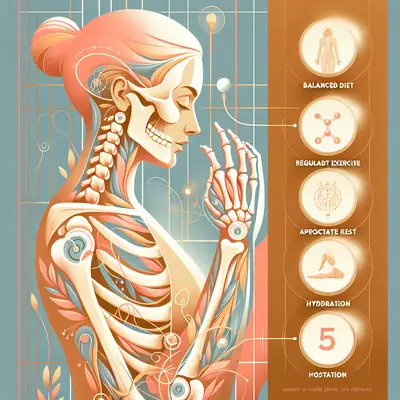
Healthy living, when viewed through the lens of joint health, is far more nuanced than “eat well and exercise.” It’s the art of arranging your days so that your joints are not merely spared damage, but actively invited into a state of enduring ease. This is not about athletic heroics or extreme regimens; it’s about quiet precision—small, intentional choices that compound into effortless movement over decades.
Below, you’ll find a refined exploration of healthy living that privileges your joints at every turn, including five exclusive, under‑discussed insights that people serious about joint health will recognize as difference‑makers.
Healthy Living, Reframed: Joints as the Silent Curators of Your Day
Most wellness advice treats joints as an afterthought—something to worry about only when pain appears. Yet your joints curate almost every experience of daily living: how gracefully you rise from a chair, how free you feel on a staircase, how long you can enjoy a walk without distraction.
When you reframe healthy living around joint preservation, your priorities become strikingly clear. Sleep is no longer simply “rest”; it’s when cartilage is nourished and tissues repair. Nutrition becomes less about weight alone and more about taming low‑grade inflammation that quietly erodes joint integrity. Movement is no longer punishment for dietary choices, but a refined dialogue with your tissues: load, release, recover, repeat.
Joint‑centric healthy living is therefore not a niche pursuit. It is the foundation that allows every other aspect of wellness—cardiovascular health, cognitive clarity, emotional stability—to unfold with less friction, literally and figuratively.
The Architecture of Anti‑Inflammatory Living
Chronic, low‑level inflammation is the quiet antagonist of joint longevity. You feel it, not as a dramatic flare, but as stiffness that lingers, recovery that slows, or an ache that arrives earlier in the day than it used to.
Designing a life that is gently anti‑inflammatory is less about “never again” rules and more about consistent, elevated defaults:
- Favor whole, minimally processed foods that stabilize blood sugar and reduce inflammatory signaling—think vegetables, fruits, legumes, whole grains, and high‑quality fats.
- Prioritize omega‑3 rich foods (fatty fish like salmon and sardines, walnuts, flax, chia), which can help modulate inflammatory pathways that affect joint tissues.
- Reserve ultra‑processed foods, sugary drinks, and excessive alcohol for rare occasions rather than weekly habits; their collective effect is quietly cumulative.
- Treat hydration as a structural choice, not an afterthought; synovial fluid—the “liquid cushion” in many joints—depends on adequate fluid balance.
Healthy living for joint longevity is not about perfection. It’s about making the inflamed state the exception, not the baseline, so your joints spend more time in an environment conducive to repair rather than defense.
Five Exclusive Insights for the Joint‑Focused Individual
The following insights are often overlooked in general wellness conversations but become essential when joint health is your north star.
1. Your Cartilage Has a Weakness: Stillness
Cartilage is avascular—it has no direct blood supply. It receives nutrition through movement, as joint surfaces glide and compress, circulating synovial fluid like a gentle internal tide.
Long stretches of stillness—hours at a desk, prolonged car rides, even “couch marathons”—deprive cartilage of this dynamic nourishment. Over years, that deficit matters.
What to do:
- Break up sitting every 25–45 minutes with 1–3 minutes of movement: stand, walk a corridor, perform slow ankle circles, do a few gentle squats using a chair for support.
- On long drives or flights, treat stretch breaks not as indulgences but as essential joint maintenance.
- Consider “micro‑movement rituals” (shoulder rolls, neck glides, wrist circles) during routine transitions—waiting for the kettle, between meetings, while a page loads.
Stillness is not the enemy; unbroken stillness is. Your cartilage’s preferred state is “often gently in motion.”
2. Precision Strength: Training the Muscles That Protect Joints, Not Just Any Muscles
Many people train muscles they can see in the mirror. Joints, however, are primarily protected by muscles that stabilize rather than showcase.
For joint‑centric strength:
- Hips and glutes: Strong gluteal muscles and deep hip rotators reduce excessive strain on knees and lower back. Movements like hip hinges, step‑ups, and controlled bridges are quietly powerful.
- Core as stabilizer: Think planks, side planks, and anti‑rotation exercises instead of endless crunches; stability through the trunk helps align force through hips, knees, and ankles.
- Rotator cuff and scapular stabilizers: Light, precise work for the shoulders (external rotations, rows with focus on shoulder blade control) helps preserve shoulder integrity for decades.
The refined approach is to favor form over volume. Fewer repetitions, impeccably executed, are often more protective than hurried sets performed to exhaustion. Strength training for joint health is not a spectacle; it’s meticulous.
3. The Underestimated Power of Sleep on Joint Renewal
Sleep is not simply “rest for the mind”; it is a mechanical and biochemical advantage for joints.
During deeper stages of sleep:
- Growth hormone release supports tissue repair and maintenance.
- Inflammatory markers often decrease, giving joint structures a reprieve.
- Reduced load on weight‑bearing joints allows cartilage, ligaments, and tendons to recover from the day’s micro‑strains.
For joint‑focused healthy living:
- Aim for consistent sleep and wake times; irregularity can amplify systemic inflammation and pain sensitivity.
- Consider sleep surfaces: a supportive mattress and a pillow that preserves neutral spinal alignment can ease neck, hip, and low‑back strain over time.
- Protect the pre‑sleep hour: dim lights, reduce stimulating screens, and avoid late, heavy meals that may disturb sleep quality.
Restful sleep is not a luxury; it is an unseen therapy session for your joints, conducted nightly if you allow it.
4. Glycemic Calm: How Blood Sugar Swings Quietly Influence Joint Comfort
Blood sugar volatility is often discussed in relation to diabetes and energy crashes, but it also affects joint health. Repeated spikes in blood glucose can increase systemic inflammation and oxidative stress, subtly influencing joint tissues over years.
For glycemic calm:
- Pair carbohydrates with protein, fat, or fiber to slow absorption and flatten glucose spikes (e.g., fruit with nuts, whole grains with legumes, yogurt with seeds).
- Favor intact grains (oats, quinoa, barley, farro) over refined ones; the slower digestion benefits both metabolic and joint health.
- Be mindful of sweetened drinks, which can deliver a rapid surge in sugar without the buffering effect of fiber or protein.
A day framed around stable blood sugar is a day with fewer inflammatory surges subtly tugging at your joints.
5. The “Load Envelope”: Respecting Your Joint’s Daily Capacity
Each joint has a “load envelope”—a range of stress it can comfortably accommodate in a given period before repair mechanisms are outpaced. Exceed that envelope repeatedly, and wear, irritation, or injury follows.
What this means in practice:
- Sudden changes in activity (“weekend warrior” marathons, abrupt training increases, intense new classes) often exceed your current envelope, especially if your baseline is sedentary.
- Progression should be graceful: increase volume, intensity, or frequency in modest increments, giving your joints time to adapt.
- Pain is data, not an adversary; a new sharp, persistent, or swelling‑related pain is a signal that your load envelope has been breached and needs recalibration.
Healthy living for joint preservation is the art of expanding your load envelope gradually over time, never demanding from your joints today what you did not prepare them for yesterday.
Cultivating a Joint‑Wise Environment at Home and Work
Joints do not experience your life as isolated workouts; they experience the total environment—how you sit, stand, carry, reach, and rest.
Subtle environmental refinements can recalibrate your joint experience:
- At your desk: Aim for a chair that supports the natural curves of your spine, feet flat on the floor or on a footrest, hips and knees near 90 degrees. Wrists should remain neutral, not bent up or down, when typing.
- At home: Store frequently used items between mid‑thigh and shoulder height to avoid repetitive deep bending or overhead straining.
- On your phone: Bring the screen up toward eye level instead of dropping your head forward, which stresses cervical joints and upper back tissues.
- In footwear: Prioritize a stable, well‑cushioned shoe with adequate support over minimal, fashion‑driven designs if you spend considerable time standing or walking; the right shoe is a joint‑protective device in disguise.
When your spaces are configured thoughtfully, your joints expend less effort simply existing and more capacity remains available for the movements you truly value.
Nutrition as Daily Joint Insurance
Beyond anti‑inflammatory patterns and glycemic stability, a few nutritional themes deserve special attention for joint‑conscious living:
- Adequate protein: Cartilage, ligaments, and muscles require amino acids for maintenance and repair. Many adults, particularly as they age, benefit from ensuring each meal includes a thoughtful protein source (fish, poultry, eggs, legumes, tofu, Greek yogurt).
- Micronutrients that matter: Vitamins C and D, along with minerals like calcium and magnesium, play roles in connective tissue integrity and bone health, which indirectly support joint resilience.
- Healthy fats: Extra‑virgin olive oil, nuts, seeds, and fatty fish provide compounds that support an anti‑inflammatory milieu.
- Body weight as mechanical leverage: Each additional pound of body weight can translate into several pounds of extra force across weight‑bearing joints like the knees with each step. Moderating weight through a balanced, sustainable way of eating can dramatically reduce mechanical stress.
Think of nutrition not as a quick fix for joint discomfort, but as a subtle, daily form of insurance shaping the terrain in which your joints operate.
Conclusion
Healthy living, when refined through the lens of joint health, becomes less about chasing extremes and more about cultivating quiet excellence in the everyday: consistent, low‑inflammation habits; precise strength in the right muscles; deeply restorative sleep; careful attention to load; and environments that support rather than sabotage your movement.
Joints reward nuance. They respond to routines that favor gradual progression over bravado, stability over spectacle, and consistency over heroic bursts of effort. As you curate your days with this in mind, the reward is not merely fewer aches, but a form of everyday elegance: the ability to move through your life with ease, grace, and a sense of unhurried capability that endures.
Sources
- [Centers for Disease Control and Prevention – Arthritis and Physical Activity](https://www.cdc.gov/arthritis/basics/physical-activity-overview.html) - Overview of how regular, appropriate physical activity supports joint function and reduces arthritis symptoms
- [Harvard T.H. Chan School of Public Health – Inflammation and Diet](https://www.hsph.harvard.edu/nutritionsource/inflammation/) - Explains how dietary patterns influence chronic inflammation relevant to joint health
- [Mayo Clinic – Osteoarthritis: Symptoms and Causes](https://www.mayoclinic.org/diseases-conditions/osteoarthritis/symptoms-causes/syc-20351925) - Details the role of mechanical load, weight, and lifestyle factors in joint degeneration
- [National Institute of Arthritis and Musculoskeletal and Skin Diseases (NIAMS) – Joint Health and Aging](https://www.niams.nih.gov/health-topics/joint-health) - Discusses how aging, activity, and lifestyle choices affect long-term joint health
- [Johns Hopkins Medicine – Sleep and Pain](https://www.hopkinsmedicine.org/health/wellness-and-prevention/the-relationship-between-sleep-and-pain) - Reviews the bidirectional relationship between sleep quality, pain perception, and inflammation
Key Takeaway
The most important thing to remember from this article is that this information can change how you think about Healthy Living.