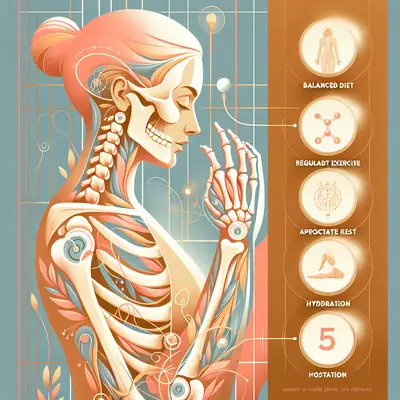
Joint health is rarely treated as a luxury—yet it is one of the most exquisite investments you can make in your quality of life. Beyond symptom management and standard advice, there is an elevated way to move, eat, and live that quietly protects your joints in the background of everything else you do. Think of it as curating your body the way you might curate a wardrobe, art collection, or home: selectively, intentionally, and with an eye for longevity.
In this article, we’ll explore a more polished approach to healthy living for joints, anchored by five exclusive insights that reward attentiveness and nuance. These are the kinds of upgrades that don’t shout—but they accumulate into years of comfortable, capable movement.
The Art of Micro-Loading: How You Ask Your Joints to Work
Most joint advice focuses on total load—how much weight you lift, how many steps you take, how long you stand. Far fewer people consider how abruptly that load appears. The nervous system and connective tissues are exquisitely sensitive to changes in force over time, not just to the final number on a barbell or the distance on a step counter.
Micro-loading is the practice of introducing joint demand with deliberate, gradual escalation. Instead of jumping from a sedentary week into a high-intensity class, you stack smaller bouts of movement across several days, allowing cartilage, tendons, and joint capsules to adapt. This matters because cartilage doesn’t have its own blood supply—it relies on the gentle compression and decompression of movement to draw in nutrients and remove waste.
A refined micro-loading strategy might look like this: a few minutes of joint-specific mobility first thing in the morning, a short walk with varied surfaces in the afternoon, then structured strength work later in the week. The joint never experiences a shocking spike in demand; instead, it receives a series of small, polite invitations. Over time, this approach tends to result in fewer flare-ups, improved confidence in movement, and better tolerance for the activities you truly enjoy.
For those with arthritis or past injuries, micro-loading is especially powerful. It respects your history while expanding your capability—an elegant compromise between protection and progression.
Precision Strength: Training the Muscles That Quietly Guard Your Joints
Healthy living for joints is not just “getting stronger”; it’s getting stronger in the right places with the right intent. Joints do not exist in isolation—they are stabilized and guided by muscles, fascia, and the nervous system. When certain muscle groups are undertrained, the joint itself ends up absorbing forces it was never meant to handle alone.
Precision strength is about upgrading the support system around each joint with deliberate, targeted training. Instead of simply doing “leg day,” you pay attention to how the glute medius supports the hip and knee, how the deep core stabilizes the spine, how the small muscles around the shoulder blade govern shoulder motion. These are the quiet guardians of joint health.
This doesn’t require an elaborate gym routine. It requires choosing movements with high joint value: controlled step-downs rather than only squats, rows that emphasize scapular control rather than just pulling weight, hip hinges that honor spinal alignment instead of chasing numbers. A few well-chosen exercises, done with impeccable form and consistency, are worth far more than a chaotic collection of random workouts.
Over time, this precision approach yields a sense of internal structure: joints feel “held,” movement feels more decisive and less fragile, and everyday tasks become an opportunity to practice alignment rather than a threat to it. You are not merely strong; you are strategically strong.
The Understated Power of “Texture” in Movement
One of the most overlooked concepts in joint health is movement texture—how varied or monotonous your daily motion really is. Even if you meet standard activity guidelines, your joints may still be living a surprisingly repetitive life: the same office chair, the same route, the same style of workout, the same shoes, the same surfaces.
Joints thrive on varied mechanical input. Slight changes in angle, load, speed, and direction stimulate different areas of cartilage and supporting tissues, encouraging more balanced wear and better neuromuscular control. In contrast, high repetition of one narrow pattern—like always walking on perfectly flat treadmills, or always wearing the same heel height—can overuse specific regions while neglecting others.
Curating your movement texture is a subtle, elevated strategy. You might rotate between different walking routes (with modest hills, gentle turns, varied surfaces), alternate shoe styles that are all supportive but not identical, or cycle through a few low-impact activities (swimming one day, cycling another, strength on a third). Even at home, you can vary your positions: standing for some calls, sitting on a firm chair for others, perhaps using a supportive floor cushion for short periods.
The aim is not chaos; it’s thoughtful diversity. You are offering your joints a well-composed menu of movement stimuli, rather than the same dish every day. The result is more resilient joints that are comfortable in more contexts—and less prone to protest when life becomes unpredictable.
Nutrition as Architecture: Building a Joint-Supportive Internal Environment
Nutrition advice for joint health often collapses into a few phrases—“eat anti-inflammatory foods,” “take omega-3s,” “avoid processed sugar.” All true, but such reductions miss the more refined view: your food choices are constantly shaping the architecture of your internal environment, from the viscosity of your synovial fluid to the inflammatory set point of your immune system.
A thoughtfully joint-supportive way of eating emphasizes stability and quality over fads. At its core, this means consistent intake of whole, minimally processed foods, adequate protein to preserve and build muscle (which in turn stabilizes joints), and a colorful variety of plants to provide antioxidants and polyphenols that help counter chronic, low-grade inflammation. Omega‑3 fatty acids—from sources like fatty fish, walnuts, or algae—are particularly well-supported for their role in modulating inflammatory pathways relevant to joint health.
Equally important is what you avoid in excess. Highly refined sugars, ultra-processed foods, and frequent heavy alcohol intake can contribute to systemic inflammation and, in some individuals, aggravate joint symptoms. Think of these not as forbidden, but as occasional indulgences within an otherwise stable framework of nourishment.
For those with arthritis or a strong family history, a more curated approach may include monitoring vitamin D status, ensuring sufficient calcium (preferably from food, supplemented when necessary), and considering evidence-based supplements in consultation with a clinician—such as omega‑3s or, in specific cases, glucosamine and chondroitin. The goal is not a supplement collection; it is a coherent nutritional architecture where each piece justifies its place.
Recovery as a Luxury Standard, Not an Afterthought
The healthiest joints are rarely the ones subjected to the most aggressive training—they are the ones whose owners respect recovery with the same seriousness as performance. In a culture that glamorizes intensity and productivity, rest is often framed as indulgence. For joint health, rest is not indulgence; it is infrastructure.
High-quality sleep is the most underestimated joint-care protocol available to you. During sleep, hormonal cascades involved in tissue repair, immune calibration, and pain modulation are in full effect. Inadequate or fragmented sleep is associated with heightened pain sensitivity and worsened arthritis symptoms. A premium approach to joint health therefore includes a premium approach to sleep: a consistent schedule, a cool and dark environment, limited late-night screen exposure, and a pre-sleep ritual that signals the nervous system to downshift.
But recovery extends beyond the bedroom. It includes building “buffers” into your week: low-intensity days after high-demand days, brief mobility sessions to discharge stiffness after travel, and deliberate pauses between long periods of sitting or standing. It may also include modalities that feel almost spa-like but serve very real physiological purposes—gentle hydrotherapy, mindful breathing to dampen stress-driven inflammation, or occasional massage to improve circulation and ease muscle tension around vulnerable joints.
The refined mindset shift is this: you stop earning your rest and start designing it. Recovery becomes a standard feature of your routine, not a reward for overexertion. Your joints, in turn, experience a more predictable, kindly rhythm—and often repay you with more forgiving, cooperative movement.
Conclusion
A well-lived life places extraordinary demands on relatively small structures: knees that carry ambition, hands that express competence and care, a spine that holds the posture of your presence in the world. Protecting these structures does not require extremes; it requires discernment.
By embracing micro-loading instead of sudden exertion, precision strength instead of generic workouts, textured movement instead of mechanical repetition, architectural nutrition instead of diet confusion, and luxury-level recovery instead of rushed rest, you craft an environment in which your joints can quietly excel.
This is joint health as a form of high-standard living: subtle, intentional, and deeply rewarding. Not merely the absence of pain, but the confident ease of a body you have thoughtfully curated—day after day, choice after choice.
Sources
- [Centers for Disease Control and Prevention – Physical Activity and Arthritis](https://www.cdc.gov/arthritis/basics/physical-activity-overview.html) - Overview of how appropriately dosed physical activity supports joint health and arthritis management
- [Arthritis Foundation – Nutrition and Arthritis](https://www.arthritis.org/health-wellness/healthy-living/nutrition) - Evidence-informed guidance on how specific dietary patterns influence joint pain and inflammation
- [Harvard T.H. Chan School of Public Health – Fats and Inflammation](https://www.hsph.harvard.edu/nutritionsource/fats-and-cholesterol/types-of-fat/) - Explains the role of different dietary fats, including omega‑3s, in modulating inflammation
- [National Institute of Arthritis and Musculoskeletal and Skin Diseases (NIH)](https://www.niams.nih.gov/health-topics/osteoarthritis) - Authoritative information on osteoarthritis, including the importance of strength, weight management, and joint-friendly activity
- [Johns Hopkins Medicine – Sleep and Pain](https://www.hopkinsmedicine.org/health/wellness-and-prevention/the-complicated-relationship-between-pain-and-sleep) - Discusses the bidirectional relationship between sleep quality and pain perception, relevant to joint health and recovery
Key Takeaway
The most important thing to remember from this article is that this information can change how you think about Healthy Living.