When a viral Bored Panda roundup of “Not My Job” moments started circulating this week—showcasing workers doing the absolute bare minimum in hilariously obvious ways—it struck a nerve for reasons that go far beyond crooked street lines and upside‑down signs. For many people living with arthritis, that same energy quietly shows up in their healthcare: a rushed prescription here, a generic handout there, and the subtle message that “management” is someone else’s responsibility.
But arthritis doesn’t respond well to minimal effort. In an era where social feeds are filled with viral shortcuts and “bare minimum” memes, sophisticated arthritis management is starting to look almost radical: deeply personalized, quietly consistent, and unapologetically high‑standard.
Today, inspired by the cultural conversation around doing just enough to get by, we’re exploring what it looks like to take luxury‑level ownership of your joint health—far beyond the medical equivalent of a crooked painted line.
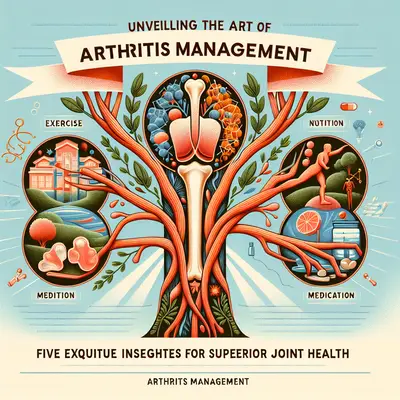
Below are five exclusive, elevated insights for people who expect more from their arthritis care than “good enough.”
1. Replace “Bare Minimum” Medicine With A Personal Arthritis Dossier
The healthcare version of a “Not My Job” moment is all too familiar: a brief appointment, a quick NSAID refill, and “come back in six months.” It’s technically care—but it’s not ownership.
A more refined approach is to create a personal Arthritis Dossier—a living, elegantly organized record that travels with you from specialist to specialist. Think of it as the antithesis of half‑finished paint jobs: it’s complete, curated, and unmistakably yours.
Curate, at minimum:
- A one‑page summary of your diagnosis history (dates, imaging, key flares)
- A current medication list, including doses, timing, and past drugs that failed
- Lab and imaging highlights (ESR, CRP, RF, anti‑CCP, uric acid, key MRI/X‑ray dates)
- A “flare map”: when, where, triggers you’ve noticed, and how long they last
- A personal priority list: what you value most (e.g., preserving hand function for your work, walking pain‑free for travel, or maintaining early‑morning mobility)
Bring this dossier—digital or printed—to every appointment. It allows your rheumatologist to operate at a higher level of precision and signals that you are not outsourcing responsibility for your joints. You are a partner, not a passive recipient.
That subtle shift—from “treat me” to “collaborate with me”—changes the caliber of care you receive.
2. Design Movement Like A Tailored Suit, Not A Generic Uniform
Those “Not My Job” images often feature a single line painted carelessly across every possible surface—no nuance, just one approach for all terrains. Many exercise prescriptions for arthritis look exactly the same: “just walk more,” “try swimming,” “do some light weights.”
Sophisticated joint care treats movement like a bespoke suit: structured, measured, and cut to your body’s exact realities.
Three principles to elevate your routine:
- Joint‑specific precision
Instead of “exercise,” think in terms of joint portfolios: a knee portfolio (quadriceps, hips, glutes), a hand portfolio (intrinsic muscles, grip strength, gentle stretching), a spine portfolio (core stability, postural endurance). Each portfolio gets targeted, time‑efficient attention—10–15 minutes at a time.
- Load before length
For many with arthritis, heavy stretching first thing in the morning can feel like pulling on a fragile zipper. Far better: light activation and load—gentle isometrics, short‑arc movements—before deep stretching. This primes the joint, then invites range, not the other way around.
- Micro‑scheduling, macro‑results
Instead of a single, heroic 45‑minute session, embed three to four “micro‑capsules” of movement through your day: a 6‑minute knee activation after lunch, 8 minutes of hand work during an evening show, 10 minutes of controlled core work before bed. Small segments done consistently are infinitely kinder to inflamed joints than rare, over‑ambitious workouts.
Luxury, in the context of arthritis, is not intensity. It’s accuracy.
3. Upgrade Your Recovery Rituals Beyond Ice Packs And Ibuprofen
The online “Not My Job” photos often show tasks technically completed, but in the most unimaginative way possible. Recovery for arthritis frequently suffers the same fate: a cold pack, a pill, and a shrug.
Elevated joint care treats recovery as a deliberate ritual, not an afterthought.
Refined recovery elements to consider:
- Temperature with intent
Rather than random alternation between hot and cold, match temperature to timing. Heat is often ideal before movement to ease stiffness (warm shower, paraffin bath for hands, a heated wrap on the spine). Cold belongs immediately after higher‑load activity or at the first sign of a flare to calm inflammation.
- Compression that actually fits
Off‑the‑rack sleeves can be the “crooked signage” of arthritis gear—there, but not working optimally. Seek professionally measured compression stockings, custom‑fitted knee or wrist supports, and glove fabrics designed for breathability plus overnight wear. High‑quality compression delivers subtle but serious gains in post‑activity comfort.
- Sleep as a therapeutic tool, not just downtime
- Are your hips or knees collapsing inward?
- Is your neck rotated or over‑extended?
- Are your hands curled tightly or compressed under your pillow?
People with arthritis often sleep in positions that quietly aggravate their condition. Audit your nighttime alignment:
Strategic use of side‑sleeping pillows between the knees, wrist splints for night use (especially in inflammatory arthritis), or a modest neck support pillow can turn eight hours into active joint restoration rather than eight hours of unnoticed strain.
Recovery done thoughtfully is invisible to others—but your joints will register every detail.
4. Treat Flare Management Like Crisis Response, Not Casual Guesswork
In those viral photos, one thing is clear: no one planned for complexity. When a problem arrived—an obstacle in the way, a signpost in the wrong place—the response was simply to proceed anyway, even if it made no sense.
Many people manage arthritis flares the same way: they improvise in the moment, despite knowing flares are inevitable.
A premium approach is to build a Personal Flare Protocol—your own crisis playbook—before you need it.
Curate:
- A medication rapid‑response plan
- Can you temporarily increase an NSAID dose?
- Is there a rescue corticosteroid plan (e.g., a brief taper) for major flares?
- Should you pause any specific activities or complementary therapies when inflammation spikes?
- An energy and movement “downgrade” template
- Work: which tasks can be postponed or delegated within 24–48 hours
- Home: pre‑agreed shortcuts (meal delivery, simplified cleaning, reduced errands)
- Exercise: a flare‑friendly routine focused purely on gentle range of motion, circulation, and joint positioning
- A communication script
Confirm with your rheumatologist what is safe to adjust at the first sign of a flare:
Decide in advance how you’ll scale back:
Many people with arthritis lose valuable time to guilt and explanation. Draft a simple script for colleagues, friends, or family: “I’m in a confirmed flare. I’ll be operating in a reduced capacity for the next 48–72 hours while I follow my management plan.” Clear, calm, and boundaried.
Flare protocols are the opposite of the “not my job” mentality. They say: when things get complicated, I’ve already done the thinking.
5. Curate Your Information Feed With The Same Care You Curate Your Home
The “Not My Job” trend lives on the internet because algorithms reward what is extreme, careless, or absurd. Unfortunately, health information online is no different: sensational diets, miracle cures, aggressive anti‑medication rhetoric, and oversimplified “joint hacks” thrive precisely because they are loud.
Premium arthritis management requires a quiet, deliberate curation of what you allow into your mind.
Three filters to apply:
- Evidence over virality
Prioritize sources that cite clinical guidelines or peer‑reviewed studies—major arthritis foundations, academic medical centers, and board‑certified rheumatologists. Viral TikTok remedies and anonymous testimonials may entertain, but they rarely offer the nuance your joints deserve.
- Nuance over absolutes
Be skeptical of “never” and “always.” Elegant joint care lives in the grey: some people thrive on Mediterranean‑style eating, others on plant‑forward with carefully managed protein; some respond exquisitely to biologics, others require a more layered pharmacologic strategy. Discernment is your most powerful tool.
- Personal resonance over generic aspiration
- Does this complement my existing regimen or crash into it?
- Can I sustain this for months, not days?
- Does it align with my values (for example, discretion, independence, longevity, or performance)?
Just as those “Not My Job” photos ignore context, generic advice ignores your actual life. Before adopting any new practice, ask:
Curated information protects you from distraction and decision fatigue—two silent enemies of consistent arthritis care.
Conclusion
In a week when the internet is delighting in the art of doing just enough to “technically” finish a task, living with arthritis invites a very different philosophy.
Your joints will never be served by the careless line painted over a manhole cover, or the sign posted where no one can read it. They respond to considered decisions, elegant routines, and a level of self‑advocacy that feels more like craftsmanship than crisis.
Owning your arthritis care—through a personal dossier, tailored movement, elevated recovery, pre‑planned flare protocols, and a ruthlessly curated information feed—is not about perfection. It’s about refusing to let your health become a “Not My Job” moment for anyone, including yourself.
In a world fascinated by shortcuts, there is something quietly luxurious about doing this well. Your future mobility is the return on that investment.
Key Takeaway
The most important thing to remember from this article is that this information can change how you think about Arthritis Management.