If your social feed has been filled with people joking about outlandish reasons to call in sick, you’re not alone. A trending piece on Bored Panda—“30 People Share Hilarious And Strange Reasons They Would Call In Sick”—has taken off precisely because it touches a nerve: our complicated relationship with work, rest, and discomfort. Hidden beneath the humor is a quieter, more serious pattern that anyone concerned with joint health should pay attention to.
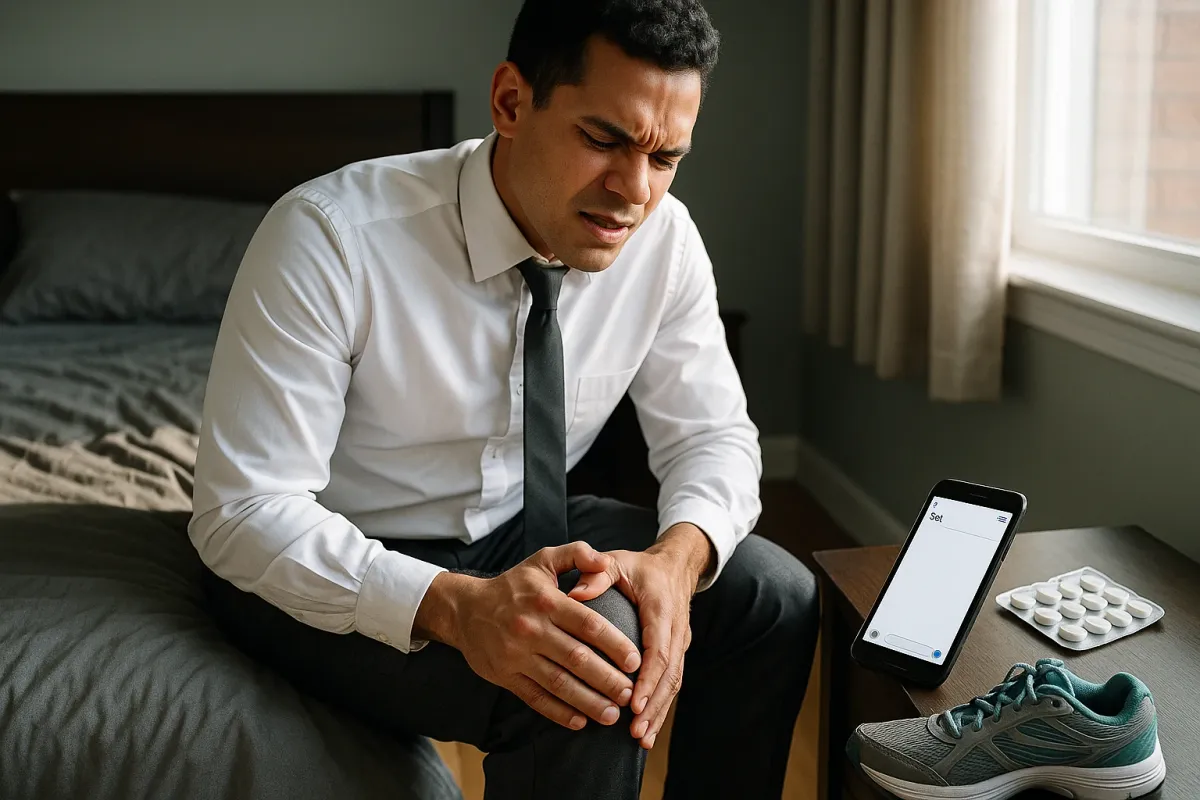
When we laugh about staying home because we’re “emotionally unprepared” or “allergic to Mondays,” we often overlook the more silent, socially acceptable reason people disappear from their desks: pain. Joint pain, stiffness, or deep fatigue rarely makes a funny caption—but it is one of the most common, under‑reported reasons people quietly opt out of a workday. As conversations about toxic workplaces and burnout surface across the internet, there is an elegant opportunity to reframe how we interpret “I don’t feel up to it today” as a potential early warning for joint distress, not just a punchline.
Below are five refined, joint‑centric insights inspired by this cultural moment—designed for those who want to elevate their self‑care beyond generic wellness advice.
1. Sick Days As Silent Data: Decoding Your Personal “Joint Weather Report”
The viral fascination with absurd sick‑day excuses obscures a more interesting metric: how often you feel you could justify staying home because your body simply doesn’t want to collaborate. For joint‑conscious individuals, this is not merely about fatigue; it’s about patterns. Are your “I’d rather not move today” mornings clustering after long commutes, intense deadlines, or travel? Are they worse after back‑to‑back Zoom calls or days when you barely leave your chair?
Instead of dismissing these days as laziness or “getting older,” treat them like a highly personalized weather report for your joints. Record, discreetly and honestly, the mornings when your knees feel heavy, your fingers refuse to glide over a keyboard, or your spine protests when you stand. Over a month, subtle correlations emerge: perhaps your hips rebel after long car rides, or your hands swell more after late-night wine and salty snacks. These observations are more sophisticated than a wearable’s step count—they are nuanced, embodied data. Share them with a rheumatologist or physiotherapist, and you give them a far richer portrait than a standard pain scale ever could.
2. Micro‑Recovery As A Luxury Practice, Not A Last Resort
The stories in the “calling in sick” compilation highlight a rigid, all‑or‑nothing thinking: either you are perfectly fine, or you must vanish for a full day with a dramatic excuse. Joint‑smart living requires a more elegant, layered approach—micro‑recovery woven quietly into your day, long before a full sick day becomes unavoidable.
Imagine your schedule as you might a well‑appointed hotel lobby: every piece intentional, but with space to breathe. Rather than waiting for a flare so severe that you cancel an entire day, introduce deliberate two‑minute rituals that act like quiet concierge service for your joints. A slow, precise neck sequence between calls. Directed ankle circles while a file downloads. Heat applied thoughtfully to your lower back while reading emails in the evening. These are not indulgences; they are structural reinforcements. People who maintain long-term joint function rarely rely on emergency rest—they curate ongoing micro‑rest, the way a luxury property is maintained continuously, not renovated only after it crumbles.
3. The Posture‑Burnout Loop: How “Just One More Email” Steals From Your Future Mobility
The Bored Panda article sits alongside other trending pieces about toxic workplaces, and together they highlight a modern paradox: we joke about skipping work, but we quietly normalize the posture that accelerates joint wear. Hours spent leaning into a laptop, shoulders rounded, pelvis locked, is not merely uncomfortable—it is biomechanical negotiation against your future self.
For joint‑aware readers, it’s time to think of posture not as an aesthetic ideal, but as capital allocation. Every day you stay frozen in a compromised position, you are spending joint “currency” you do not get back. Over time, this leads to what might be called posture‑burnout: your joints are so chronically overloaded in limited ranges that they have no capacity left for the richer movements you actually enjoy—walking through a city, carrying a weekend bag, kneeling to play with a child, or stepping confidently into a boutique fitness class. The corrective is not perfection, but rotation. Aim to cycle your body through at least three distinct working postures each day—seated upright, standing, and reclined or semi‑reclined with lumbar support. Variety, not rigidity, is the ultimate luxury for your joints.
4. Language Matters: Upgrading “I’m Just Tired” To Precision
Those “hilarious” reasons for calling in sick are, in their own way, an attempt to find words for a mismatch between how we feel and what is expected of us. For joint health, imprecise language is more than a communication issue—it can delay meaningful care by years. Saying “I’m just tired” when you really mean “my hips feel like stone when I wake up” deprives both you and your clinician of crucial nuance.
A premium approach to joint health involves upgrading your vocabulary. Instead of “pain,” experiment with: stiffness, burning, pulling, grinding, deep ache, surface tenderness, unpredictable sharpness. Note timing: worse in the morning, improves with movement, worse at night, flares after alcohol, or after emotional stress. This refined self‑description is the difference between generic advice (“try stretching”) and targeted interventions—whether that’s adjusting your anti‑inflammatory regimen, refining your strength program, or exploring early autoimmune markers. In a world where millions post about minor inconveniences online in exquisite detail, your joints deserve at least that level of articulate attention.
5. Designing A “Socially Acceptable” Joint‑Protective Life
The viral sick‑day confessions hint at a shared truth: many people still feel they need a dramatic story to justify taking care of themselves. For anyone invested in long-term joint health, the next frontier is designing a lifestyle where joint‑protective choices are not only accepted, but expected.
This might mean normalizing camera‑off walking calls while you pace gently at home, or quietly requesting meetings in chairs that actually support your hips and spine. It could be framing your mid‑day mobility session not as a “break” but as essential performance maintenance—no different from charging your laptop. For business travelers, it may involve choosing flights and hotels based less on points and more on how kindly they treat your knees and back. The goal is subtle but powerful: shaping an environment where it is neither dramatic nor self‑indulgent to say, “My body functions better when I move like this, sit like this, and rest like this—and I intend to protect that.”
Conclusion
The internet has turned calling in sick into a genre of entertainment—but beneath the humor lies something more meaningful. Each joke, each exaggerated excuse, is a reminder that our culture still struggles to speak plainly about discomfort, pain, and the need to pause. For those who care deeply about their joints, this is your invitation to listen differently.
Your “I can’t face today” moments may not be about emails or meetings at all; they may be your joints sending early, elegant signals that they need a different kind of stewardship. Track them. Name them precisely. Respond with micro‑recovery instead of crisis. And, perhaps most importantly, craft a life in which caring for your joints is not a secret reason to call in sick—but a visible, refined, and completely unapologetic standard for how you choose to live.
Key Takeaway
The most important thing to remember from this article is that this information can change how you think about Joint Care.