Online, everything is louder, faster, more heated. Scroll for ten seconds and you’ll see arguments over politics, identity, power, and who’s “right.” Bored Panda’s recent feature on a trans instructor ousted from a college after failing a student who cited the Bible is a perfect snapshot of this cultural moment: a single grading decision goes viral, the internet erupts, and everyone’s nervous system catches fire.
If you live with arthritis, that ambient tension isn’t just “noise.” It’s inflammation fuel.
Today’s news cycle has become an invisible lifestyle factor in joint health. The constant micro‑stress of outrage headlines, contentious comment threads, and polarized debates can subtly, continuously elevate inflammatory pathways that matter in osteoarthritis and inflammatory arthritis alike. For those committed to preserving mobility with elegance and intention, learning to insulate your joints from the volatility of the digital world is becoming as important as choosing the right biologic or exercise plan.
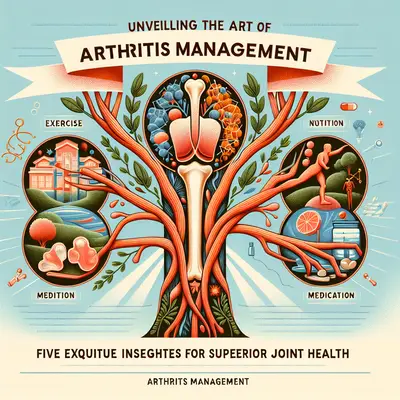
Below, five exclusive, quietly powerful strategies for protecting your joints in an age where even a grading dispute can dominate your feed.
1. From Outrage To Overspill: How Online Conflict Primes Your Inflammation
The story of the trans instructor’s dismissal didn’t just live in a campus newsletter. It was amplified, reframed, and weaponized across platforms—each share another spark of emotional arousal. Whether you agreed, disagreed, or simply watched, your body registered the volatility.
Acute psychological stress has been repeatedly shown to raise pro‑inflammatory cytokines such as IL‑6 and TNF‑α—molecules already central in rheumatoid arthritis and psoriatic arthritis, and increasingly implicated in osteoarthritis progression. When your nervous system is perpetually on alert, your joint environment becomes less forgiving: cartilage repair may stall, pain sensitization may rise, and morning stiffness can become more pronounced. The tricky part? Much of this stress is “micro‑dose”: no single headline feels catastrophic, but dozens per day form a kind of inflammatory background music.
The refined response is not digital abstinence; it’s intentional exposure. Treat the news the way you’d treat alcohol with a new medication: deliberate, time‑limited, and never on an empty emotional stomach. Ask a simple question before you click: “Is this information, or is this provocation?” If it’s the latter, remember that each surge of indignation has a biological bill—and your joints get part of it.
2. Designing A “Low‑Inflammation Feed” As Carefully As Your Medication Regimen
Arthritis management guidelines now emphasize shared decision‑making: tailoring treatment to your values, routines, and long‑term goals. Your digital environment deserves the same precision. In the wake of viral controversies like the college dismissal case, algorithms learn what keeps you engaged—and often, that’s what keeps you activated.
Curate your feeds the way a discerning host curates a guest list. Mute accounts that trade in outrage and moral panic, even if you technically “agree” with them. Follow voices that translate complexity calmly: evidence‑based rheumatology accounts, movement specialists, and patient advocates who offer nuance instead of adrenaline. Consider designating one platform—for many people, Instagram or Pinterest—as an explicitly inflammation‑safe space: no politics, no culture war, no “hot takes,” only content that supports your nervous system and, by extension, your joints.
This is not escapism; it’s inflammation management. Chronic exposure to heated conflict nudges your autonomic balance toward sympathetic dominance (fight‑or‑flight) rather than parasympathetic (rest‑and‑repair). A curated digital landscape is a modern extension of the classic arthritis advice to “pace yourself”—only now, you are pacing your emotional load as carefully as your physical one.
3. Protecting Your Hands And Neck While The World Argues In The Comments
Stories like the dismissed instructor’s case don’t just stir up emotion; they keep our hands mechanically busy. Scrolling, typing long replies, doom‑reading entire comment sections—these repetitive micro‑movements, layered onto an already inflamed joint, create a perfect storm for hand, wrist, and cervical spine pain.
For someone with osteoarthritis at the base of the thumb or rheumatoid involvement in the MCP and PIP joints, the posture of modern outrage—head forward, phone low, fingers tapping rapidly—is biomechanically unforgiving. The premium approach is not to disengage from important conversation, but to engage with ergonomic elegance:
- Elevate the device to eye level, resting elbows on cushions or armrests to offload the neck and shoulders.
- Use voice‑to‑text for longer responses; let technology absorb mechanical strain instead of your thumb joints.
- Institute a “three‑screen rule”: for every three minutes of scrolling a heated thread, pause for thirty seconds of gentle finger and wrist mobility—fist to open hand, thumb circles, wrist flexion/extension.
- For laptops, an external keyboard and slightly elevated screen can transform an inflammatory posture into a sustainable one.
Remember that inflamed synovium does not recognize “productive” versus “unproductive” use. Whether you are writing an important advocacy email or reading the 400th comment on a viral story, your joints only experience load, angle, and duration. Be as discerning with your mechanics as you are with your opinions.
4. Turning Emotional Reactivity Into A Therapeutic Micro‑Pause
Stories involving identity, fairness, and power—like a professor’s career hinging on a single grading decision—strike at primal human concerns. Your pulse quickens, posture stiffens, jaw tightens. That somatic thread is an often‑missed opportunity in arthritis management.
Instead of trying to “not feel” activated, view each surge of reactivity as a prompt for a joint‑protective ritual. When you notice your shoulders creeping upward or your hands clenching around the phone, use a simple three‑step protocol:
- Name the activation. “I feel angry,” or “I feel unsettled by this.” The act of labeling emotion has been shown in neuroimaging studies to calm activity in the amygdala, the brain’s alarm center.
- Introduce a physical counter‑signal. Gently move the joints that tend to stiffen under stress: slow shoulder rolls, small neck arcs, ankle circles under the desk, or simply unclenching and re‑spreading the fingers.
- Extend the exhale. Breathe in for a count of four, out for a count of six or eight. This subtle emphasis on exhalation enhances vagal tone—linked in emerging research to lower systemic inflammation and improved pain modulation.
Over time, this pairing of emotional trigger with protective ritual can become automatic. The very stories that once silently taxed your joints become cues for micro‑interventions that maintain mobility, soften stiffness, and support more stable pain levels. You are, in effect, alchemizing cultural volatility into a precision tool for self‑regulation.
5. Cultivating A “Stable Center” In An Unstable News Cycle
The narrative around the trans instructor’s firing is still unfolding—statements, counter‑statements, legal speculation, public commentary. It is, by design, unresolved. For a nervous system already managing the chronic uncertainty of arthritis—Will this flare subside? Will this medication keep working?—piling on another layer of open‑ended drama can quietly erode resilience.
What your joints need is not withdrawal from society, but a sense of internal stability that is not constantly contingent on external resolution. This can be surprisingly practical:
- Anchor your day with two non‑negotiables that have nothing to do with the news: a short morning mobility sequence and an evening wind‑down ritual (heat pack, gentle stretch, magnesium‑rich herbal tea).
- Let major updates find you via a trusted, pre‑selected source at a set time, instead of chasing every fragment in real time.
- Treat your arthritis care plan—medications, movement, recovery—as the “long story” you are invested in. The day’s headline is a subplot, not your central narrative.
Arthritis is, fundamentally, a condition of time: of wear, of cumulative inflammation, of gradual adaptation. The more your daily life is organized around enduring priorities rather than ephemeral provocations, the more space your body has to heal micro‑damage, regulate pain, and maintain function.
Conclusion
Today’s viral controversies—like a trans instructor losing her position over a contested grading decision—are not just cultural artifacts; they are physiological events, played out through your nervous system and, ultimately, your joints. In an era where attention is a commodity, those living with arthritis must become connoisseurs of where, when, and how they spend theirs.
Elegant arthritis management in 2025 is no longer limited to what happens in the clinic or the gym. It includes the architecture of your digital life, the ergonomics of your outrage, the rituals that accompany your emotional spikes, and the way you hold onto a steady center while the world argues at high volume.
The headlines will keep coming. Your task is simpler and far more luxurious: to design a life—online and off—that lets your joints move through time with as much calm, clarity, and quiet strength as possible.
Key Takeaway
The most important thing to remember from this article is that this information can change how you think about Arthritis Management.